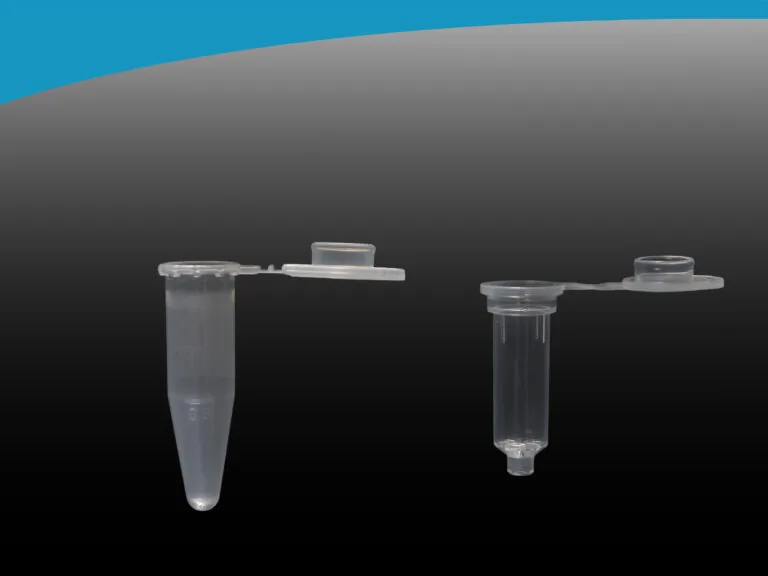
Name of Product Milenia GenLine Extraction System Catalog Number MGES 1 Short Info The Milenia GenLine Extraction System is an universal kit which is intended for the isolation of analytes from swabs for further processing.
Method/Platform Swab Sample Collection System Range/Assay Sensivity Test Principle
Detail
Name of Product
Milenia GenLine Extraction System
Catalog Number
MGES 1
Short Info
The Milenia GenLine Extraction System is an universal kit which is intended for the isolation of analytes from swabs for further processing.
Method/Platform
Swab Sample Collection System
Range/Assay Sensivity
Test Principle
Brief Instructions
Storage
room temperature
Components
1000 pcs. of reaction tubes (1,5 ml) and 1000 pcs. of mini purification column
Other Products
Propargyl-PEG7-acid
Product Info
Document
Product Info
Propargyl-PEG7-acid is a reagent with a propargyl group with a carboxylic acid. The carboxylic acid reacts with primary amines under the activation of EDC or HATU. The propargyl group can participate in azide-alkyne Click Chemistry reaction to form triazole linkage, copper is required as a catalyst. The PEG spacer increases the hydrophilicity of the molecule. Reagent grade, for research purpose. Please contact us for GMP-grade inquiries.
Document
Propargyl-PEG7-acid is a reagent with a propargyl group with a carboxylic acid. The carboxylic acid reacts with primary amines under the activation of EDC or HATU. The propargyl group can participate in azide-alkyne Click Chemistry reaction to form triazole linkage, copper is required as a catalyst. The PEG spacer increases the hydrophilicity of the molecule. Reagent grade, for research purpose. Please contact us for GMP-grade inquiries.
ProteoSpin™ Total Protein Concentration, Detergent Clean-Up and Endotoxin Removal Kits
Product Info
Document
Product Info
Overview
Columns bind proteins of interest while endotoxins flow through
Reduce endotoxin levels to less than 0.01 EU/µg of protein
Proteins are desalted
Greater than 95% protein recovery
Concentrate protein samples and remove detergents at the same time
Effectively remove a wide range of detergents including SDS, Triton® X-100, CHAPS, NP-40, and Tween 20
Purification is based on spin column chromatography that uses Norgen’s resin separation matrix
The ProteoSpin™ Total Protein Concentration, Detergent Clean-Up and Endotoxin Removal Kits are designed for the rapid removal of endotoxins from previously purified proteins or peptides, with protein recoveries of > 95% being achieved. Endotoxins, also known as lipopolysaccharides, are cell-membrane components of Gram-negative bacteria such as E. coli. Endotoxins liberated by Gram-negative bacteria are frequent contaminations of protein solutions derived from bioprocesses. Due to the high toxicity of endotoxins in vivo and in vitro, their removal from protein preparations is often necessary prior to the use of the protein in downstream applications. These kits efficiently reduce endotoxin levels to ≤ 0.01 EU/mg of protein, using spin column chromatography based on Norgen’s proprietary resin as the separation matrix. These kits are highly efficient in removing many different salts commonly used in the laboratory including, but not limited to, MgCl2, NaCl, KCl, CaCl2, LiCl and CsCl. The purified protein samples can be used in a number of downstream applications including sequencing, cloning, and in vitro and in vivo introduction into cells and organisms for various purposes. The simultaneous removal of salts while concentrating a dilute protein solution makes the kit a convenient method for preparing proteins before running many downstream applications such as SDS-PAGE, isoelectric focusing, X-ray crystallography, NMR spectroscopy, mass spectroscopy and other applications.
Mini Kit
The ProteoSpin™ Total Protein Concentration, Detergent Clean-Up and Endotoxin Removal Mini Kit is designed for the rapid removal of endotoxins from up to 200 μg of previously purified proteins or peptides, with protein recoveries of > 95% being achieved.
Maxi Kit
The ProteoSpin™ Total Protein Concentration, Detergent Clean-Up and Endotoxin Removal Maxi Kit is designed for the rapid removal of endotoxins from up to 4 mg of previously purified proteins or peptides, with protein recoveries of > 95% being achieved.
Including Triton® X-100, CHAPS, NP-40 and Tween 20
Elution Volume
2-4 mL
Time to Complete 10 Purifications
30-40 minutes
Storage Conditions All solutions should be kept tightly sealed and stored at room temperature. This kit is stable for 2 years after the date of shipment.
Component
Cat. 22800 (25 preps)
Cat. 22200 (4 preps)
Binding Buffer J
8 mL
8 mL
Binding Buffer N
4 mL
20 mL
Wash Solution M
50 mL
130 mL
Wash Solution CIP
20 mL
60 mL
Wash Solution N
30 mL
130 mL
Wash Solution NIP
20 mL
60 mL
Elution Buffer G
6 mL
20 mL
Endotoxin Removal Solution
1.5 mL
1.5 mL
Protein Neutralizer EF
2 mL
2 mL
Maxi Spin Columns (assembled with Collection Tubes)
–
4
Mini Spin Columns
25
–
Collection Tubes
25
–
Maxi Spin Columns (assembled with Collection Tubes)
The series of DNA Size Selection Kits (Magnetic Beads) were developed for DNA size selection using magnetic beads. A total of 11 kits are available, with different selection ranges spanning from 50 bp to over 10 kb. The kits provide a simple and quick approach for the enrichment of a specific range of DNA fragments. The kit workflow allows double-sided or single-sided size selection for specific size cutoffs.
Gel images of different ranges of size selection. Sheared human genomic DNA was used as input.
.
DNA size selection is a selective capture of DNA fragments of a specific range of size for next-generation sequencing (NGS) library preparations, PCR, ChIP assay, DNA ligations, endonuclease digestions, adapter removal, and other genomics and molecular biology applications. DNA size selection is preferred after NGS library prep in most of the cases. The NGS library preparation is related to the quality of the sequencing data. Precise NGS library size selection can increase sequencing efficiency, improve data quality, and reduce costs.
There are two types of sequencing technologies: short-read sequencing and long-read sequencing. Short-read sequencing uses DNA libraries that contain small insert DNA fragments of similar sizes, usually several hundred base pairs. The sequencing efficiency can be improved if the DNA size selection is in the right range. Cat.# 20104S and 20104L are the best kits for NGS library size selection of illumina paired-end 100 (PE100) sequencing with 100-200 bp library inserts; Cat.# 20105S and 20105L are the best kits for NGS library size selection of illumina paired-end 150 (PE150) sequencing with 150-300 bp library inserts; and Cat.# 20106S and 20106L are the best kits for NGS library size selection of illumina paired-end 300 (PE300) sequencing with 300-600 bp library inserts.
Long-read sequencing uses a large DNA fragment as input and makes very long reads. Usually, library size selection is preferred to remove smaller fragments. Cat.# 20110S and 20110L are the best kits for long-read sequencing size selection with DNA sizes >5 kb, and Cat.# 20111S and 20111L are the best kits for long-read sequencing size selection with DNA sizes >10 kb.
The magnetic beads technology uses paramagnetic particles, also known as SPRI (Solid Phase Reversible Immobilization) beads, to bind DNA reversibly and selectively. DNA fragments can be size-selected and purified by changing the properties of the magnetic beads or SPRI beads. The magnetic beads can easily separate the beads-binding DNA from the contaminants and unwanted components in the samples. The samples after DNA size selection are free of contaminants such as buffer components, enzymes, proteins, salts, dNTPs, primers, and adapters. Our proprietary magnetic beads reagents improve yield, selectivity, and reproducibility.
Specific DNA fragments at a certain length range can be purified simply using magnetic separation with different beads components, avoiding tedious and time-consuming gel extraction and column-based purification. The magnetic beads method is popular for common DNA size selection, including library size selection. The first beads-binding step, referred to as the right-side clean-up, removes large DNA fragments. The large DNA fragments are bound to the beads and are discarded. The desired DNA fragments in the supernatant are transferred to a new well, and new beads are added to the supernatant for the second beads-binding, referred to as the left-side clean-up. The double-size selected DNA fragments are eluted after ethanol rinsing.
DNA size selection with dual clean-ups.
.
A single clean-up is needed for DNA size selection with large fragments. In this case, only the large DNA fragments are bound to the beads. The selected larger DNA fragments are eluted after ethanol rinsing.
DNA size selection with single clean-up for >5 kb and >10 kb DNA.
.
Features of DNA size selection and library size selection
High specificity and high recovery of size selection
11 selection ranges are available, including 5 ranges for NGS library size selection
50-100 bp
100-200 bp
200-500 bp
250-350 bp: ideal for illumina PE100 sequencing
300-450 bp: ideal for illumina PE150 sequencing
450-750 bp: ideal for illumina PE300 sequencing
500-1000 bp
1-3 kb
1-5 kb
>5 kb: ideal for long-read sequencing
>10 kb: ideal for long-read sequencing
Fast and simple
20-min protocol
No gel purification required
No columns required
No centrifugation required
Efficient removal of contaminants and unwanted components