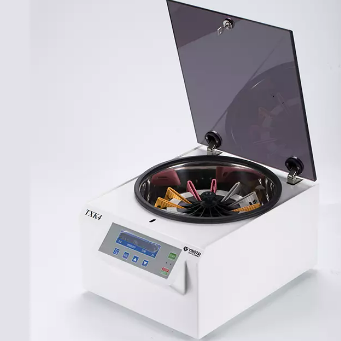
TXK4 blood group serological tests multipurpose centrifuge widely used in the test of blood group serology, blood type, Microcolumn agglutination, immunodetection and etc.
Detail
TXK4 Blood card centrifuge, ID card Centrifuge, Gel card centrifuge
Application:
TXK4 blood group serological tests multipurpose centrifuge widely used in the test of blood group serology, blood type, Microcolumn agglutination, immunodetection and etc.
Features:
1. Brushless motor to make sure free maintenance,no powder polution, micro computer control and digital display the time, speed and RCF to let operation easily.
2. Special centrifugation technical to different reagent according to the requirement.
3. Regular centrifugation program, customers can press the button to choose the required one.
4. Electrical lid lock, over speed and imbalance protection.
Our SNPsig® kits use our own proprietary genotyping method to enable the identification of SARS-CoV-2 variants of concern. These products can be used on any real-time PCR machine using familiar protocols, whilst resulting in exceptional genotyping data.
Positive control templates for wild-type and variants are supplied in every kit to make data interpretation simple.
Our SNPsig® technology provides an alternative to sequencing as well as S gene target failure (SGTF) that enables scientists to analyse and monitor these specific genomic mutations. Our kits can provide a pivotal role in screening for SARS-CoV-2 variants for the purpose of genomic surveillance and studies.
Document
For the detection of the SARS-CoV-2 variants with the VUI-21APR-01 and VUI-21APR-03 (India) Rapid detection of specific detection profiles High priming efficiency Sensitive to < 100 copies of target
Positive copy number standard curve for quantification
Accurate controls to confirm findings
96 reactions, includes master mix
[DM2160] FluoroBand™ 100 bp Fluorescent DNA Ladder, 500 μl
Product Info
Document
Product Info
Description
The DM2160 FluoroBand™ 100 bp Fluorescent DNA Ladder is a ready-to-use DNA ladder, which is pre-mixed with high sensitivity DNA binding fluorescent dye and loading dye for direct gel loading. The DNA Ladder DM2160 is composed of 11 individual DNA fragments: 1.5k, 1k, 900, 800, 700, 600, 500, 400, 300, 200 and 100 bp derived from a mixture of PCR products and specifically digested plasmid DNA; these bands can be visualized when illuminated with 470 nm blue light or UV light. This product contains two enhanced bands (1.5 kb and 500 bp) for easier reference. In addition, two tracking dyes, Xylene cyanol FF and Orange G which mimic the migration of 4,000 bp and 50 bp dsDNA during electrophoresis are also added for real time monitoring. Real time observation of the electrophoresis is also possible if compatible light source is fitted to the electrophoresis tank.
Features
Sharp bands
Quick reference— enhanced bands
Ready-to-use— premixed with loading dye for direct loading
Stable— room temperature storage over 6 months
Directly observed by UV or blue light— premixed with high sensitive DNA fluorescent dye
Source
Phenol extracted PCR products and dsDNA digested with specific restriction enzymes, equilibrated in 10 mM Tris-HCl (pH 8.0) and 10 mM EDTA.
Range
100 ~ 1,500 bp
Concentration
52.2 µg/ 500 µl
Recommended loading volume
5 µl/ well
Storage
Protected from light Room temperature for 6 months 4°C for 12 months -20°C for 24 months
Document
The DM2160 FluoroBand™ 100 bp Fluorescent DNA Ladder is a ready-to-use DNA ladder, which is pre-mixed with high sensitivity DNA binding fluorescent dye and loading dye for direct gel loading. The DNA Ladder DM2160 is composed of 11 individual DNA fragments: 1.5k, 1k, 900, 800, 700, 600, 500, 400, 300, 200 and 100 bp derived from a mixture of PCR products and specifically digested plasmid DNA; these bands can be visualized when illuminated with 470 nm blue light or UV light. This product contains two enhanced bands (1.5 kb and 500 bp) for easier reference. In addition, two tracking dyes, Xylene cyanol FF and Orange G which mimic the migration of 4,000 bp and 50 bp dsDNA during electrophoresis are also added for real time monitoring. Real time observation of the electrophoresis is also possible if compatible light source is fitted to the electrophoresis tank.
Usages: For differentiating enteric bacteria based on urease activity by adding 40% sterile urea solution.
Principle: Peptone provides the carbon and nitrogen; maintain a balanced osmotic sodium chloride; potassium dihydrogen phosphate is buffers; decomposing bacteria urease urea medium, produce large amounts of ammonia, agar as medium coagulant.
Formulation (per liter): Peptone 1g Sodium chloride 5g Glucose 1g Ppotassium dihydrogen phosphate 2g Phenol red 0.012g Agar 12g Final pH7.2 ± 0.2
How to use: 1.Suspend 21g in 1L of distilled or deionized water. Heat with frequent agitation and boil to completely dissolve the powder. Distribute into flasks. Autoclave at 121 for 15 minutes. cooling to 50-55 and adding 40% urea solution. 2.Diluted and treated samples.
Storage: Store in a dark, cool and dry place, tighten the cap immediately after use. Storage period of three years.