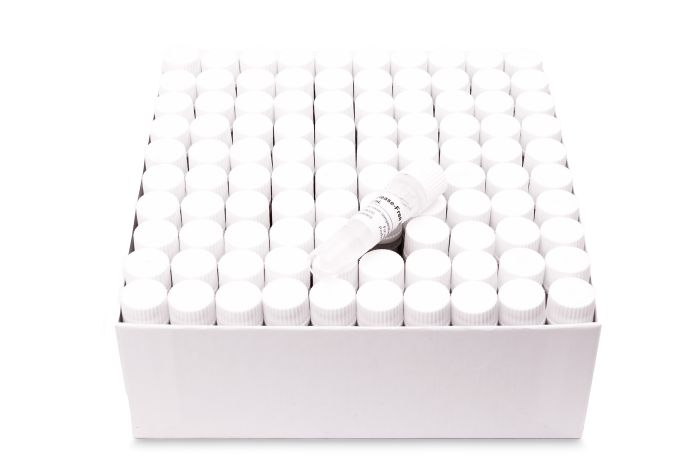
Norgen’s Nuclease-Free Water is free of all DNases, RNases and nucleic acids and is suitable for all molecular biology applications requiring nuclease-free water including PCR, RT-PCR and real-time PCR. Our water is prepared without the use of DEPC, and is ready to use without further treatment.
Applications For use in any molecular biology application
Storage Conditions Norgen’s Nuclease-Free Water should be stored at room temperature. Storage at +4°C or -20°C is optional.
Precautions and Disclaimers This product is designed for research purposes only. It is not intended for human or diagnostic use.
Other Products
Zika Virus (ZIKV) TaqMan RT-PCR Detection Kits
Product Info
Document
Product Info
Overview
Detection kits for ZIKV
CE-IVD marked version available for in vitro diagnostic use
Available in TaqMan format for analysis
The Zika Virus (ZIKV) is an emerging mosquito-borne virus that was first identified in Uganda in 1947 in Rhesus monkeys through monitoring of sylvatic yellow fever. During large outbreaks in French Polynesia and Brazil, national health authorities reported potential neurological and auto-immune complications of ZIKV disease. Agencies investigating the Zika outbreaks are finding an increasing body of evidence about the link between ZIKV and microcephaly. Infection with ZIKV may be suspected based on symptoms and recent history (e.g. residence or travel to an area where ZIKV is known to be present). Zika virus diagnosis can only be confirmed by laboratory testing for the presence of ZIKV RNA in the blood or other body fluids, such as urine or saliva.
ZIKV TaqMan RT-PCR Kit, 100 reactions
Ready to use format, including Master Mix for the target and PCR control to monitor for PCR inhibition and validate the quality
Specific Primer and Probe mix for the pathogen/virus/viroid of interest
Primer and Probe mix
Positive and negative control to confirm the integrity of the kit reagents
ZIKV TaqMan RT-PCR Probe/Primer Set and Controls, 100 reactions
Specific Primer/Probe mix and Positive Control for the pathogen/virus/viroid of interest
Nuclease-free water
Can be used together with Norgen’s RT-PCR Master Mix (#28113) or customer supplied master mix
All kit components can be stored for 1 year after the date of production without showing any reduction in performance.
All kit components should be stored at -20°C upon arrival. Repeated thawing and freezing (> 2 x) of the Master Mix and Positive Control should be avoided, as this may affect the performance of the assay. If the reagents are to be used only intermittently, they should be frozen in aliquots.
Attogene’ s Cylindrospermopsin Lateral Flow Kit can be used to detect Cylindrospermopsin in source water samples.
Format: Rapid-Water – Run Time: 30 Minutes, enough to run two samples (undiluted and a 10 fold dilution) and negative control.
Cylindrospermopsin (CYN) is a potent cyanotoxin synthesized by select species of cyanobacteria, prominently including Cylindrospermopsin raciborskii. It belongs to the tricyclic alkaloid class, exhibiting a molecular weight of approximately 415 Da. Structurally, cylindrospermopsin features an uracil ring fused with a hydantoin moiety, alongside a guanidino group, attributes that render it highly soluble and polar in aqueous environments.
Cylindrospermopsin is notorious for its profound toxicity towards aquatic organisms and its potential threat to human health through exposure via contaminated water and food sources. Consequently, rigorous monitoring protocols are essential in regions prone to cyanobacterial blooms, where cylindrospermopsin can accumulate in freshwater reservoirs and other aquatic habitats. In recognition of these risks, regulatory bodies such as the United States Environmental Protection Agency (EPA) have implemented an action level guideline. As of 2019, EPA 10-day drinking water health advisory for cylindrospermopsin recommended a threshold of 0.7 parts per billion (ppb), or 700 parts per trillion (ppt) for children under the age of six, and 3 parts per billion, 3000 parts per trillion for anyone older, to effectively manage cylindrospermopsin levels. This precautionary measure aims to uphold both environmental sustainability and public health integrity by minimizing exposure risks. The EPA has also drafted a human health recreational water quality criterion to protect human health at 8,000ppt.