
Opentrons OT-2 8-Channel Electronic Pipettes automate liquid handling and pipetting for most daily wetlab applications. Best for medium- to high-throughput workflows.

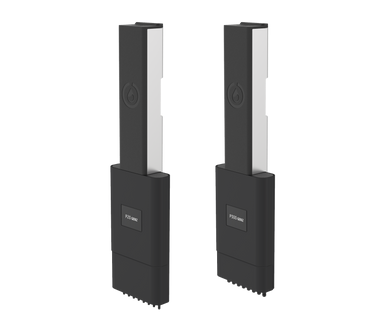
Opentrons OT-2 8-Channel Electronic Pipettes automate liquid handling and pipetting for most daily wetlab applications. Best for medium- to high-throughput workflows.

Product Description
Kit Storage and Term of Validity
Storage term: stored at ≤-20℃,keep away from light, avoid heavy weight and repeated freezing and thawing.
Term of Validity: 14 months
Isothermal Nucleic Acid Principle Summary
The kit is based on rapid nucleic acid amplification technology at room temperature and constant temperature, its principle is that at room and constant temperature, the recombinase and primer form a protein/single-stranded nucleotide complex Rec/ssDNA, and invade the double-stranded DNA template with the help of auxiliary proteins and single-stranded binding protein SSB; then form a D-loop region at the invasion point and start to scan the DNA duplex, after finding the target region complementary to the primer and disintegration of the complex Rec/ssDNA, the polymerase also binds to the 3′ end of the primer to start the chain extension.
Isothermal Nucleic Acid Product Features
1/ High sensitivity and specificity, short reaction time.
2/ The reagent form is freeze-dried, stable and easy to operate.
3/ The reaction can be operated by metal bath and water bath pot without purchasing expensive PCR apparatus.
Technical Parameters:
| Parameters | Details |
|---|---|
| Product Name | DNA Isothermal Amplification Kit Basic |
| Manufacturer | Amp-future |
| Storage Temperature | -20°C |
| Kit Components | Enzymes, Buffers ,Reagents |
| Packaging | 48 Tests/box |
| Detection Limit | 500-1000copies/µL |
| Shipping | ICE |
| Test Time | 5-20mins |
Isothermal Nucleic Acid Applications
Suitable for DNA isothermal rapid amplification kit(Basic type)
Primer: Require pair of nucleotide primers with the length of 25-35 bp.
Colloidal gold probe:Require a sequence of 46-52nt in length
DNA basic kit reaction temperature is 39 to 42℃ and time is 5-20 minutes.
Notes
1/ Please avoid nucleic acid contamination and set blank control during reaction due to the high sensitivity of the kit.
2/ Please take out the required quantity of MIRA reaction units for the experiment, and put the rest under storage conditions when performing the experiment.

Description
FluoroDye™ DNA Fluorescent Loading Dye is a ready-to-use 6X DNA loading dye designed for fast qualitative electrophoresis analysis. Containing sensitive fluorescent dye with high specific affinity towards double stranded DNA (dsDNA), the FluoroDye™ Fluorescent DNA Loading Dye has negligible background and renders destaining process unnecessary. The FluoroDye™ DNA Fluorescent Loading Dye allows the user to immediately visualize electrophoresis result upon completion or to monitor the electrophoresis in real time. FluoroDye™ DNA Fluorescent Loading Dye is compatible with both the conventional UV gel-illuminating system as well as the less harmful long wavelength blue light illumination system. FluoroDye™ emission as bound to dsDNA is 522 nm, while its excitation peaks are at 270, 370 and 497 nm.
Features:
Composition
FluoroDye™ DNA Fluorescent Loading Dye is stored in 6X concentration in 60% glycerol and buffered with Tris-HCl and EDTA, containing Bromophenol blue, Xylene cyanol FF and Orange G as tracking dyes.
Storage
Protected from light
-20°C for 24 months
FluoroDye™ DNA Fluorescent Loading Dye is a ready-to-use 6X DNA loading dye designed for fast qualitative electrophoresis analysis. Containing sensitive fluorescent dye with high specific affinity towards double stranded DNA (dsDNA), the FluoroDye™ Fluorescent DNA Loading Dye has negligible background and renders destaining process unnecessary. The FluoroDye™ DNA Fluorescent Loading Dye allows the user to immediately visualize electrophoresis result upon completion or to monitor the electrophoresis in real time. FluoroDye™ DNA Fluorescent Loading Dye is compatible with both the conventional UV gel-illuminating system as well as the less harmful long wavelength blue light illumination system. FluoroDye™ emission as bound to dsDNA is 522 nm, while its excitation peaks are at 270, 370 and 497 nm.

Different sizes:
Powerful magnets quickly secure beads.
Simply turn tube for efficient bead mixing.