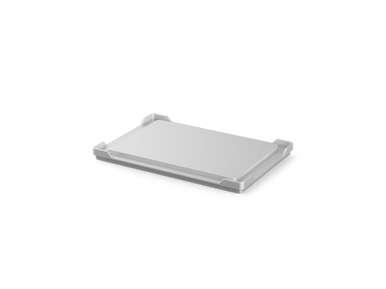
The Opentrons Flat Bottom Aluminum Block can be placed directly on the OT-2/Opentrons Flex deck or on the Opentrons Temperature Module. This block can hold flat bottom plates and other flat labware at constant temperature. The aluminum block holds temperatures between 4°C and 95°C when used with the Opentrons Temperature Module (GEN2).
Detail
The Opentrons Flat Bottom Aluminum Block can be placed directly on the OT-2/Opentrons Flex deck or on the Opentrons Temperature Module. This block can hold flat bottom plates and other flat labware at constant temperature. The aluminum block holds temperatures between 4°C and 95°C when used with the Opentrons Temperature Module (GEN2).
Other Products
IL-6 / Interleukin-6 Control
Product Info
Document
Product Info
Name of Product
IL-6 / Interleukin-6 Control
Catalog Number
MQCO6 1
Short Info
This product is a Interleukin-6 Quality Control (two areas) for Milenia QuickLine IL-6 Test (MQL6 1).
This product is only available within the EU!
Method/Platform
control
Range/Assay Sensivity
two areas
Test Principle
The controls are designed only for internal Quality Control of Milenia QuickLine Il-6 Tests. Test results can only be evaluated with Milenia POCScan Reader.
Brief Instructions
Storage
2°C to 8°C
Components
IL-6 Control 1, IL-6 Control 2
Document
2 x 3 flasks This product is a Interleukin-6 Quality Control (two areas) for Milenia QuickLine IL-6 Test (MQL6 1).
Compatible with most DNA and RNA isolation methods
Norgen’s Total Nucleic Acid Preservation Tubes Dx are designed for ambient preservation and transport of total nucleic acids (DNA and RNA) from samples collected using a swab. The Total Nucleic Acid Preservation Tubes contain Norgen’s Total Nucleic Acid Preservative in a liquid format. The user simply collects the specimen using a sterile nylon flocked swab (not provided), and then transfers the swab into the Total Nucleic Acid Preservative. The Preservative prevents the growth of Gram-negative and Gram- positive bacteria and fungi, and also inactivates viruses allowing the resulting non-infectious samples to be handled and shipped safely. In addition, the Total Nucleic Acid Preservative eliminates the need to immediately process or freeze samples and allows the samples to be shipped to centralized testing facilities at ambient temperatures. The components of the preservative allow DNA samples to be stored at room temperature for over 4 months and RNA samples to be stored at room temperature for over 2 months. This kit is ideal for collecting and preserving nasal and oral swab samples for in vitro diagnostic use for medical purposes. This kit can be used to preserve viral RNA, including SARs-CoV-2 RNA for detection of COVID-19.
Norgen’s Total Nucleic Acid Preservation Tubes Dx are intended for use by professional users such as technicians, physicians and biologists experienced and trained in molecular biological techniques.
Norgen’s Total Nucleic Acid Preservation Tubes Dx do not provide a diagnostic result. It is the sole responsibility of the user to use and validate these devices in conjunction with a downstream in vitro diagnostic assay.
Shelf Life and HandlingThe tubes should be kept tightly sealed and stored at room temperature for up to 1 year without any reduction in performance (The collection due date is written on the device label and the kit box label).Once collected, RNA is stable for up to 2 months and DNA is stable for up to 4 months when the tubes are kept tightly sealed and stored at room temperature.