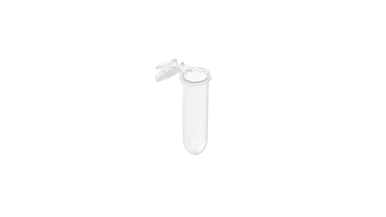
NEST 2.0 mL Microcentrifuge Tube, polypropylene, sterile, DNase, RNase, pyrogen and endotoxin free. Relative centrifugal force (RCF): 30000 x g. Easy-open, secure safelock cap seal. 500 count.
Labware definition is available for immediate use in Opentron’s Labware Library.
Detail
NEST 2.0 mL Microcentrifuge Tube, polypropylene, sterile, DNase, RNase, pyrogen and endotoxin free. Relative centrifugal force (RCF): 30000 x g. Easy-open, secure safelock cap seal. 500 count.
Labware definition is available for immediate use in Opentron’s Labware Library.
Other Products
DBCO-NHCO-PEG4-amine, TFA salt
Product Info
Document
Product Info
DBCO-NHCO-PEG4-amine is a carboxyl-reactive building block with extended PEG spacer arm. The hydrophilic PEG spacer arm improves water solubility. In the presence of of activators (e.g. EDC, or HATU), this reagent can be used to derivatize carboxyl groups or activated esters (e.g. The NHS ester) through a stable amide bond. DBCO is commonly used for copper-free Click Chemistry reactions. Reagent grade, for research purpose. Please contact us for GMP-grade inquiries.
Document
DBCO-NHCO-PEG4-amine is a carboxyl-reactive building block with extended PEG spacer arm. The hydrophilic PEG spacer arm improves water solubility. In the presence of of activators (e.g. EDC, or HATU), this reagent can be used to derivatize carboxyl groups or activated esters (e.g. The NHS ester) through a stable amide bond. DBCO is commonly used for copper-free Click Chemistry reactions. Reagent grade, for research purpose. Please contact us for GMP-grade inquiries.
Livestock Disease Kit with African swine fever virus Test Kit for Nucleic Acid Detection
Product parameters:
Kit composition(WLRE8208KIT 48T/Pack)
Composition
Content
E buffer
1 mL×2 Tubes
B buffer
150 μL×1Tube
Positive control template
100 μL×1Tube
Reagents
48T
Product features and advantages:
Product features and advantages
Features
Advantages
High sensitivity
1 copies/ml
Strong specificity
Specificity is superior to PCR
Short reaction time
20min
Polymorphic reagent
Liquid, freeze-dried powder, freeze-dried ball
Easy to operate
Few steps of liquid dispensing; It is even possible to add only samples and amplify to get the resultsDesign of primers and probe is simple
Easy to store and transport
It is best preserved at -20℃, and can be stored at room temperature for up to 30 days in a cool place away from light.The freeze-dried form has a long storage time and is convenient for transportation
Low requirements on equipment
Applicable to Applied Biosystems 7500, QuantStudio 3/5, QuantStudio 6/7 Flex fluorescence quantitative PCR instrument;Applicable to our WL-16-III and other isothermal fluorescence detector
Product application:
Application
Ultra-clean laboratory
African Swine Fever Virus Isothermal Detection
Indoor
Operation procedure and process:
Take out the liquid components of the kit in advance, thaw at room temperature, and shake to mix.
Prepare freeze-dried reagents according to the number of samples to be tested, negative and positive controls, and add 37.5 μL E buffer to each freeze-dried reagent.
Select the appropriate nucleic acid extraction method and reagent to extract the sample nucleic acid
Add 10 μL nucleic acid template to the reaction tube (the amount of template can be adjusted to be filled with sterile water; That is, 10 μL nucleic acid template plus sterile water), 10 μL positive control template was added to positive control, and 10 μL sterile water was added to negative control
Add 2.5μL B buffer to each reaction tube and close the tube cap (for multiple reactions, it is recommended to add B buffer to the inside of the tube cap)
Thoroughly mix the reaction tube upside and down for 8-10 times. After mixing, shake (or rapidly centrifuge) the reaction liquid to the bottom of the tube and transfer it to the amplification zone.
Performence Comparison Data:
No.
TT value
Template concentration
Result determination
1
4.2
10-1
Positive
2
5.5
10-2
Positive
3
10.2
10-3
Positive
4
17.0
10-4
Positive
5
12.0
10-5
Positive
6
–
10-6
Negative
7
–
10-7
Negative
8
Negative control
Negative
Support and Services:
Livestock Disease Kit Technical Support and Services
We provide technical support and services for our Livestock Disease Kit. We are committed to helping you get the most out of your product and ensuring your satisfaction with our products and services.
Our technical support staff is available to answer any questions you may have about the product.
We offer online tutorials and user guides to help you understand the product better.
We provide technical assistance to help troubleshoot any issues you may be having with the product.
We offer a warranty on our products.
If you have any questions or need technical support, please do not hesitate to contact us. We are here to help you make the most of your Livestock Disease Kit.
FAQ:
Q: What diseases can Livestock Disease Kit detect? A: Livestock Disease Kit can detect different infectious diseases, such as Foot and Mouth Disease, Bluetongue Disease, Bovine Viral Diarrhea.
Q: How does Livestock Disease Kit work? A: Livestock Disease Kit uses advanced MIRA technology to amplify the target DNA/RNA targent sequences , and detect the disease by analyzing the amplified sequences.
Q: How long does it take to get results from Livestock Disease Kit? A: Livestock Disease Kit can give a result within 5-20 mins.
Q: What type of sample is suitable for Livestock Disease Kit? A: Livestock Disease Kit is suitable for blood, serum, and tissue samples.
Q: Does Livestock Disease Kit require professional equipment? A: No, Livestock Disease Kit does not require any professional equipment,can use with our isothermal equipment or pcr machine
Document
Livestock Disease Kit with African swine fever virus Test Kit for Nucleic Acid Detection
NGS DNA Library Prep Kit (illumina and MGI Platforms)
Product Info
Document
Product Info
The kit was developed for construction of high quality libraries for next generation sequencing (illumina and MGI Platforms). The kit needs double strand DNA fragments (blunt and/or sticky) as input DNA for NGS library preparation, and is compatible with DNA fragments generated from both enzymatic methods and physical methods (sonication, nebulization etc.). Library multiplexing is possible with different types of indexes.
The kit was optimized for next generation sequencing (NGS) library preparation with different types of samples. Most of DNA library preparation requires the ligation of sheared DNA fragments to library adaptors and the DNA library preparation is closely related to the quality of NGS data. With BioDynami’s unique DNA library preparation technologies, the fast and simple kit allows high quality NGS library preparation to be completed in 1.5 hours with only 10 minutes of hands-on time.
Some genomic regions are very difficult to be covered evenly and usually result in very low coverage rate or gap in these regions.
Typical difficult regions are: • with high GC contents • have secondary structures: mainly due to repeat sequences • the worst cases: have both high GC contents and repeated sequences.
Example: human TERT gene is one of the most difficult regions as shown above. NGS data showed that BioDynami kit has the best performance to cover the extremely difficult human TERT gene region.
Three index types are available for the illumina platform kits:
Non-index (illumina Cat.# 30009): Libraries do not have index.
Index (illumina Cat.# 30021): A unique barcode sequence with 6 bases has been included in each of the index primers. RNA Sequencing library multiplexing is possible with up to 48 samples. Index information can be downloaded here.
Unique dual index (illumina Cat.# 30023): RNA Sequencing library multiplexing up to 96 samples is possible with the unique dual indexes. We have developed a 4-Base Difference Index System. The system can generate indexes with at least 4 bases different from others in the 8-base indexing region. the unique dual indexing primers identify sequencing errors such as index hopping, mis-assignment, and de-multiplexing errors. Index information can be downloaded here.
Indexes are available for the MGI platform kits (Cat.# 34021).
Document
The kit was developed for construction of high quality libraries for next generation sequencing (illumina and MGI Platforms). The kit needs double strand DNA fragments (blunt and/or sticky) as input DNA for NGS library preparation, and is compatible with DNA fragments generated from both enzymatic methods and physical methods (sonication, nebulization etc.). Library multiplexing is possible with different types of indexes.