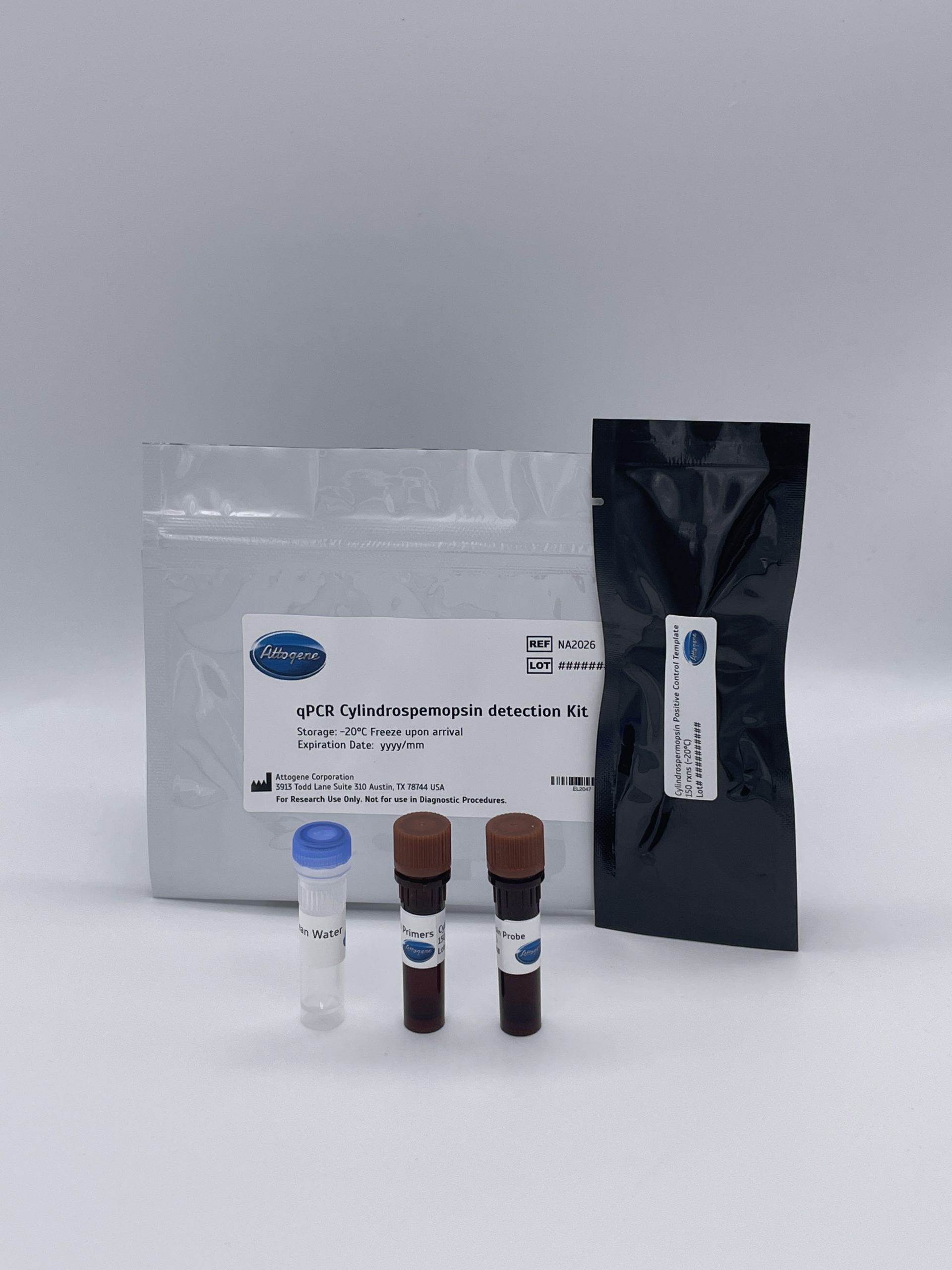
This kit is sufficient for 150 reactions: For characterizing cyanobacteria in environmental samples Use in combination with Attogene Algae DNA isolation kit Universal 23s PCR primers Perfect for Environmental DNA (eDNA) Characterization
Detail
This kit is sufficient for 150 reactions:
For characterizing cyanobacteria in environmental samples
Use in combination with Attogene Algae DNA isolation kit
Universal 23s PCR primers
Perfect for Environmental DNA (eDNA) Characterization
The 23S ribosomal RNA (rRNA) is a crucial component of the bacterial/archean ribosome. The 23S rRNA is a 2,904-nucleotide long component of the large subunit (50S) of the ribosome. Compared to 16S rRNA genes, 23S rRNA genes have greater sequence variations due to unique insertions, deletions, and length. Attogene’s 23s PCR kit is designed for identification of specific strains of bacterial/archean using the ribosomal RNA gene region for use in Phylogenetic studies of bacterial diversity from environmental DNA samples such as water. For example, a sample of algae is obtained and washed to extract a clean algal genomic DNA (gDNA) sample. A reaction mixture is assembled from primers, master mix, and gDNA samples as required. The qPCR machine of choice is set up and loaded as needed and the mixture undergoes PCR amplification. The Primer mix provided exploits the Taq polymerase to amplify the gene region of interest.
Other Products
DBCO-PEG5-acid
Product Info
Document
Product Info
DBCO-PEG5-acid is an analog of DBCO-Acid with PEG linker and a DBCO group. DBCO group is a highly reactive cycloalkyne which is commonly used for copper-free Click Chemistry reactions. The hydrophilic PEG chain allows for increased water solubility of compounds in aqueous media. The terminal carboxylic acid can react with primary amine groups in the presence of activators (e.g. EDC, or HATU) to form a stable amide bond. Reagent grade, for research purpose. Please contact us for GMP-grade inquiries.
Document
DBCO-PEG5-acid is an analog of DBCO-Acid with PEG linker and a DBCO group. DBCO group is a highly reactive cycloalkyne which is commonly used for copper-free Click Chemistry reactions. The hydrophilic PEG chain allows for increased water solubility of compounds in aqueous media. The terminal carboxylic acid can react with primary amine groups in the presence of activators (e.g. EDC, or HATU) to form a stable amide bond. Reagent grade, for research purpose. Please contact us for GMP-grade inquiries.
Short term stability: 2-8oC, Long term stability: See individual component labels
Stability:
> 2 years under recommended storage conditions
Analyte:
α-Amylase
Assay Format:
Spectrophotometer, Auto-analyser
Detection Method:
Absorbance
Wavelength (nm):
400
Limit of Detection:
0.05 U/mL
Reproducibility (%):
~ 3%
Reaction Time (min):
~ 30 min
Purchase high purity Ceralpha: α-Amylase Reagent – 4 vials for the measurement of α-amylase for research, biochemical enzyme assays and in vitro diagnostic analysis.
p-Nitrophenyl α-D-maltoheptaoside (blocked), plus excess α-glucosidase and glucoamylase. For the measurement of cereal, fungal and bacterial α-amylase.
Purchase high purity Ceralpha: α-Amylase Reagent – 4 vials for the measurement of α-amylase for research, biochemical enzyme assays and in vitro diagnostic analysis.
p-Nitrophenyl α-D-maltoheptaoside (blocked), plus excess α-glucosidase and glucoamylase. For the measurement of cereal, fungal and bacterial α-amylase.
Isolate DNA from a wide range of food materials. (e.g boiled, fluid, processed or raw food products)
No hazardous chemicals required (e.g. phenol or chloroform)
Effective lysis with Proteinase K and optional lysozyme treatment
Fast (less than 15 minutes hands-on time) and convenient processing using a rapid spin-column format
Wide compatibility with a variety of food products for GMO-DNA isolation
Universal protocol for food related pathogen DNA isolation (Gram positive and Gram negative)
This kit provides a rapid spin column method for the isolation and purification of total DNA from a wide range of food samples originating from animals or plants. The kit is designed for identification of GMO-DNA or animal components in food and feed and can be used for a wide range of starting materials including raw or processed food, meat, liquids, sauces and dairy products including milk, cheese and yogurt.
This kit also provides a convenient method for the detection of food-related pathogens and will isolate such DNA (enriched or as is) including Gram-positive bacteria, Gram-negative bacteria, yeast and fungi which may contaminate food sources. A number of pathogens have been tested including E. coli O157:H7, Staphylococcus, Listeria monocytogenes, Salmonella enterica & Campylobacter jejuni. The purified DNA is of the highest integrity, and can be used in a number of downstream applications including PCR based detection, sequencing and genotyping.
Maximum Amount of Starting Material: Solid food material Liquid sample (e.g. milk or concentrated juice)
200 mg 1 mL to 1.5 mL
Time to Complete 10 Purifications
45 minutes
Storage Conditions and Product Stability All solutions should be kept tightly sealed and stored at room temperature. This kit is stable for 1 year after the date of shipment. The kit contains a ready-to-use Proteinase K, which is dissolved in a specially prepared storage buffer. The buffered Proteinase K is stable for up to 1 year after the date of shipment when stored at room temperature.
Samples Tested by PCR
Food Materials
Samples that Have Been Tested by PCR
Plant related
Cereal, Jam, Chocolate, Spices, Sauce
Animal related
Raw and processed meat products (e.g. ham, beef jerky, taco seasoned ground beef, pork and sausage)
Dairy product
Milk, Yogurt, Cheese
Pathogens (enriched from food samples)
E. coli O157:H7 from food sample Staphylococcus from milk Listeria monocytogenes from milk Salmonella enterica from raw meat Campylobacter jejuni from milk