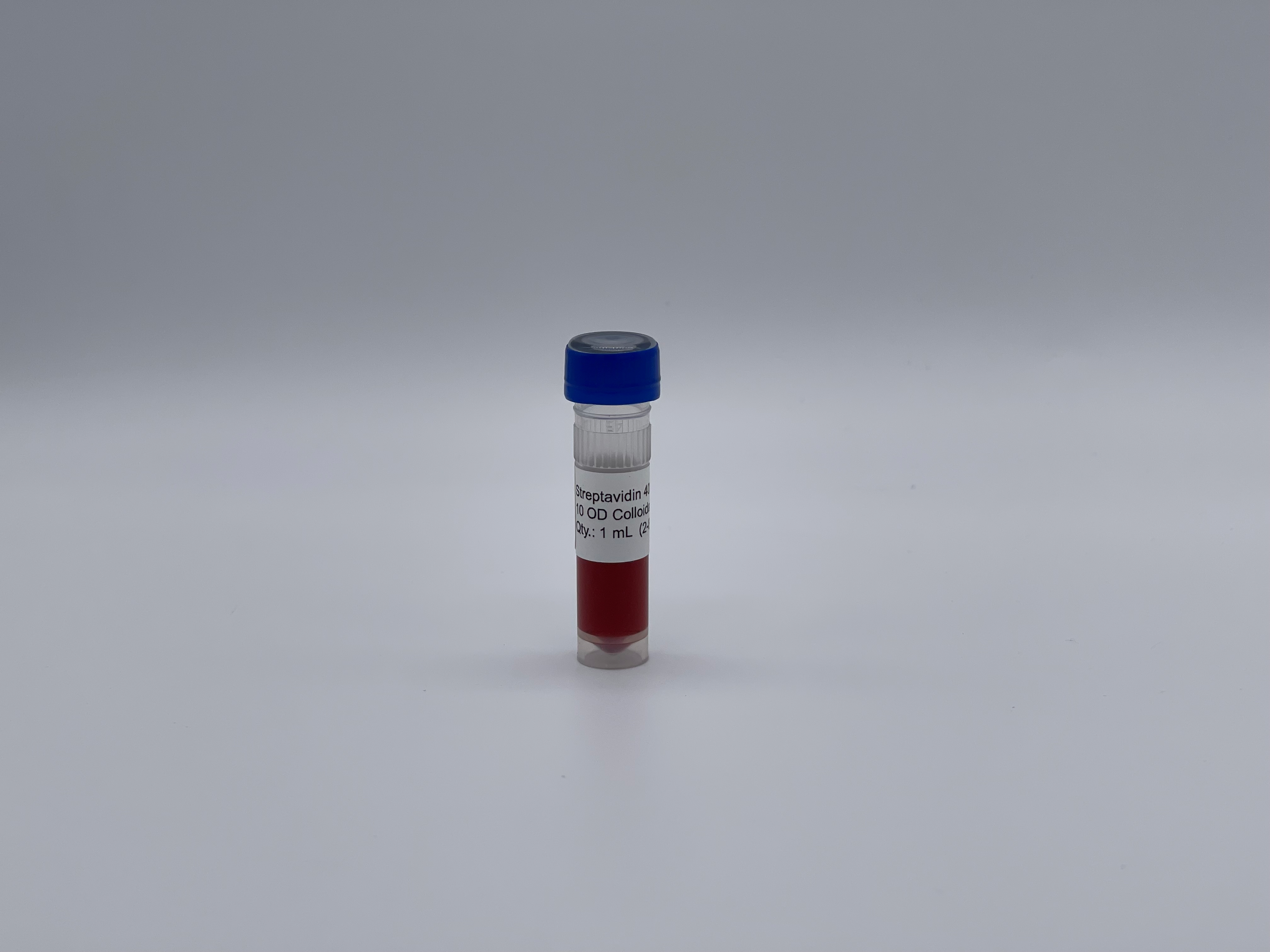
Goat Anti-Rabbit (GAR) Conjugated Colloidal Gold for Lateral Flow (1mL of 10OD)
Product image shows functional testing of Goat Anti Rabbit 40nm colloidal gold on a lateral flow test.
Our products are produced in a state-of-the-art manufacturing facility that enable rapid turnaround times while ensuring batch to batch consistency and reliability.
Goat Anti-Rabbit (GAR) Conjugated Colloidal Gold for Lateral Flow (1mL of 10OD)
Product image shows functional testing of Goat Anti Rabbit 40nm colloidal gold on a lateral flow test.
Our products are produced in a state-of-the-art manufacturing facility that enable rapid turnaround times while ensuring batch to batch consistency and reliability.
Norgen’s EXTRAClean Urine Cell-Free Circulating RNA Purification Kits provide a fast, reliable, reproducible, and simple procedure for isolating circulating RNA and exosomal RNA from various urine inputs ranging from 250 μL and up to 30 mL. The purified RNA is of the highest integrity, and can be used in a number of downstream applications including real-time PCR, reverse transcription PCR, Northern blotting, RNase protection and primer extensions, and expression array assays.
EXTRAClean Cell-Free Circulating RNA Purification Mini Kit: For sample volumes ranging from 250 μL to 2 mL
EXTRAClean Cell-Free Circulating RNA Purification Midi Kit: For sample volumes ranging from 2mL to 10mL. The first column will handle the large volume input of urine that is followed by a concentration on a mini column for a final elution of 50 μL to 100 μL
EXTRAClean Cell-Free Circulating RNA Purification Maxi Kit: For sample volumes ranging from 10 mL to 30 mL. The first column will handle the large volume input of urine that is followed by a concentration on a mini column for a final elution of 50 μL to 100 μL.
All sizes, including miRNA and small RNA (< 200 nt)
Average Yields ¥
Variable depending on specimen
¥Please check page 5 of protocol for average urine yields and common RNA quantification methods.
Storage Conditions and Product Stability
All buffers should be kept tightly sealed and stored at room temperature. These kits are stable for 2 years after the date of shipment. It is recommended to warm Lysis Buffer A for 20 minutes at 60°C if any salt precipitation is observed.
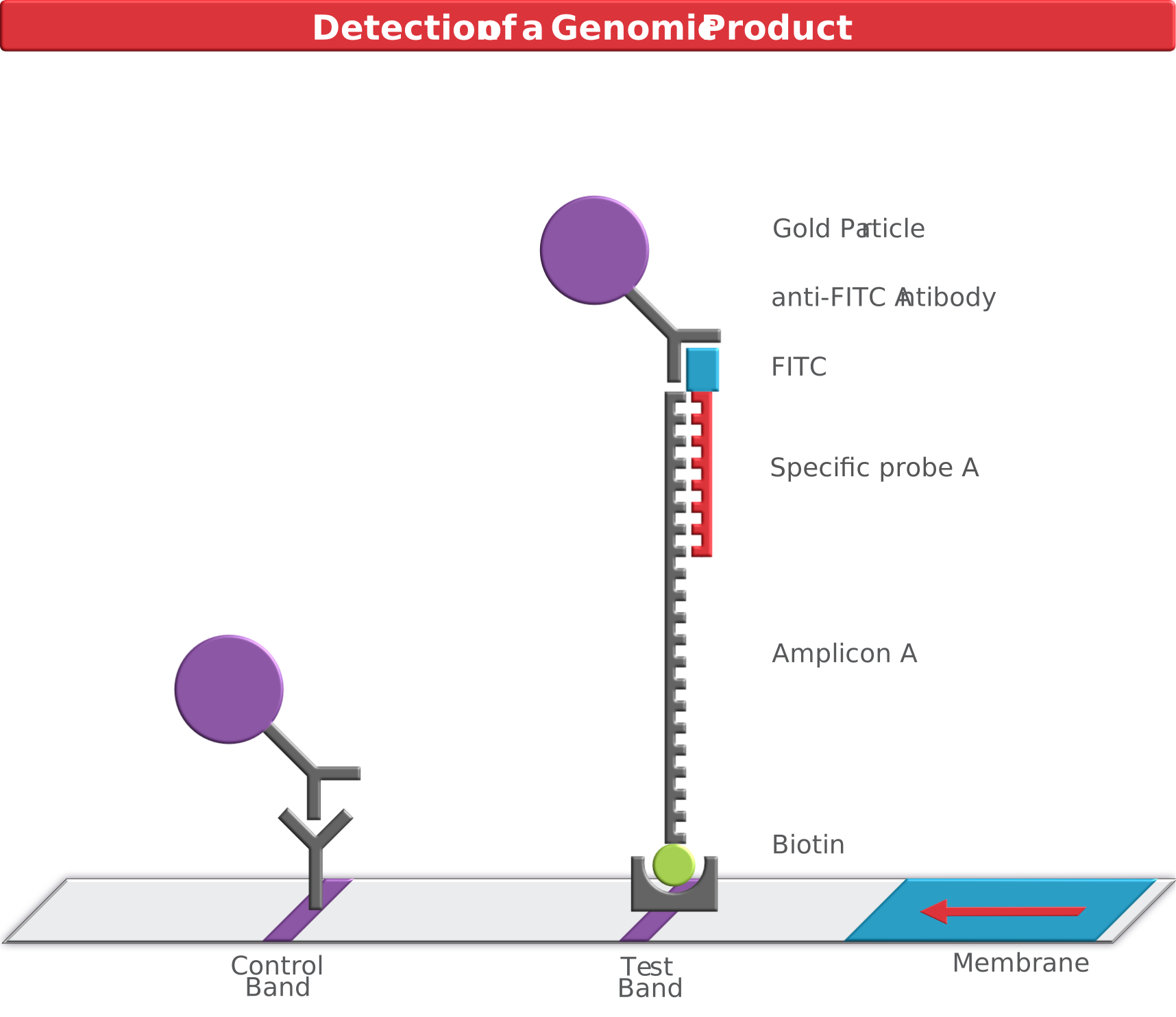
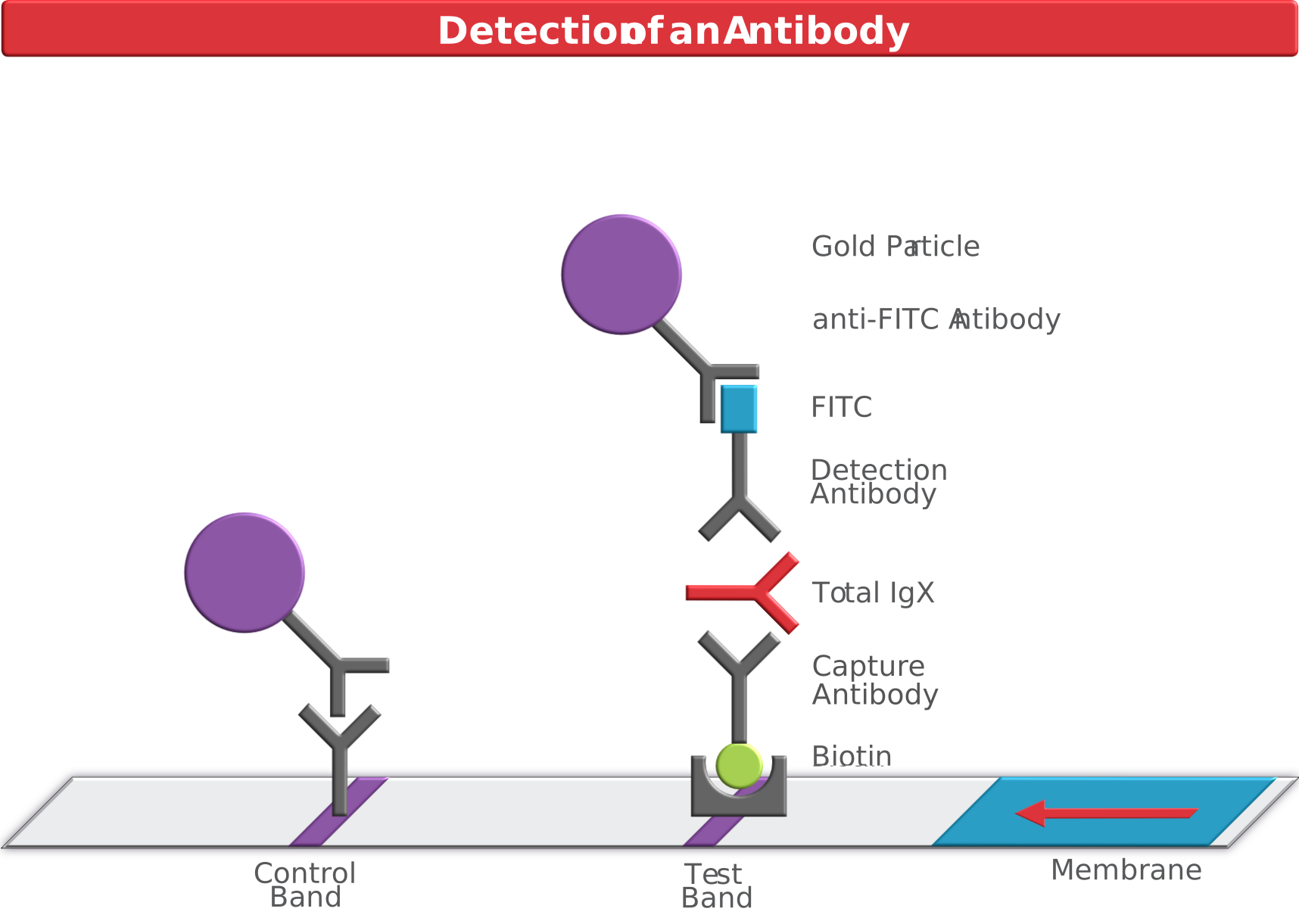
The HybriDetect is a simple and quick tool to develop your own rapid test. Various molecules can be detected: Proteins, Antibodies, Genetic amplicons
Please note, that you may have to pay country-specific taxes and duties.
Method/Platform
Lateral flow, sandwich or competetive
Range/Assay Sensivity
5 pg DNA, eqivalent to agarose gel electrophoresis
Test Principle
HybriDetect is a ready-to-use, universal test strip (dipstick) based on lateral flow technology using gold particles. The dipstick can be used to develop qualitative or quantitative rapid test systems for a wide range of analytes such as antibodies, gene amplification products or proteins . The results can be interpreted qualitative or quantitative.
Document
The HybriDetect is a simple and quick tool to develop your own rapid test. Various molecules can be detected: Proteins, Antibodies, Genetic amplicons
This kit provides fast purification of high-quality RNA from cells, tissues, and yeast using silica-membrane spin columns with a binding capacity of 100μg RNA. There is no need for phenol/chloroform extractions and time-consuming steps such as CsCl gradient ultracentrifugation or isopropanol precipitation. RNA purified using the HiPure Total RNA Purification System can be used for applications such as RT-PCR, Northern blotting, poly A+ RNA (mRNA) purification, nuclease protection, and in vitro translation.
Details
Specifications
Features
Specifications
Main Functions
Isolation total RNA (not include miRNA) from 20mg tissue, 150mg plant, 5 x 10⁶ cell using two columns (gDNA removed column)
Applications
RT-PCR, qRT-PCR, Northern hybridization, second generation sequencing
The Kit isolates total RNA from up to 107 cells or 20 mg tissue. A short workflow enables RNA isolation with genomic DNA removal in less than 25 mins. Samples are first lysed and homogenized. The lysate is passed through a DNA Mini column, ethanol is added to the flow-through, and the sample is applied to a RNA column. RNA binds to the membrane and contaminants are washed away. High-quality RNA is eluted in as little as 30µl water using the Kit.
Advantages
Efficient removal of DNA – unique genomic DNA removal column without DNase treatment
High quality – high purity total RNA can be directly used in various sensitive downstream applications
Fast – several samples can be extracted in 25 minutes by column method
Safe – no phenol chloroform extraction required
Sensitive – RNA can be recovered at the level of PG
Kit Contents
Contents
R411102
D411103
Purification Times
50 Preps
250 Preps
HiPure DNA Mini Columns
50
250
HiPure RNA Mini Columns
50
250
2ml Collection Tubes
100
2 x 250
Buffer RLC
50 ml
200 ml
Buffer RW1
50 ml
200 ml
Buffer RW2*
12 ml
2 x 50 ml
RNase Free Water
10 ml
30 ml
Storage and Stability
HiPureKit can be stored dry at room temperature (15-25°C) and are stable for at least18 months under these conditions. During shipment, crystals or precipitationmay form in the Buffer RLC. Dissolve by warming buffer to 37°C.
Document
This kit provides fast purification of high-quality RNA from cells, tissues, and yeast using silica-membrane spin columns with a binding capacity of 100μg RNA. There is no need for phenol/chloroform extractions and time-consuming steps such as CsCl gradient ultracentrifugation or isopropanol precipitation. RNA purified using the HiPure Total RNA Purification System can be used for applications such as RT-PCR, Northern blotting, poly A+ RNA (mRNA) purification, nuclease protection, and in vitro translation.