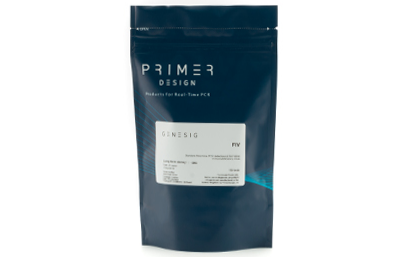
Exceptional value for money Rapid detection of all clinically relevant subtypes Positive copy number standard curve for quantification Highly specific detection profile High priming efficiency Broad dynamic detection range (>6 logs) Sensitive to < 100 copies of target
Accurate controls to confirm findings
Nucleic acid testing (NAT) is the method of choice for detection and quantification of a wide range of micro organisms. Primerdesign manufactures and supplies high quality quantitative real-time PCR kits for the detection and simultaneous quantification of numerous significant pathogens . A copy number standard curve is provided for quantification and an the internal extraction template (DNA or RNA), controls for the quality of the nucleic acid extraction and eliminates false negative results.
The kit is designed with the broadest possible detection profile to ensure that all clinically relevant strains and subtypes are detected. Target sequences are selected by working with data from key opinion leaders in the field. Multiple sequence alignments and unprecedented real-time PCR expertise in design and validation ensure the best possible kit.
Details of the target and priming specificity are included in the individual handbooks above.
Packaged, optimised and ready to use. Expect Better Data.
Other Products
IVD3020B MagPure Universal RNA Kit B
Product Info
Document
Product Info
Introduction
This product is suitable for rapid extraction of RNA from low RNA yield somples such as tissue (<10mg), cells, bone marrow, fresh blood, and other clinical samples. RNA can be used directly for RT-PCR, Real time PCR, NGS, Viral RNA detection and so on.
Details
Specifications
Features
Specifications
Main Functions
Isolation total RNA from tissue, cell, whole blood
Applications
RT-PCR, cDNA synthesis, second generation sequencing
Purification method
Polydisperse magnetic beads
Purification technology
Magnetic beads technology
Process method
Manual or automatic
Adaptive instrument
Nucleic acid extractor, pipetting workstation
Sample type
Tissues, cells, lymphocytes and other clinical sample
Sample amount
Cells grown in suspension: ≤3 x 10⁶Animal tissue: ≤10mgPlant tissue: ≤30mgWhole blood: 0.5~1.0 ml fresh blood or bone marrow and fresh blood mixture
Kit Contents
Contents
IVD3020B-96
IVD3020B
Purification Times
96 Preps
200 Preps
MagPure Particles N
2.5 ml
5 ml
DNase I
2 x 600 µl
4 x 600 µl
DNase Buffer C
60 ml
120 ml
Buffer RLC
60 ml
120 ml
Buffer MCB*
60 ml
150 ml
Buffer GW1*
44 ml
110 ml
Buffer MW2*
50 ml
100 ml
RNase Free Water
20 ml
60 ml
Storage and Stability
DNase I should be shipped with ice pack and stored at -20°C after arrival. MagPure Particles N should be stored at 2–8°C for long time storage. The remaining kit components can be stored at room temperature(15–25°C) for up to18 months under these conditions.
Document
This product is suitable for rapid extraction of RNA from low RNA yield somples such as tissue (<10mg), cells, bone marrow, fresh blood, and other clinical samples. RNA can be used directly for RT-PCR, Real time PCR, NGS, Viral RNA detection and so on.
The cfDNA Purification Kit (Magnetic Beads) was developed for cell free DNA (cfDNA) enrichment by separating genomic DNA contamination from isolated cfDNA samples.
Many diagnostic technologies for detection of disease signals in cfDNA begin with isolation and purification of DNA from liquid biopsy that include urine, plasma, cerebrospinal fluid. The most widely explored biotechnology is assays used to detect cancer-derived plasma cfDNA. Silica-based magnetic bead cfDNA isolation kits can reliably extract total DNA from plasma, but typically yield a large variation in cfDNA that includes the presence of genomic DNA that often depends on tumor stage, tumor size, or healthy status individuals. Most of the commercial cfDNA isolation kits can’t specifically recover the cfDNA while leaving the high molecular weight genomic DNA behind. The presence of genomic DNA can lead to decreased sensitivity or inconsistent results in downstream applications such as next-generation sequencing (NGS), PCR, QPCR, and digital PCR etc.
Therefore, an additional purification step to enrich cfDNA before downstream methods helps to improve signal from fragments that originate from cancer cells. A proportion of cancer-derived cfDNA fragment signals are below 100 bp and are often not detectable except by qPCR or single-stranded DNA based library preparation for NGS (1, 2, 3). Furthermore only 1% of cancer-derived fragments are found above 400 bp (1, 2). Capture of size-selected fragments between 90-150 bp improved detection of cancer by 2-4 fold (4). Furthermore, TF-bound and protected cfDNA fragments are also being investigated for active cancer-specific signals down to 35-80 bp (5, 6).
This kit uses Dual Solid Phase Reversible Immobilization (SPRI) technology for cfDNA purification. Most Dual SPRI procedures do NOT recover fragments below 100 bp. The kit can be used for the enrichment of cfDNA isolated from liquid biopsies, plasma, serum, and urine. The kit separates cfDNA (50-500 bp) and genomic DNA, and recovers of 90% of the cfDNA without the high molecular weight genomic DNA with high efficiency. Fragments at 500 bp and above may also be retained. Both the 50-500 bp and >500 bp DNA fractions can be used for downstream applications such as single-stranded or double stranded NGS library prep, qPCR, ddPCR, and other methods.
Features
Separation of cfDNA and genomic DNA; Recovery of both types of DNA
Recovery of cfDNA (50-500 bp)
As short as 50 bp can be recovered
Recovery of high molecular weight genomic DNA
Removal of unwanted components and other impurities
Automation friendly
Examples of cfDNA purification. Both cfDNA and genomic DNA can be recovered separately.
The range of recovered small DNA fragments is from 50 to 500 bp. The input DNA are mixtures of sheared small DNA fragments and intact genomic DNA. The ratios of sheared DNA fragments versus genomic DNA are indicated.
Recovery rates of cfDNA and genomic DNA.
Document
Many diagnostic technologies for detection of disease signals in cfDNA begin with isolation and purification of DNA from liquid biopsy that include urine, plasma, cerebrospinal fluid. The most widely explored biotechnology is assays used to detect cancer-derived plasma cfDNA. Silica-based magnetic bead cfDNA isolation kits can reliably extract total DNA from plasma, but typically yield a large variation in cfDNA that includes the presence of genomic DNA that often depends on tumor stage, tumor size, or healthy status individuals. Most of the commercial cfDNA isolation kits can’t specifically recover the cfDNA while leaving the high molecular weight genomic DNA behind. The presence of genomic DNA can lead to decreased sensitivity or inconsistent results in downstream applications such as next-generation sequencing (NGS), PCR, QPCR, and digital PCR etc.
Propargyl-PEG4-(CH2)3-CO2H is a linker containing a propargyl group at one end and a carboxylic acid at the other end. The carboxylic acid reacts with amine groups in the presence of activators (EDC or HATU). Under the catalyzation of copper, the propargyl group forms linkage with azide group of biomolecules. Reagent grade, for research purpose. Please contact us for GMP-grade inquiries.
Document
Propargyl-PEG4-(CH2)3-CO2H is a linker containing a propargyl group at one end and a carboxylic acid at the other end. The carboxylic acid reacts with amine groups in the presence of activators (EDC or HATU). Under the catalyzation of copper, the propargyl group forms linkage with azide group of biomolecules. Reagent grade, for research purpose. Please contact us for GMP-grade inquiries.