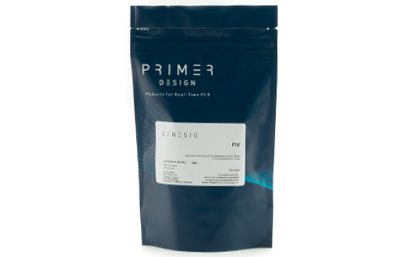
Dengue virus, Zika virus and Chikungunya virus multiplex kit
Facebook
X
Pinterest
Email
Exceptional value for money Rapid detection of all clinically relevant subtypes Positive copy number standard curve for quantification Highly specific detection profile High priming efficiency Broad dynamic detection range (>6 logs) Sensitive to < 100 copies of target
Accurate controls to confirm findings
150 reactions
The genesig® Dengue, Zika and Chikungunya Virus Multiplex kit is designed for the detection and differentiation of Dengue virus, Zika virus (ZIKV) and Chikungunya virus (CHIKV) only. Individual tests have been designed in the conserved regions of each virus such that all isolates and subtypes will be detected simultaneously in the same test. The Dengue component of the test will detect subtypes 1, 2, 3 and 4 but will not differentiate between them. A positive Dengue test results indicates that the sample has either one of these four subtypes.
The primers and probe sequences in this kit have 100% homology with a broad range of clinically relevant reference sequences based on a comprehensive bioinformatics analysis. They therefore have a very broad quantification profile.
Other Products
[RI1001] RNAok™ RNase Inhibitor, 20 U/μl, 2000 U x 5
Product Info
Document
Product Info
Description
The RNAok™ RNase Inhibitor is a recombinant mammalian RNase inhibitor which possesses very high affinity for eukaryotic pancreatic-type ribonuclease. The RNAok™ RNase Inhibitor forms a 1:1 complex with pancreatic RNase A by noncovalent binding, presenting a noncompetitive inhibitory activity on these pancreatic enzymes. RNAok™ RNase Inhibitor is active against RNase A, RNase B, RNase C but not RNAse H, RNase I, RNase T1, RNase T2, and S1 nuclease. RNAok™ RNase Inhibitor is compatible with RT-PCR enzymes such as AMV, M-MLV and ExcelRT™ Reverse Transcriptase or Taq DNA polymerase.
Application
cDNA Synthesis
in vitro translation
in vitro transcription
One-step RT-PCR
Separation and identification of specific ribonuclease activities
Storage Buffer
40 mM HEPES-KOH (pH 7.5), 100 mM KCl, 8 mM DTT, 0.1 mM EDTA, stabilizer and 50% (v/v) glycerol
Storage
-20°C for 24 months
Document
The RNAok™ RNase Inhibitor is a recombinant mammalian RNase inhibitor which possesses very high affinity for eukaryotic pancreatic-type ribonuclease. The RNAok™ RNase Inhibitor forms a 1:1 complex with pancreatic RNase A by noncovalent binding, presenting a noncompetitive inhibitory activity on these pancreatic enzymes. RNAok™ RNase Inhibitor is active against RNase A, RNase B, RNase C but not RNAse H, RNase I, RNase T1, RNase T2, and S1 nuclease. RNAok™ RNase Inhibitor is compatible with RT-PCR enzymes such as AMV, M-MLV and ExcelRT™ Reverse Transcriptase or Taq DNA polymerase.
The Hepatitis B virus (HBV) is mainly transmitted via blood or blood products. In addition, sexual, oral and perinatal infections are also possible. Early symptoms of the infection include appetite loss, vomiting and abdominal symptoms, with approximately 10-20% of those patients developing fever as well as rheumatoid joint and muscle pain. Jaundice, which may be accompanied by itching, will then develop within 2-14 days. Fulminant hepatitis then occurs in about 1% of all infected patients, which in severe cases may be fatal. Of those individuals infected by HBV, 5-10% will develop chronic liver inflammation which may progress to cirrhosis of the liver or, in the worst case, primary liver cell carcinoma. The HBV virus is a hepadnavirus that has a circular genome composed of partially double-stranded DNA.
HBV TaqMan PCR Kit, 100 reactions
Ready to use format, including Master Mix for the target and PCR control to monitor for PCR inhibition and validate the quality
Specific Primer and Probe mix for the pathogen/virus/viroid of interest
Primer and Probe mix
Positive and negative control to confirm the integrity of the kit reagents
HBV TaqMan PCR Probe/Primer Set and Controls, 100 reactions
Specific Primer/Probe mix and Positive Control for the pathogen/virus/viroid of interest
Nuclease-free water
Can be used together with Norgen’s PCR Master Mix (#28007) or customer supplied master mix
For research use only and NOT intended for in vitro diagnostics.
Storage Conditions and Product Stability All kit components can be stored for 2 years after the date of production without showing any reduction in performance.
All kit components should be stored at -20°C upon arrival. Repeated thawing and freezing (> 2 x) of the Master Mix and Positive Control should be avoided, as this may affect the performance of the assay. If the reagents are to be used only intermittently, they should be frozen in aliquots.