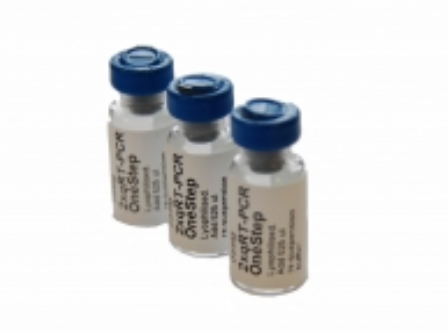
The oasig freeze drying process stabilises all of the active components allowing these reagents to be shipped and stored at room temperature. This hugely simplifies the logistics of purchasing, shipping and using the technology. Whether you are in a sophisticated laboratory in Texas or a mobile field hospital in Timbuktu we can supply complete qPCR kit and reagent packages to your door quickly and cheaply via standard shipping methods without the need for dry ice or a cold chain of any sort.
The performance of the reagents is second to none. We are confident that you will find excellent data quality and even see an improvement in data quality versus many traditional frozen master mixes.
Primerdesign real-time PCR reagents are manufactured to the highest standards within our ISO9001:2008 and ISO13485:2012 certified quality management laboratory environment.
The IdPath™ COVID-19 Real-Time RT-PCR Kit is a real-time RT-PCR test intended for the detection of SARS-CoV-2 virus RNA which might be extracted from the respiratory tract specimens. The Kit provides reagents for multiplex real-time RT-PCR to detect SARS-CoV-2 by one-step reaction, specifically targeting the E (Envelope), RdRP (RNA-dependent RNA polymerase) and N (Nucleocapsid protein) gene for SARS-CoV-2 virus.
The Kit contains the RT enzyme mix and qPCR master mix for reverse transcription and real-time PCR of virus RNA. The COVID-19 Control (positive control) and ddWater (negative control) are used as indicators to avoid false negative/positive results across all experimental procedures. The Primers/probes Mix contains multiplex primers and TaqMan probes specific to the N, E/RdRP genes of SARS-CoV-2 and RNase P gene of human, detected by FAM, VIC and ROX channels, respectively.
For Research Use Only
Features
High Sensitivity:5×10² copies/ml (10 copies/rxn)
High Inclusivity : >99% of currently available complete virus genomes for SARS-CoV-2 including Omicron variant
High Accuracy : Clinical validation with 100% accuracy
High Stability : 37/25°C for 2 weeks ; 4°C for 24 weeks ; 10 times of freeze-thaw cycles
High Compatibility : Suitable for most laboratory qPCR machines
Operation Control : Including internal control for quality control of total process
Convenience : Multiplex (E/RdRP and N) detection by one-step reaction
Storage
Aliquot to avoid multiple freeze-thaw cycles
Protect fluorogenic probes from light
-20°C for 12 months
Document
The IdPath™ COVID-19 Real-Time RT-PCR Kit is a real-time RT-PCR test intended for the detection of SARS-CoV-2 virus RNA which might be extracted from the respiratory tract specimens. The Kit provides reagents for multiplex real-time RT-PCR to detect SARS-CoV-2 by one-step reaction, specifically targeting the E (Envelope), RdRP (RNA-dependent RNA polymerase) and N (Nucleocapsid protein) gene for SARS-CoV-2 virus. The Kit contains the RT enzyme mix and qPCR master mix for reverse transcription and real-time PCR of virus RNA. The COVID-19 Control (positive control) and ddWater (negative control) are used as indicators to avoid false negative/positive results across all experimental procedures. The Primers/probes Mix contains multiplex primers and TaqMan probes specific to the N, E/RdRP genes of SARS-CoV-2 and RNase P gene of human, detected by FAM, VIC and ROX channels, respectively.
Short term stability: 2-8oC, Long term stability: See individual component labels
Stability:
> 2 years under recommended storage conditions
Analyte:
Dietary Fiber
Assay Format:
Enzymatic
Detection Method:
Gravimetric/HPLC
Signal Response:
Increase
Limit of Detection:
0.5 g/100 g
Total Assay Time:
~ 3 h work (over 1-2 days)
Application examples:
Food ingredients, food products and other materials.
Method recognition:
AACC Method 32-60.01, AOAC Method 2022.01, AOAC Method 2017.16, ICC Standard Method No. 185 and CODEX Method Type I
The Rapid Integrated Total Dietary Fiber Assay Kit method is validated under collaborative study (AACC Method 32-60.01, AOAC Method 2022.01, AOAC Method 2017.16, ICC Standard No. 185) and is recognized as a Type I Method by CODEX Alimentarius. The K-RINTDF method is the recommended one for the measurement of total dietary fiber in all foods that may or may not contain resistant starch. This method is updated to be more consistent with in vivo conditions in the human small intestine, i.e. a 4 h incubation time. Under these conditions more accurate measurement of resistant starch is obtained, including phosphate cross-liked starch (RS4). Use of higher enzyme concentrations ensures that resistant maltodextrins produced from non-resistant starch under the incubation conditions of the Integrated Total Dietary Fiber procedure (AOAC Methods 2009.01 and 2011.25) are no longer produced.
In this improved, rapid method, the incubation time with PAA + AMG is reduced to 4 h and the levels of both PAA and AMG are increased to ensure that resistant starch levels obtained with a set of control samples are consistent with ileostomy data. Under these conditions, the DF values obtained for most samples are the same as those obtained with AOAC Methods 2009.01 and 2011.25.
The dietary fiber fractions that are measured with this method are:
1. High Molecular Weight Dietary Fiber (HMWDF) including Insoluble Dietary Fiber (IDF) and High Molecular Weight Soluble Dietary Fiber (SDFP; soluble dietary fiber which is precipitated in the presence of 78% aqueous ethanol), and
2. Low Molecular Weight Soluble Dietary Fiber (SDFS; water soluble dietary fiber that is soluble in the presence of 78% aqueous ethanol).
Alternatively, IDF, SDFP and SDFS can be measured separately.
The enzymes used in this method are high purity and effectively devoid of contaminating enzymes active on other dietary fiber components such as β-glucan, pectin and arabinoxylan. They are supplied as freeze-dried powders; allowing the use of glycerol as an internal standard in the method.
* See McCleary, B. V., Sloane, N & Draga, A. (2015). Determination of total dietary fibre and available carbohydrates: a rapid integrated procedure that simulates in vivo digestion. Starch/Starke, 66, 1-24.
Validation of Methods
Advantages
More rapid measurement – incubation time with PAA + AMG reduced to 4 h in comparison with AOAC 2009.01 (increased levels of enzyme employed)
DF values for most samples are very similar to those obtained with AOAC Method 2009.01
Rapid Integrated Total Dietary Fiber method removes all of the limitations that have been identified with AOAC Method 2009.01*
All reagents stable for > 2 years after preparation
The method is consistent with the CODEX Alimentarius definition of dietary fiber
Mega-Calc™ software tool is available from our website for hassle-free raw data processing
Very competitive price (cost per test)
Document
The Rapid Integrated Total Dietary Fiber Assay Kit method is validated under collaborative study (AACC Method 32-60.01, AOAC Method 2022.01, AOAC Method 2017.16, ICC Standard No. 185) and is recognized as a Type I Method by CODEX Alimentarius. The K-RINTDF method is the recommended one for the measurement of total dietary fiber in all foods that may or may not contain resistant starch. This method is updated to be more consistent with in vivo conditions in the human small intestine, i.e. a 4 h incubation time. Under these conditions more accurate measurement of resistant starch is obtained, including phosphate cross-liked starch (RS4). Use of higher enzyme concentrations ensures that resistant maltodextrins produced from non-resistant starch under the incubation conditions of the Integrated Total Dietary Fiber procedure (AOAC Methods 2009.01 and 2011.25) are no longer produced.