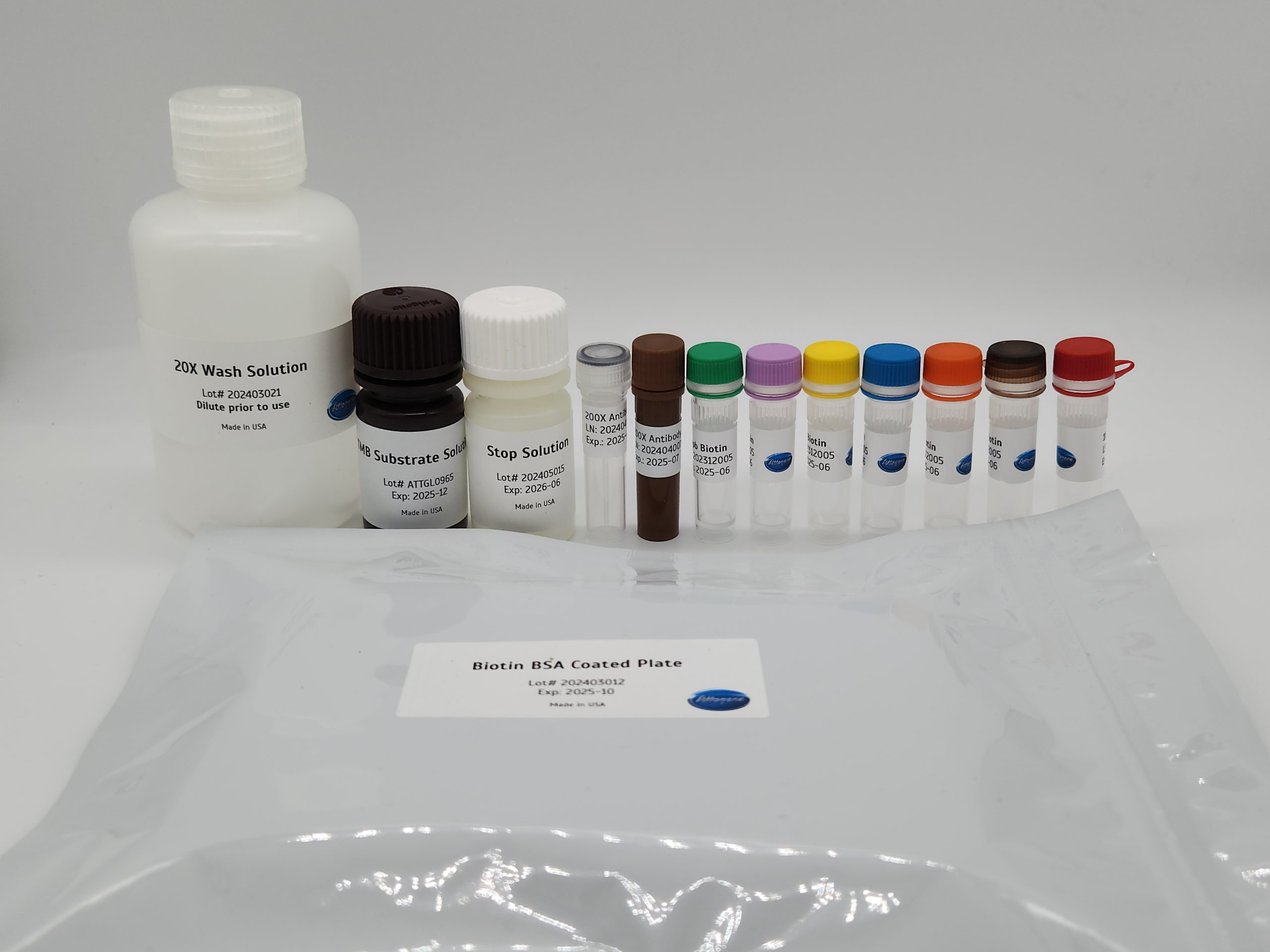
Highly Sensitive, rapid, robust screening kit for Biotin
Useful for detecting and quantifying biotin in biological samples
Adaptable for detecting biotin in food samples
Biotin is extensively used in combination with streptavidin in biological assays. Our biotin detection kits have multiple applications in detecting biotin attachment and efficiency of conjugation during biotinylation processes. These kits are perfect for understanding the efficiency of the reaction and free biotin in your solutions that can interfear with Streptavidin-biotin interactions.
Attogene offers three kits to detect and quantify biotin using three different technologies including Lateral Flow, ELISA and Chemical. these kits are accurate and sensitive compared with common instrumental analysis.
Can be used to calculate the amount of biotin in liquid samples including biological samples including biotinylated antibody, free biotin in solution, foods, plasma and serum as needed. Also, can be used to quantify the % biotinylation following standard biotinylation reactions.
Designed for those labs wishing to separate magnetic beads into rings.
The Permagen ring magnet low elution plate was designed for use in automation applications where volumes as low as 5 µL are required. Most PCR plates are bent, leading to inconsistent lab results. Unlike most products, we have added an angled frame around the top of our plate, this helps with two things, straightening out the PCR plate, and leading it to the proper location on the magnets during automation
SBS SLAS Footprint (127.75mm x 85.50mm) to fit into any automated liquid handling robot
Features include solid aluminum alloy construction and hard coat anodized finish for years of trouble-free use, and compatible with any magnetic beads
Designed for those labs wishing to separate magnetic beads into rings.
The Permagen ring magnet low elution plate was designed for use in automation applications where volumes as low as 5 µL are required. Most PCR plates are bent, leading to inconsistent lab results. Unlike most products, we have added an angled frame around the top of our plate, this helps with two things, straightening out the PCR plate, and leading it to the proper location on the magnets during automation
CE-IVD marked version available for in vitro diagnostic use
Available in TaqMan format for analysis
Salmonella enterica have emerged as significant foodborne pathogens that pose a serious public health problem. The symptoms of salmonellosis may include diarrhea, fever, vomiting, and abdominal cramps with elderly, new-born, and immunocompromised individuals the most susceptible. S. enterica is a facultatively anaerobic Gram-negative bacterium that could survive low temperatures and freezing. The majority of the 1.3 billion annual cases of Salmonella-caused human gastroenteritis result from ingestion of contaminated food products, such as raw or undercooked meat, seafood, and eggs, as well as raw or unpasteurized milk and dairy products. Salmonella infections are also contracted following consumption of fresh fruits or vegetables that have been contaminated by infected fertilizer.
Salmonella enterica TaqMan PCR Kit, 100 reactions
Ready to use format, including Master Mix for the target and PCR control to monitor for PCR inhibition and validate the quality
Specific Primer and Probe mix for the pathogen/virus/viroid of interest
Primer and Probe mix
Positive and negative control to confirm the integrity of the kit reagents
Salmonella enterica TaqMan PCR Probe/Primer Set and Controls, 100 reactions
Specific Primer/Probe mix and Positive Control for the pathogen/virus/viroid of interest
Nuclease-free water
Can be used together with Norgen’s PCR Master Mix (#28007) or customer supplied master mix
Storage Conditions and Product Stability All kit components can be stored for 2 years after the date of production without showing any reduction in performance.
All kit components should be stored at -20°C upon arrival.
CE-IVD marked version available for in vitro diagnostic use
Available in TaqMan format for analysis.
Giardiasis is a disease of the small bowel caused by the protozoan parasite Giardia intestinalis (syn.duodenalis or lamblia). Giardia is one of the most common intestinal parasites in the world, and occurs at very high prevalence rates in places with poor water sanitation. Individuals become infected through ingesting or coming into contact with contaminated water, food or soil. It can also be spread through the faecal-oral route due to poor hygiene practices, which makes it common in day-care centers. G. intestinalis lives inside the intestines of infected humans or other animals including cats, dogs, birds, cows, beaver and deer. Symptoms of infection include diarrhea, malaise, excessive gas, bloating, nausea, diminished interest in food, possible vomiting and weight loss.
There are 2 kits available for the detection of Giardia intestinalis:
Storage Conditions and Product Stability All kit components can be stored for 1 year after the date of production without showing any reduction in performance.
All kit components should be stored at -20°C upon arrival.