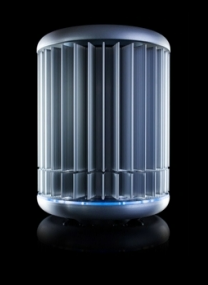
Incredibly easy to use Automated data analysis Robust, beautiful design Small and portable: 12cm footprint Over 550 kits available from a vast range of human, food and veterinary detection profiles Highly portable
What is the genesig q16? The genesig q16 is a revolutionary instrument launched by Primerdesign Ltd. The instrument is designed to accompany the genesig Easy product range which includes kits for more than 550 different DNA testing applications. The genesig q16 is designed to make DNA testing affordable and easy for anyone in any business.
What is DNA testing? DNA testing is the most sensitive and precise way to detect and quantify the presence of a DNA target. The underlying technology within the genesig q16 is real-time quantitative PCR. The technology has been around for 20 years, but to date has been complex and expensive to perform. The genesig q16 changes all that.
What can I use it for? The genesig Easy product range includes tests for a massive range of applications:
Other Products
IVD5412-F-96 MagPure Viral DNA/RNA Precast Kit
Product Info
Document
Product Info
Introduction
This product is suitable for extracting total viral nucleic acid from cell-free/low-content cell biological samples such as body fluids, serums, plasma, soaking solutions, tissue homogenate supernatant, and culture supernatant. The Purified DNA/RNA is used for RT-PCR and PCR detection.
Details
Specifications
Features
Specifications
Main Functions
IVD5412 precast kit for kingfisher Flex
Applications
RT-PCR,PCR,NGS
Products
Viral DNA / RNA, body cell DNA / RNA
Purification method
Polydisperse magnetic beads
Purification technology
Magnetic beads technolog
Process method
Manual or automatic
Sample type
Sample amount
200μl
Adaptive instrument
Nucleic acid extractor, pipetting workstation
Principle
This product is based on the purification method of high binding magnetic particles. The sample is lysed and digested under the action of lysate and Protease. DNA/RNA is released into the lysate. After adding magnetic particles and binding solution, DNA/RNA will be adsorbed on the surface of magnetic particles, and impurities such as proteins will be removed without adsorption. The adsorbed particles were washed with washing solution to remove proteins and impurities, washed with ethanol to remove salts, and finally DNA/RNA was eluted by Nuclease Free Water.
Advantages
Kit Contents
Cat.No
Reagent
IVD5412-F-96
PK/Carrier RNA
1x 24 mg/Bottle
Protease Dissolve Buffer Blue
1.8 ml/Bottle
Tip
1
Sample Plate (DW Plate)
500µl Buffer MLB/Well
1
Wash 1 Plate (DW Plate)
500µl Buffer MW1/Well
1
Wash 2 Plate (DW Plate)
500µl Buffer CW/Well
1
Beads Plate (DW Plate)
500µl CW & 20µl MPN/Well
1
Elute Plate (KF Plate)
90µl NFW/Well
1
Storage and Stability
This kit is shipped and stored at room temperature and is valid for 12 months.
Document
This product is suitable for extracting total viral nucleic acid from cell-free/low-content cell biological samples such as body fluids, serums, plasma, soaking solutions, tissue homogenate supernatant, and culture supernatant. The Purified DNA/RNA is used for RT-PCR and PCR detection.
The ITS1 Library Preparation Kit for Illumina consists of the reagents and components required for library preparation of the fungal target ITS1 libraries to be used for next-generation sequencing on Illumina platforms. All molecular reagents including primers, enzyme mixes, indexes, and buffers are provided. Instructions for PCR clean up with the AMPure XPMagneticBeads(supplied by customer) are also included for rapid purification of nucleic acid products generated at two steps of the workflow. The library prep workflow could be used for purified DNA inputs from different sources including stool, soil, water, saliva, plant, urine, skin swab, vaginal swab, cheek swab, nasal/swab, plasma/serum, tongue swab, gum swab, and others.
The ITS1 Library Preparation Kit for Illumina has a streamlined procedure that reduces the handling time such that the library prep procedure can be completed in approximately 4 hours (see diagram below). Input DNA is first subjected to targeted PCR to amplify the ITS1 region of the fungal DNA.The post-PCR reaction is then cleaned up using AMPure XPbeads. Dual index primers are then added using a limited-cycle PCR. The indexed amplicons flanked by 5′ and 3′ barcoded adaptors are then cleaned using AMPure XPbeads. The libraries are then ready for quantification, pooling and sequencing.
Storage Conditions and Product Stability Norgen’s ITS1 Library Prep Kit for Illumina is shipped as one kit box (for the 24 prep kit) or two sub-component kits (for the 96 prep kit). All kits should be stored at -20°C upon arrival.
All kit components will remain stable for at least 1 year when stored at the specified storage conditions.
Simultaneous concentration, desalting and buffer exchange of total urinary proteins
No molecular weight cutoff allows for isolation of all sizes of proteins and peptides
Purification is based on spin column chromatography that uses Norgen’s resin separation matrix
These kits concentrate urine proteins while simultaneously removing salts, urea, and other urine contaminants. There is no molecular weight cut-off and therefore the columns capture total urinary proteins and peptides of all sizes making them ideal for biomarker discovery work, differential expression of proteins in various diseases, or other diagnostic research. The columns are convenient, rapid and easy to use and thus offer significant time savings over classic dialysis protocols. The resulting high-quality protein sample is concentrated and free from the original sample salts, thus preparing the sample conveniently for downstream proteomic applications including SDS-PAGE, 2D Gels, MALDI-TOF, LC/MS, LC/MS/MS, whole protein mass spectrometry, western blotting, protein microarrays, and more.
ProteoSpin™ Urine Protein Concentration Micro Kit
Each spin column is able to concentrate and desalt up to 200 μg of urine proteins. Twelve samples can be processed in 20 minutes.
ProteoSpin™ Urine Protein Concentration Midi Kit
The ProteoSpin™ Urine Protein Concentration Midi Kit provides a fast and simple procedure for concentrating dilute solutions of urine proteins from 1 to 5 mL inputs of urine. Each mini spin column is able to concentrate and desalt up to 3 mg of urine proteins in 30 minutes.
ProteoSpin™ Urine Protein Concentration Maxi Kit
The ProteoSpin™ Urine Protein Concentration Maxi Kit provides a fast and simple procedure for concentrating dilute solutions of urine proteins from 2 to 20 mL inputs of urine. Each maxi spin column is able to concentrate and desalt up to 4 mg of urine proteins in 45 minutes.
Storage Conditions All solutions should be kept tightly sealed and stored at room temperature. Once opened, the solution should be stored at 4°C. This kit is stable for 2 years after the date of shipment.
Component
Cat. 17400 (25 preps)
Cat. 52300 (10 preps)
Cat. 21600 (4 preps)
Wash Solution C
60 mL
60 mL
130 mL
Binding Buffer A
4 mL
4 mL
8 mL
Elution Buffer C
8 mL
30 mL
30 mL
Protein Neutralizer
4 mL
4 mL
4 mL
Micro Spin Columns
25
–
–
Midi Spin Columns (assembled with collection tubes)
–
10
–
Maxi Spin Columns (assembled with collection tubes)