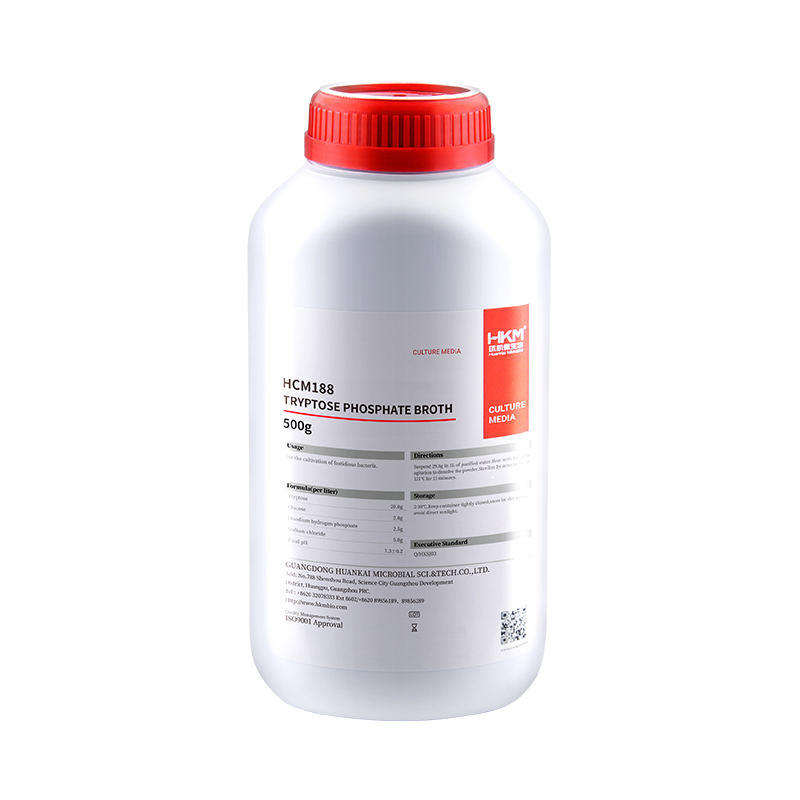
Suspend 29.5g in 1L of purified water. Heat with frequent agitation to dissolve the powder. Sterilize at 121℃ for 15 minutes
Storage:
Keep the container tightly closed. Store in a cool, dry place, away from bright light. The storage period is 3 years.
Specification: 500g/bottle
Other Products
D3113 HiPure Tissue&Blood DNA Midi Kit
Product Info
Document
Product Info
Introduction
This product provides fast and easy methods for purification of total DNA for reliable PCR and Southern Blotting. Total DNA (e.g., genomic, viral, mitochondrial) can be purified from tissue and culture cells.
Details
Specifications
Features
Specifications
Main Functions
Isolation total DNA from 2ml blood and 200mg tissue using Midi column
Applications
PCR, southern bolt and virus detection, etc
Purification method
Midi spin column
Purification technology
Silica technology
Process method
Manual (centrifugation or vacuum)
Sample type
Tissue, cell, blood, saliva, swab, blood spot, semen and other clinical samples
Sample amount
0.2-2 ml
Elution volume
≥300μl
Time per run
≤80 minutes
Liquid carrying volume per column
4ml
Binding yield of column
1mg
Principles
This product is based on silica column purification. The sample is lysed and digested with lysate and protease, DNA is released into the lysate. Transfer to an adsorption column. Nucleic acid is adsorbed on the membrane, while protein is not adsorbed and is removed with filtration. After washing proteins and other impurities, Nucleic acid was finally eluted with low-salt buffer (10mm Tris, pH9.0, 0.5mm EDTA).
Advantages
High quality DNA – meet a variety of downstream applications, including PCR, qPCR, enzyme digestion, hybridization, etc.
Fast – without separation of leukocytes, organic extraction or ethanol precipitation
Simple – all nucleic acids can be obtained by direct digestion
Wide applicability – handle a variety of liquid samples
Kit Contents
Contents
D311302
D311303
Purification Times
20
100
HiPure gDNA Midi Columns
20
100
15ml Collection Tubes
40
200
Buffer ATL
50 ml
250 ml
Buffer AL
50 ml
250 ml
Buffer GW1*
22 ml
110 ml
Buffer GW2*
12 ml
50 ml
RNase A
20 mg
90 mg
Proteinase K
100 mg
440 mg
Protease Dissolve Buffer
10 ml
30 ml
Buffer AE
20 ml
120 ml
Storage and Stability
Proteinase K, RNase A should be stored at 2-8°C upon arrival. However, short-term storage (up to 12 weeks) at room temperature (15-25°C) does not affect their performance. The remaining kit components can be stored at room temperature (15-25°C) and are stable for at least 18 months under these conditions.
*Note:Leukocyte protocol can be used when large volume whole blood samples need to be processed. Whole blood was treated with red blood cell lysate, and white blood cells were obtained by centrifugation before extraction
Select the right purification kit to get impactful results:
This product provides fast and easy methods for purification of total DNA for reliable PCR and Southern Blotting. Total DNA (e.g., genomic, viral, mitochondrial) can be purified from tissue and culture cells.
CE-IVD marked version available for in vitro diagnostic use
Available in TaqMan format for analysis
Clostridium difficile is rod-shaped, gram positive bacterium. It is the main causal agent of antibiotic-associated diarrhea and pseudomembranous colitis. The colonization of intestines by C. difficile is usually associated with the elimination of natural intestinal flora as a result of antibiotic application and is frequently reported in health care centers. While C. difficile infection could be severe and life-threatening, particularly among the elderly, many patients are asymptomatic making diagnosis challenging during outbreaks. The tradition method of detecting C. difficile infection is by cytotoxicity test of the toxin produced by the bacterium, but such protocols usually require extensive time before conclusion can be made.
Storage Conditions and Product Stability All kit components can be stored for 2 years after the date of production without showing any reduction in performance.
All kit components should be stored at -20°C upon arrival.