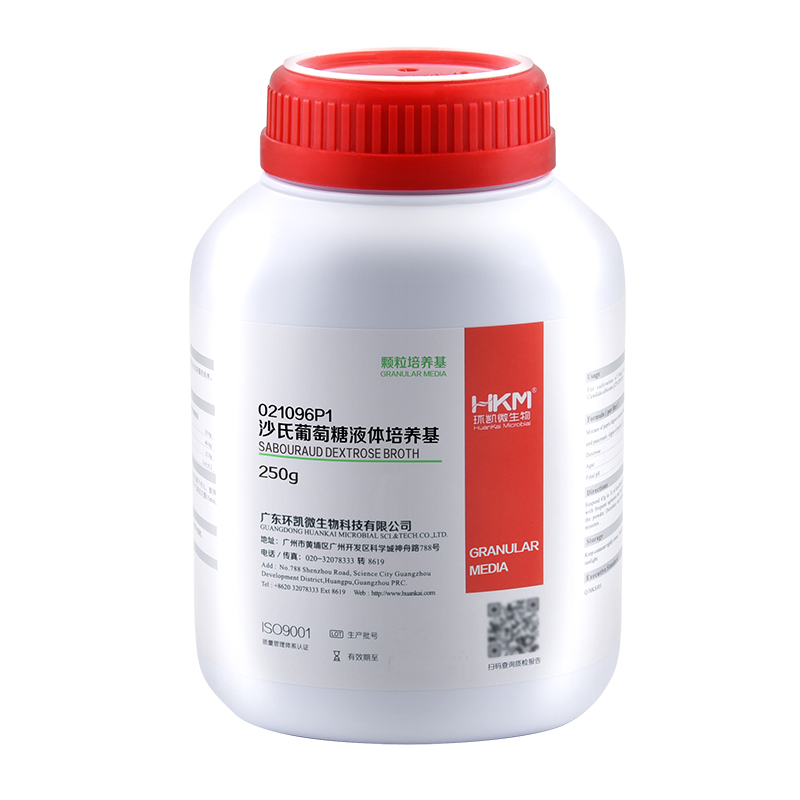
Usages: For cultivations of yeasts , moulds and acidophilic bacteria.
Principle: Peptone and yeast extract powder provides carbon and nitrogen sources and trace elements; lactose are fermentable sugars; sodium chloride maintains osmotic equilibrium; the 3rd bile salts and crystal violet inhibiting gram-positive bacteria, especially against Gram positive bacteria and fecal streptococci; neutral red as pH indicator.
How to use: 1.Suspend 30g in 1 L of distilled water , stirring heated to boiling until completely dissolved, dispensing flask, 121 ℃ autoclave for 15min. 2.Diluted and treated samples.
Quality control:
Item
The name and number of strain
Growth
Colony Color
1
Aspergillus niger ATCC16404
Good
Spore surface growth
2
Candida albicans ATCC10231
Good
Cloudy broth
3
Escherichia coli ATCC25922
Inhibition
—
Storage: Keep container tightly closed, store in a cool, dry place, away from bright light. Storage period of 3 years.
The IdPath™ COVID-19 Real-Time RT-PCR Kit is a real-time RT-PCR test intended for the detection of SARS-CoV-2 virus RNA which might be extracted from the respiratory tract specimens. The Kit provides reagents for multiplex real-time RT-PCR to detect SARS-CoV-2 by one-step reaction, specifically targeting the E (Envelope), RdRP (RNA-dependent RNA polymerase) and N (Nucleocapsid protein) gene for SARS-CoV-2 virus.
The Kit contains the RT enzyme mix and qPCR master mix for reverse transcription and real-time PCR of virus RNA. The COVID-19 Control (positive control) and ddWater (negative control) are used as indicators to avoid false negative/positive results across all experimental procedures. The Primers/probes Mix contains multiplex primers and TaqMan probes specific to the N, E/RdRP genes of SARS-CoV-2 and RNase P gene of human, detected by FAM, VIC and ROX channels, respectively.
For Research Use Only
Features
High Sensitivity:5×10² copies/ml (10 copies/rxn)
High Inclusivity : >99% of currently available complete virus genomes for SARS-CoV-2 including Omicron variant
High Accuracy : Clinical validation with 100% accuracy
High Stability : 37/25°C for 2 weeks ; 4°C for 24 weeks ; 10 times of freeze-thaw cycles
High Compatibility : Suitable for most laboratory qPCR machines
Operation Control : Including internal control for quality control of total process
Convenience : Multiplex (E/RdRP and N) detection by one-step reaction
Storage
Aliquot to avoid multiple freeze-thaw cycles
Protect fluorogenic probes from light
-20°C for 12 months
Document
The IdPath™ COVID-19 Real-Time RT-PCR Kit is a real-time RT-PCR test intended for the detection of SARS-CoV-2 virus RNA which might be extracted from the respiratory tract specimens. The Kit provides reagents for multiplex real-time RT-PCR to detect SARS-CoV-2 by one-step reaction, specifically targeting the E (Envelope), RdRP (RNA-dependent RNA polymerase) and N (Nucleocapsid protein) gene for SARS-CoV-2 virus. The Kit contains the RT enzyme mix and qPCR master mix for reverse transcription and real-time PCR of virus RNA. The COVID-19 Control (positive control) and ddWater (negative control) are used as indicators to avoid false negative/positive results across all experimental procedures. The Primers/probes Mix contains multiplex primers and TaqMan probes specific to the N, E/RdRP genes of SARS-CoV-2 and RNase P gene of human, detected by FAM, VIC and ROX channels, respectively.
Propargyl-PEG6-acid comprises propargyl and carboxylic acid functional groups. The acid group reacts with primary amines in the presence of activators (e.g. EDC, or HATU).The propargyl group reacts with azide-bearing compounds or biomolecules via copper catalyzed azide-alkyne Click Chemistry to yield a stable triazole linkage. The molecule has good solubility in aqueous environment. Reagent grade, for research purpose. Please contact us for GMP-grade inquiries.
Document
Propargyl-PEG6-acid comprises propargyl and carboxylic acid functional groups. The acid group reacts with primary amines in the presence of activators (e.g. EDC, or HATU).The propargyl group reacts with azide-bearing compounds or biomolecules via copper catalyzed azide-alkyne Click Chemistry to yield a stable triazole linkage. The molecule has good solubility in aqueous environment. Reagent grade, for research purpose. Please contact us for GMP-grade inquiries.
Toxoplasma gondii is a single-celled organism which causes Toxoplasmosis, the most common parasitic infection worldwide affecting animals as well as humans. Cats are the only animal in which sexual reproduction of the organism occurs, and for this reason cats are the only domestic animal which has the potential to shed T. gondii eggs. When disease does occur, it may develop following primary infection due to an inadequate immune response to stop the invasive tachyzoites or as a result of a reactivated infection due to a compromised immune system. The most common symptoms of the disease are anorexia, weight loss, lethargy, dyspnea, ocular symptoms and pyrexia. As toxoplasmosis can be transmitted to humans it represents a serious health risk for people living in close contact with infected animals. Infection is especially dangerous for people with suppressed immune systems and cancer patients as well as pregnant women.
Toxoplasma gondii TaqMan PCR Kit, 100 reactions
Ready to use format, including Master Mix for the target and PCR control to monitor for PCR inhibition and validate the quality
Specific Primer and Probe mix for the pathogen/virus/viroid of interest
Primer and Probe mix
Positive and negative control to confirm the integrity of the kit reagents
Toxoplasma gondii TaqMan PCR Probe/Primer Set and Controls, 100 reactions
Specific Primer/Probe mix and Positive Control for the pathogen/virus/viroid of interest
Nuclease-free water
Can be used together with Norgen’s PCR Master Mix (#28007) or customer supplied master mix
All kit components can be stored for 2 years after the date of production without showing any reduction in performance.
All kit components should be stored at -20°C upon arrival. Repeated thawing and freezing (> 2 x) of the Master Mix and Positive Control should be avoided, as this may affect the performance of the assay. If the reagents are to be used only intermittently, they should be frozen in aliquots.