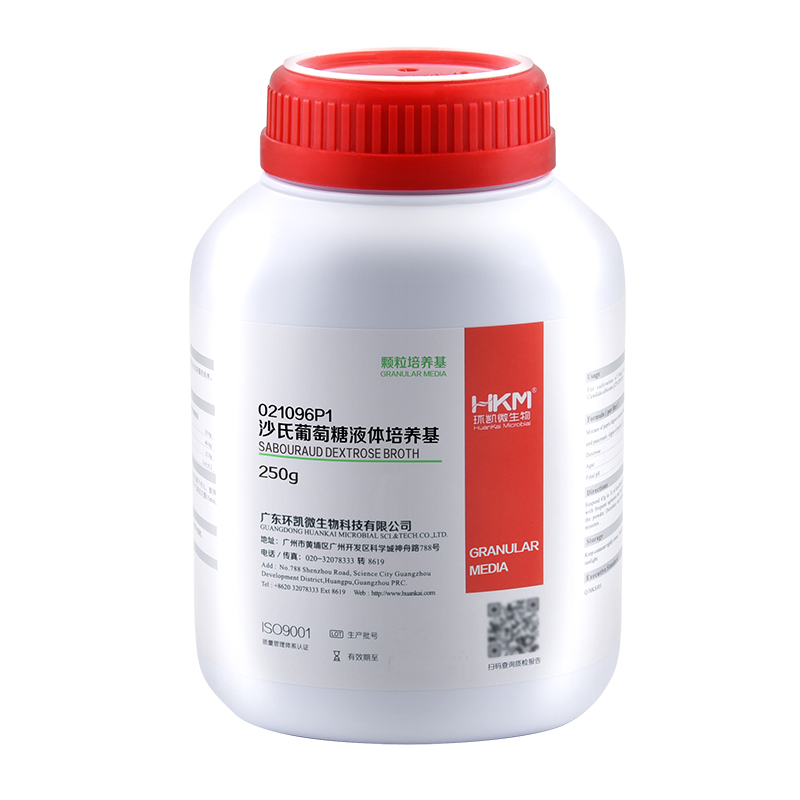
Usages: For cultivations of yeasts , moulds and acidophilic bacteria.
Principle: Peptone and yeast extract powder provides carbon and nitrogen sources and trace elements; lactose are fermentable sugars; sodium chloride maintains osmotic equilibrium; the 3rd bile salts and crystal violet inhibiting gram-positive bacteria, especially against Gram positive bacteria and fecal streptococci; neutral red as pH indicator.
How to use: 1.Suspend 30g in 1 L of distilled water , stirring heated to boiling until completely dissolved, dispensing flask, 121 ℃ autoclave for 15min. 2.Diluted and treated samples.
Quality control:
Item
The name and number of strain
Growth
Colony Color
1
Aspergillus niger ATCC16404
Good
Spore surface growth
2
Candida albicans ATCC10231
Good
Cloudy broth
3
Escherichia coli ATCC25922
Inhibition
—
Storage: Keep container tightly closed, store in a cool, dry place, away from bright light. Storage period of 3 years.
Specifications: 250g/bottle
Other Products
N-(Boc-PEG1)-N-bis(PEG2-propargyl)
Product Info
Document
Product Info
N-(Boc-PEG1)-N-bis(PEG2-propargyl) is a click chemistry branched linker. The propargyl groups can react with azide-bearing molecule via copper catalyzed Click Chemistry . The Boc group can be deprotected under acidic conditions to release amine group. Reagent grade, for research purpose. Please contact us for GMP-grade inquiries.
Document
N-(Boc-PEG1)-N-bis(PEG2-propargyl) is a click chemistry branched linker. The propargyl groups can react with azide-bearing molecule via copper catalyzed Click Chemistry . The Boc group can be deprotected under acidic conditions to release amine group. Reagent grade, for research purpose. Please contact us for GMP-grade inquiries.
The Kit is designed for purification of total RNA, including miRNA and other small RNA molecules (18nt), from cultured cells and various animal and human tissues, including difficult-to-lyse tissues samples. Alternatively, a miRNA-enriched fraction and a total RNA (>200nt) fraction can be purified separately. This Kit combines phenol/guanidine-based lysis of samples and silica membrane–based purification of total RNA. MagZol Reagent, included in the kits, is a monophasic solution of phenol and guanidine thiocyanate, designed to facilitate lysis of tissues, to inhibit RNases, and also to remove most of the cellular DNA and proteins from the lysate by organic extraction.
Details
Specifications
Features
Specifications
Main Functions
Isolation miRNA and other small RNA molecules(18nt), from cultured cells and various animal and human tissues, using MagZol reagent and column
Applications
RT-PCR, Northern Blot, poly A+purification, nucleic acid protection and in vitro translation
Hipure silica gel column is based on glass fiber filter membrane with high binding force. Under the condition of high concentration of ionizing agent (such asguanidine hydrochloride or guanidine isothiocyanate), the filter membrane can adsorb nucleic acid through hydrogen bond and electrostatic, while protein andother impurities are not adsorbed and removed. The filter membrane adsorbed with nucleic acid is washed to remove the residual protein and salt. Finally, the nucleic acid adsorbed on the filter membrane can be washed out with low salt buffer (such as buffer TE) or water. The obtained nucleic acid has high purity and can be directly used in various downstream experiments.
This kit combines acid/guanidine (MagZol) extraction technology with glass fiber filter membrane purification, which can improve the extraction effect of complex samples and samples with low RNA content. After the sample is treated with MagZol reagent and chloroform, the supernatant is added with ethanol to provide appropriate binding conditions, then transferred to the purification column and centrifuged. Macromolecular RNA can be efficiently bound to the membrane. Collect the filtrate containing small RNA, add more ethanol to adjust the binding capacity of small RNA, the pollutants can be efficiently washed away by second cleaning. Finally, the purified RNA was eluted by RNase free water.
Advantages
High quality – one step RNA extraction reagent combined with silica gel column can obtain the highest concentration
Fast – several samples can be extracted in 40 minutes
High applicability – samples including animals, plants, bacteria, cells, etc.
High concentration – efficiently remove macromolecular RNA, enrich small RNA and improve sensitivity
Kit Contents
Contents
R431002
R431003
Purification Times
50 Preps
250 Preps
HiPure RNA Mini Columns
100
2 x 250
2ml Collection Tubes
100
2 x 250
MagZol Reagent
60 ml
270 ml
Buffer RWC
20 ml
80 ml
Buffer RW2*
20 ml
2 x 50 ml
RNase Free Water
10 ml
30 ml
Storage and Stability
MagZol Reagent should be stored at 2-8°C upon arrival. However, short-term storage (up to 24 weeks) at room temperature (15-25°C) does not affect its performance. The remaining kit components can be stored at room temperature (15-25°C) and are stable for at least 18 months under these conditions.
Document
The Kit is designed for purification of total RNA, including miRNA and other small RNA molecules (18nt), from cultured cells and various animal and human tissues, including difficult-to-lyse tissues samples. Alternatively, a miRNA-enriched fraction and a total RNA (>200nt) fraction can be purified separately. This Kit combines phenol/guanidine-based lysis of samples and silica membrane–based purification of total RNA. MagZol Reagent, included in the kits, is a monophasic solution of phenol and guanidine thiocyanate, designed to facilitate lysis of tissues, to inhibit RNases, and also to remove most of the cellular DNA and proteins from the lysate by organic extraction.