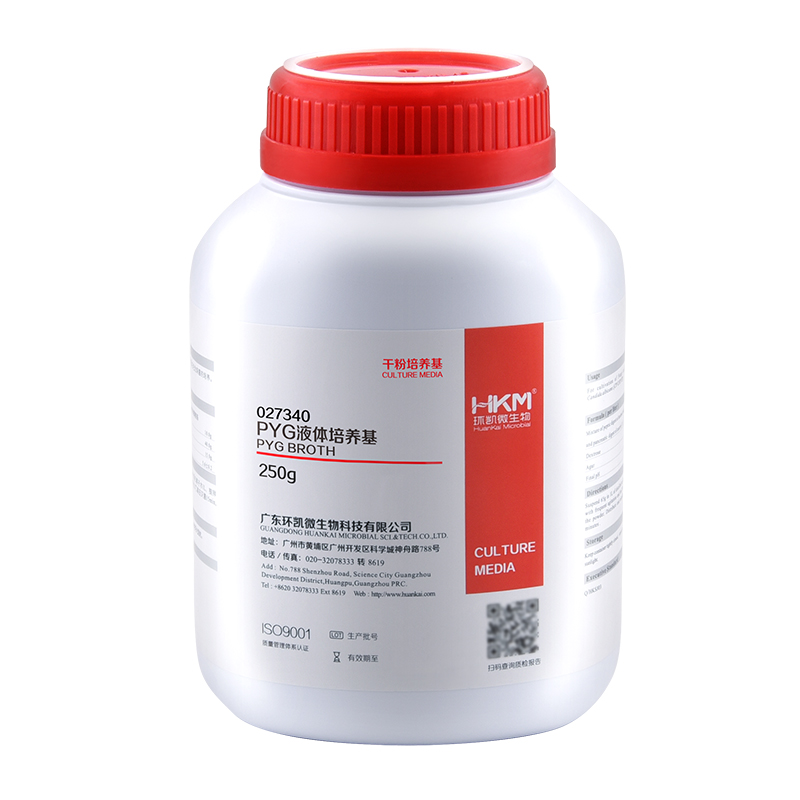
Storage: Keep container tightly closed, store in a cool, dry place, away from bright light. Storage period of 3 years.
Other Products
D3115 HiPure Tissue&Blood DNA Maxi Kit
Product Info
Document
Product Info
Introduction
This product provides fast and easy methods for purification of total DNA for reliable PCR and Southern blotting. Total DNA (e.g., genomic, viral, mitochondrial) can be purified from whole blood, tissue and culture cells.
Details
Specifications
Features
Specifications
Main Functions
Isolation total DNA from 10ml blood and 1g tissue using Maxi column
Applications
PCR, southern bolt and virus detection, etc
Purification method
Maxi spin column
Purification technology
Silica technology
Process method
Manual (centrifugation or vacuum)
Sample type
Tissue, cell, blood, saliva, swab, blood spot, semen and other clinical samples
Sample amount
3-10ml
Elution volume
≥700μl
Time per run
≤90 minutes
Liquid carrying volume per column
4ml
Binding yield of column
5mg
Principle
This product is based on silica column purification. The sample is lysed and digested with lysate and protease, DNA is released into the lysate. Transfer to an adsorption column. Nucleic acid is adsorbed on the membrane, while protein is not adsorbed and is removed with filtration. After washing proteins and other impurities, Nucleic acid was finally eluted with low-salt buffer (10mm Tris, pH9.0, 0.5mm EDTA).
Advantages
High quality DNA – meet a variety of downstream applications, including PCR, qPCR, enzyme digestion, hybridization, etc.
Fast – without separation of leukocytes, organic extraction or ethanol precipitation
Simple – all nucleic acids can be obtained by direct digestion
Pertinence – specially designed for isolating DNA from 3-10ml blood and related body fluids
Wide applicability – handle a variety of liquid samples
Proteinase K, RNase A should be stored at 2-8°C upon arrival. However, short-term storage (up to 12 weeks) at room temperature (15-25°C) does not affect their performance. The remaining kit components can be stored at room temperature (15-25°C) and are stable for at least 18 months under these conditions.
*Note:Leukocyte protocol can be used when large volume whole blood samples need to be processed. Whole blood was treated with red blood cell lysate, and white blood cells were obtained by centrifugation before extraction
Select the right purification kit to get impactful results:
This product provides fast and easy methods for purification of total DNA for reliable PCR and Southern blotting. Total DNA (e.g., genomic, viral, mitochondrial) can be purified from whole blood, tissue and culture cells.
Short term stability: 2-8oC, Long term stability: See individual component labels
Stability:
> 2 years under recommended storage conditions
Analyte:
myo-Inositol
Assay Format:
Spectrophotometer
Detection Method:
Absorbance
Wavelength (nm):
492
Signal Response:
Increase
Linear Range:
2 to 35 µg of myo-inositol per assay
Limit of Detection:
0.8 mg/L
Reaction Time (min):
~ 30 min
Application examples:
Animal feeds, food and other materials.
Method recognition:
Novel method
The myo-Inositol Assay Kit is a reliable and accurate enzymatic UV-method for the specific measurement and analysis of myo-inositol in animal feeds, foods and various other materials.
Phytic acid content of samples with very low levels of free myo-inositol can also be determined using K-INOSL. This can be achieved by measuring the amount of myo-inositol released after de-phosphorylation of phytic acid with the enzymes phytase and alkaline phosphatase, as used with the Megazyme Phytic Acid/Total Phosphorus Assay Kit (K-PHYT).
Not suitable for the determination of myo-inositol in baby formula.
Note for Content: The number of manual tests per kit can be doubled if all volumes are halved. This can be readily accommodated using the MegaQuantTM Wave Spectrophotometer (D-MQWAVE).
All reagents stable for > 2 years after preparation
Only enzymatic kit available
Rapid reaction
Mega-Calc™ software tool is available from our website for hassle-free raw data processing
Standard included
Document
The myo-Inositol Assay Kit is a reliable and accurate enzymatic UV-method for the specific measurement and analysis of myo-inositol in animal feeds, foods and various other materials.
NGS DNA Fragmentation & Library Prep Kit (illumina and MGI Platforms)
Product Info
Document
Product Info
The NGS DNA Fragmentation & Library Prep Kit (illumina and MGI Platforms) was developed for construction of high quality libraries for next generation sequencing. The kit uses intact genomic DNA (EDTA-free DNA or DNA resuspended in TE buffer) as input DNA without an additional DNA fragmentation step. Our technology provides a fast and simple workflow. DNA libraries can be generated around 2 hours with only 10 min hands-on time. Library multiplexing is possible.
NGS DNA Fragmentation & Library Prep Kit Workflow
The incorporation of DNA fragmentation in the kit makes it possible to directly use intact genomic DNA as input DNA without the need of mechanical DNA shearing or enzymatic DNA fragmentation. The NGS DNA Fragmentation & Library Prep Kit does not generate sequencing bias as compared to library using mechanical sheared DNA as input. Sequence coverage is also consistent between enzymatic shearing and mechanical shearing. The library size is inversely correlated with the incubation time of step 1 at 20°C.
Three index types are available for the kit of the illumina platform:
Non-index (Cat.# 30026): Libraries do not have index.
Index (Cat.# 30028): Each of the index primers contains a unique index sequence of 6 bases. Library multiplexing for 48 samples is possible. Index information can be downloaded here.
Unique dual index (Cat.# 30030): Library multiplexing for 96 samples is possible. With the unique features of our 4-Base Difference Index System, the index sequence is 8-base long and each index has 4 bases different from others. Our unique dual index primers effectively identify sequencing errors such as index hopping, mis-assignment of reads, and de-multiplexing errors etc. The unique dual index primers set consists of 96 pre-mixed unique pairs of index primers. Index information can be downloaded here.
Indexes are available for the MGI platform kits (Cat.# 34028).
Kit features:
1.5-hour protocol from intact genomic DNA to NGS library
Intact genomic DNA as input, DNA fragmentation is not needed.
Works with both EDTA-free DNA and DNA resuspended in TE buffer
Library conversion efficiency: 100 ng, 300 ng and 500 ng of intact genomic DNA were used as input.
The library size is inversely correlated with the incubation time of step 1 at 20°C.
NGS data comparison: enzymatic shearing versus mechanical shearing
Enzymatic shearing • DNA shearing and library prep: BioDynami NGS DNA Fragmentation & Library Prep Kit Mechanical shearing • DNA shearing: Covaris sonication • Library prep: BioDynami NGS DNA Library Prep Kit.
Document
The NGS DNA Fragmentation & Library Prep Kit (illumina and MGI Platforms) was developed for construction of high quality libraries for next generation sequencing. The kit uses intact genomic DNA (EDTA-free DNA or DNA resuspended in TE buffer) as input DNA without an additional DNA fragmentation step. Our technology provides a fast and simple workflow. DNA libraries can be generated around 2 hours with only 10 min hands-on time. Library multiplexing is possible.