
ntroduction
029040 Methyl Red Reagent
Usage:For Methyl Red Test.
Specification:10ml

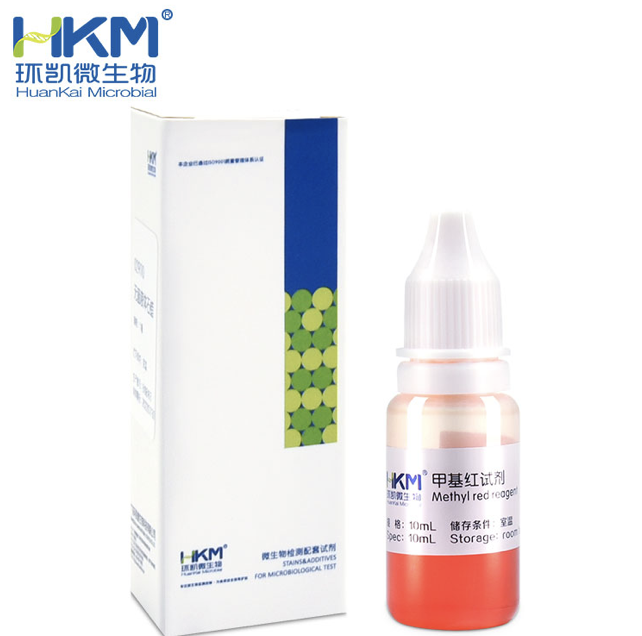
029040 Methyl Red Reagent
Usage:For Methyl Red Test.
Specification:10ml

These kits allow for the isolation of DNA from the blood of various species, including humans and will recover genomic DNA, mitochondrial DNA, viral DNA and bacterial DNA. The purified DNA is of excellent quality and yield and completely compatible with any downstream application including PCR, qPCR and genotyping.
Blood DNA Isolation Mini Kit
Norgen’s Blood DNA Isolation Mini Kit is designed for the rapid preparation of DNA from up to 200 µL of whole blood using a rapid spin column protocol. Preparation time for a single sample is less than 30 minutes and each kit contains sufficient materials for 50 preparations.
Blood DNA Isolation Midi Kit
Norgen’s Blood DNA Isolation Kit is designed for the rapid spin column preparation of DNA from 0.3 to 2 mL volumes of whole blood. Preparation time for a single sample is less than 30 minutes, and each kit contains sufficient materials for 20 preparations.
Blood DNA Isolation Maxi Kit
This kit is designed for the rapid preparation of DNA from 3 mL up to 10 mL of whole blood. Preparation time for a single sample is less than 30 minutes.
Blood DNA Isolation 96-Well Kit (High Throughput)
This kit provides a rapid method for the high-throughput isolation of DNA from up to 200 µL of whole blood. Fast and easy processing using either a vacuum manifold or centrifugation.
Blood DNA Isolation Kit (Magnetic Bead System)
Norgen’s Blood DNA Isolation Kit (Magnetic Bead System) is designed for the rapid preparation of genomic DNA from up to 200 µL of whole blood from various species, including human. Purification is based on magnetic beads as the separation matrix. Norgen’s magnetic beads bind DNA under optimized salt concentrations and releases the bound DNA under low salt and slightly alkali conditions. The genomic DNA is preferentially purified from other cellular proteinaceous components. Typical yields of genomic DNA will vary depending on the cell density of the blood sample. The purified genomic DNA is fully digestible with all restriction enzymes tested, and is completely compatible with downstream applications including real-time PCR, NGS and microarray analysis.
Blood DNA Isolation 96-Well Kit (High Throughput Magnetic Bead System)
96-well format for high throughput applications. Purification with the 96-well plates can be integrated with a robotic automation system.
Figure 1 / 19

Click for expanded view
| Kit Specifications | |
| Maximum Blood Input | 200 µL |
| Average Yield (200 µL blood)* | 4-12 µg |
| Average Purity (OD260/280) | 1.8 – 1.9 |
| Time to Complete Purifications | 40 minutes (hands-on time Cat. 59800) 50 minutes (hands-on time Cat. 62600) |
* Average DNA yield will vary depending on the donor
Storage Conditions and Product Stability
All solutions should be kept tightly sealed and stored at room temperature. This kit is stable for 1 year after the date of shipment. The kit contains a ready-to-use Proteinase K, which is dissolved in a specially prepared storage buffer. The buffered Proteinase K is stable for up to 1 year after the date of shipment when stored at room temperature.
| Component | Cat. 46300 (50 preps) | Cat. 46380 (100 preps) | Cat. 51400 (20 preps) | Cat. 31200 (12 preps) | Cat. 46350 (192 preps) | Cat. 59800 (50 preps) | Cat. 62600 (192 preps) |
|---|---|---|---|---|---|---|---|
| Lysis Buffer B | 20 mL | 2 x 20 mL | 2 x 40 mL | 2 x 110 mL | 2 x 40 mL | 20 mL | 1 x 40 mL 1 x 20 mL |
| Solution WN | 18 mL | 2 x 18 mL | 55 mL | 55 mL | 55 mL | 18 mL | 55 mL |
| Wash Solution A | 18 mL | 2 x 18 mL | 2 x 38 mL | 2 x 38 mL | 2 x 38 mL | – | – |
| Elution Buffer B | 30 mL | 2 x 30 mL | 30 mL | 30 mL | 2 x 30 mL | 15 mL | 1 x 30 mL 1 x 15 mL |
| Proteinase K in Storage Buffer | 1.2 mL | 2 x 1.2 mL | 4.4 mL | 8 mL | 4.5 mL | 1.2 mL | 4 mL |
| Magnetic Bead Suspension | – | – | – | – | – | 2 x 1.1 mL | 8.5 mL |
| Maxi Spin Columns | – | – | – | 12 | – | – | – |
| Mini Spin Columns | 50 | 100 | – | – | – | – | – |
| Midi Spin Columns | – | – | 20 | – | – | – | – |
| 96-Well Plate | – | – | – | – | 2 | – | 2 |
| Adhesive Tape | – | – | – | – | 4 | – | 2 |
| Collection Tubes | 50 | 100 | 20 | 12 | – | – | – |
| 96-Well Collection Plate | – | – | – | – | 2 | – | – |
| Elution Tubes | 50 | 100 | 20 | 12 | – | 50 | – |
| 96-Well Elution Plate | – | – | – | – | 2 | – | 2 |
| Product Insert | 1 | 1 | 1 | 1 | 1 | 1 | 1 |

This product provides fast and easy methods for purification of total DNA for reliable PCR and Southern blotting. Total DNA (e.g., genomic, viral, mitochondrial) can be purified from whole blood, tissue and culture cells.
Specifications
| Features | Specifications |
| Main Functions | Isolation total DNA from 10ml blood and 1g tissue using Maxi column |
| Applications | PCR, southern bolt and virus detection, etc |
| Purification method | Maxi spin column |
| Purification technology | Silica technology |
| Process method | Manual (centrifugation or vacuum) |
| Sample type | Tissue, cell, blood, saliva, swab, blood spot, semen and other clinical samples |
| Sample amount | 3-10ml |
| Elution volume | ≥700μl |
| Time per run | ≤90 minutes |
| Liquid carrying volume per column | 4ml |
| Binding yield of column | 5mg |
This product is based on silica column purification. The sample is lysed and digested with lysate and protease, DNA is released into the lysate. Transfer to an adsorption column. Nucleic acid is adsorbed on the membrane, while protein is not adsorbed and is removed with filtration. After washing proteins and other impurities, Nucleic acid was finally eluted with low-salt buffer (10mm Tris, pH9.0, 0.5mm EDTA).
| Contents | D311502 | D311503 |
| Purification Times | 10 | 50 |
| HiPure gDNA Maxi Columns | 10 | 50 |
| 50ml Collection Tubes | 20 | 100 |
| Buffer ATL | 120 ml | 550 ml |
| Buffer AL | 120 ml | 2 x 300 ml |
| Buffer GW1* | 53 ml | 220 ml |
| Buffer GW2* | 25 ml | 110 ml |
| RNase A | 40 mg | 180 ml |
| Proteinase K | 120 mg | 540 mg |
| Protease Dissolve Buffer | 12 ml | 50 ml |
| Buffer AE | 30 ml | 120 ml |
Storage and Stability
Proteinase K, RNase A should be stored at 2-8°C upon arrival. However, short-term storage (up to 12 weeks) at room temperature (15-25°C) does not affect their performance. The remaining kit components can be stored at room temperature (15-25°C) and are stable for at least 18 months under these conditions.
| Name | CAT NO | Sample amount | Leukocyte protocol* | Colum type | Elutio volume | Average yield | Time per run |
| HiPure Blood DNA Mini Kit | D3111 | 10-200μl | 1ml | 2ml column | ≥20μl | 5-9μg/200μl | ≤30 minutes |
| HiPure Tissue&Blood DNA Midi Kit | D3113 | 0.2-2ml | 10ml | 1.5ml column | ≥300μl | 20-40μg/1m | ≤80 minutes |
| HiPure Tissue&Blood DNA Maxi Kit | D3115 | 3 -10ml | 10ml | 15ml column | ≥700μl | 20-40μg/1m | ≤90 minutes |
| HiPure Tissue&Blood DNA 96 Kit | D3117 | 1-200μl | 1ml | 96 well plate | 3-8μg/200μl |
*Note:Leukocyte protocol can be used when large volume whole blood samples need to be processed. Whole blood was treated with red blood cell lysate, and white blood cells were obtained by centrifugation before extraction
Select the right purification kit to get impactful results:
Ⅰ. Purchase guide of Magen kits based on sample
Ⅱ. Cross purchase guide for Magen kits vs Other brands
For any customized product or OEM service, please contact us.
This product provides fast and easy methods for purification of total DNA for reliable PCR and Southern blotting. Total DNA (e.g., genomic, viral, mitochondrial) can be purified from whole blood, tissue and culture cells.
Details

N-(t-butyl ester-PEG4)-N-bis(PEG4-Propargyl) is a trifunctional PEG linker that combines a t-butyl ester with two terminal alkynes. The alkynes can be applied in copper-click chemistry with azides to form stable triazole linkages with a target molecule, while the t-butyl ester can be deprotected and reacted with amines or alcohols to form amides or esters.

N-(t-butyl ester-PEG4)-N-bis(PEG4-Propargyl) is a trifunctional PEG linker that combines a t-butyl ester with two terminal alkynes. The alkynes can be applied in copper-click chemistry with azides to form stable triazole linkages with a target molecule, while the t-butyl ester can be deprotected and reacted with amines or alcohols to form amides or esters.