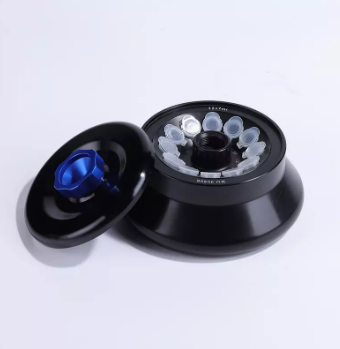

This product is suitable for extracting total pathogen RNA from biological samples with no/low cell content such as body fluid, serum, plasma, soaking solution, tissue homogenate supernatant, culture medium supernatant, etc. The purified RNA can be used for clinical in vitro detection.
It is special designed for Pathogen RNA extraction from Sputum samples, can be used in tuberculosis (TB) detection.
Specifications
| Features | Specifications |
| Main Function | Extract total pathogen RNA from cell-free/low-content cell biological samples such as body fluids, serums, plasma, tissue homogenate supernatant, special design for sputum samples. Used in tuberculosis detection. |
| Applications | RT-PCR,PCR |
| Products | Pathogen RNA |
| Purification method | Polydisperse magnetic beads |
| Purification technology | Magnetic beads technology |
| Process method | Manual or automatic |
| Sample type | cell-free/low-content cell biological samples such as body fluids, serums, plasma, tissue homogenate supernatant, sputum |
| Sample amount | 200-300μl |
| Adaptive instrument | Nucleic acid extractor, pipetting workstation |
This product is based on the purification method of high binding magnetic particles. The sample is lysed and digested under the action of lysate and Protease. After adding magnetic particles and binding solution, DNA/RNA will be adsorbed on the surface of magnetic particles, and impurities such as proteins will be removed without adsorption. The adsorbed particles were washed with washing solution to remove proteins and impurities, washed with ethanol to remove salts, and finally DNA/RNA was eluted by Buffer NFW.
Advantages
Kit Contents
| Contents | IVD6672C |
| Purification Times | 200 Preps |
| 2ml Bead Tube | 4 x 50 |
| MagPure Particle | 7.0 ml |
| Proteinase K | 100 mg |
| Protease Dissolve Buffer | 6 ml |
| DTT (Powder) | 2g |
| Buffer SDS | 15 ml |
| Buffer MLBN | 220 ml |
| DNase I | 4 x 0.6 ml |
| DNase Buffer | 60 ml |
| Buffer MW1* | 53 ml |
| Buffer MW2* | 50 ml |
| Buffer NFW | 30 ml |
Storage and Stability
MagPure Particles and Proteinase K, DNase I should be stored at 2–8°C upon arrival. However, short-term storage (up to 2 weeks) at room temperature (15–25°C) does not affect their performance. The remaining kit components can be stored at room temperature (15–25°C) and are stable for 18 months under these conditions.
This product is suitable for extracting total pathogen RNA from biological samples with no/low cell content such as body fluid, serum, plasma, soaking solution, tissue homogenate supernatant, culture medium supernatant, etc. The purified RNA can be used for clinical in vitro detection.
K-BETA3
SKU: 700004268
100 assays per kit
| Content: | 100 assays per kit |
| Shipping Temperature: | Ambient |
| Storage Temperature: | Short term stability: 2-8oC, Long term stability: See individual component labels |
| Stability: | > 2 years under recommended storage conditions |
| Analyte: | β-Amylase |
| Assay Format: | Spectrophotometer |
| Detection Method: | Absorbance |
| Wavelength (nm): | 400 |
| Signal Response: | Increase |
| Limit of Detection: | 0.05 U/mL |
| Reproducibility (%): | ~ 3% |
| Reaction Time (min): | ~ 10 min |
| Application examples: | Cereal flours, malts and other materials. |
| Method recognition: | Modification of RACI Standard Method |
The Betamyl-3; β-Amylase test kit is suitable for the specific measurement and analysis of β-amylase in malt flour.
See more of our amylase assay kits and other kit products for measurement of enzyme activities.
Advantages
The Betamyl-3; β-Amylase test kit is suitable for the specific measurement and analysis of β-amylase in malt flour.
See more of our amylase assay kits and other kit products for measurement of enzyme activities
N-(Propargyl-PEG4-carbonyl)-N-bis(PEG1-acid) is a crosslinker that can react with azide compounds or biomolecules via copper catalyzed Click Chemistry to form a stable triazole linkage. The terminal carboxylic acids can react with primary amino groups in the presence of activators (e.g. HATU) to form a stable amide bond.