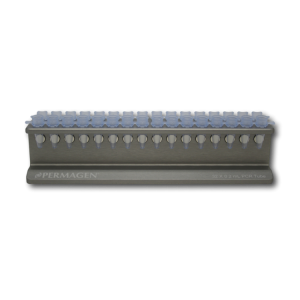
Permagen’s 32-tube PCR Separation rack features all of the same aspects of our MSR812 rack above for easy protocol transition for labs wishing to scale up to four PCR strips at a time, or up to 32 individual PCR tubes.
Detail
Permagen’s 32-tube PCR Separation rack features all of the same aspects of our MSR812 rack above for easy protocol transition for labs wishing to scale up to four PCR strips at a time, or up to 32 individual PCR tubes.
Features include solid aluminum alloy design with hard coat finish for years of trouble-free use, rubber feet to help prevent slipping on work bench, less tippy than common plastic products, and fast separations using any magnetic beads
Fast RNA Extraction Nucleic Acid Reagent High Efficiency
Product Info
Document
Product Info
Product Description
Fast RNA Extraction Reagent: High Efficiency, Reliable Results
Product Description:
Amp-future Bio’s Nucleic Acid Extraction Reagent is a RNA extraction kit that provides the highest quality nucleic acid extraction. The RNA extraction kit is an automated nucleic acid extractor which allows for quick and easy RNA isolation. The reagent is in liquid form and has a shelf life of 12 months, making it a reliable and durable product. With the Nucleic Acid Extraction Reagent, Amp-future Bio provides the accuracy and reliability of a professionally designed RNA extraction kit.
Features:
Product Name: RNA Nucleic Acid Extraction Reagent
Brand: Amp-future Bio
Form: Liquid
Shelf Life: 12 Months
Application: RNA Extract
Keywords: RNA Extraction Kit
Technical Parameters:
Property
Value
Form
Liquid
Product Name
RNA Nucleic Acid Extraction Reagent
Application
RNA Extraction
Brand
Amp-future Bio
Shelf Life
12 Months
Composition
5ml*4 tubes
Applications:
Amp-future Bio’s Nucleic Acid Reagent is an advanced automated nucleic acid extraction solution designed to efficiently extract RNA from biological samples while maintaining quality and accuracy. It is made in China and has a 12-month shelf life. It comes in a liquid form and is suitable for use in automated nucleic acid extractors, allowing for automatic and highly efficient extraction of nucleic acid from various sample types. The reagent is also designed to be easy to use, making it an ideal solution for laboratories that require fast and reliable results. This reagent is a great choice for any research or clinical laboratory that needs efficient and accurate nucleic acid extraction.
Support and Services:
Technical Support and Services for Nucleic Acid Reagent We provide technical support and services for Nucleic Acid Reagents. Our experts are available to help you identify the right reagents for your application, answer any questions, and provide assistance on the use and optimization of these reagents. Our experts are also available to provide advice on troubleshooting and protocol optimization. We offer a range of services to make ordering and stocking of reagents easy and convenient.
We provide:
Expert advice on the selection of the right reagents for your application
Free samples for evaluation
Bulk and custom orders
Technical support and troubleshooting assistance
Secure and reliable online ordering
Fast and convenient shipping options
Please contact us for more information about our technical support and services for nucleic acid reagents.
Attogene Fluorescent UniversalLateral Flow Assay Kits are a convenient ready-to-use kit for quick and cost-effective development of a fluorescent lateral flow dipstick assay for detection of DNA and RNA products.
Fluorescent lateral flow assays can be 2-100 fold more sensitive that gold based lateral flow tests.
Formats (fluorescent broad range UV light excitation range of 100nm to 400nm, 655nm emission) Streptavidin conjugate pad):
• Detectable using a black light such as a black light UV flashlight or fluorescent lateral flow reader.
• Detection of nucleic Acid (DNA or RNA) requires the use of a biotin and FAM-labelled primer during amplification.
• Test line: anti-FITC/FAM
• Control Line: Biotin
• Multiplex detection of nucleic Acid (DNA or RNA) requires the use of a biotin, FAM and Dig labelled primers during amplification.:
• Test Line #1: anti FITC/FAM, Line #2: anti-Dig, Line #3 Biotin.
For example, this product can be configured with alternative/custom streptavidin fluorescent particles.
Kit Components
50 -4.5mm Fluorescent Lateral Flow Dipsticks
10 mL Sample assay running buffer
Features & Benefits
Can be used for development of a lateral flow assay for detection of a variety of different molecules such as amplified DNA products from PCR, LAMP and RPA reactions.
No need to stripe capture antibodies
No expensive equipment required (Black Light)
Cost-effective way to screen for further downstream lateral flow assay development.



 • Detectable using a black light such as a black light UV flashlight or fluorescent lateral flow reader.