


DBCO-PEG1-amine is a PEG linker which contains DBCO and amine moieties. The DBCO group is commonly used in copper-free Click Chemistry reactions. The amine group is reactive with carboxylic acids, activated NHS esters, carbonyls (ketone, aldehyde) etc. Reagent grade, for research purpose. Please contact us for GMP-grade inquiries.

DBCO-PEG1-amine is a PEG linker which contains DBCO and amine moieties. The DBCO group is commonly used in copper-free Click Chemistry reactions. The amine group is reactive with carboxylic acids, activated NHS esters, carbonyls (ketone, aldehyde) etc. Reagent grade, for research purpose. Please contact us for GMP-grade inquiries.

GL20 Technical Parameter:
| Max. Speed | 21000rpm |
| Max. RCF | 30910×g |
| Max. Capacity | 4×800ml |
| Time Range | 1~9h59min |
| RPM/RCF Convert | Yes |
| Noise (dB) | ≤ 60 |
| Temperature | -20℃~40℃ |
| Acc/Dec | 10 Kinds |
| Speed Accuracy | ±20r/min |
| Temperature Accuracy | ±1℃ |
| Voltage(V/Hz) | AC 220V/110V 50HZ/60HZ |
| Size (W x D x Hmm) | 680×540×830mm |
| Net Weight(Kg) | 170KG |
| Certificates | CE,ISO & Calibration report are available |
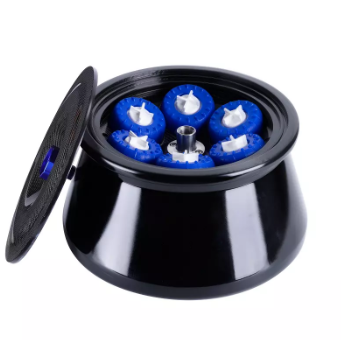
Matched Rotors for GL20
| Order No | Rotor | Rotor Max Speed(r/min) | Volume(ml) | RCF(×g) |
| G20-1 | Swing Rotor | 4000 | 4×800ml | 3450 |
| G20-2 | Microplate rotor | 4000 | 4×4×96 well | 2940 |
| G20-3 | Microplate rotor | 4000 | 2×4×96 well | 3210 |
| G20-4 | Microplate rotor | 4000 | 2×3×48 well | 2300 |
| G20-5 | Swing rotor | 4000 | 4×40×7ml vacuum tube | 3270 |
| G20-6 | 4000 | 4×40×5ml vacuum tube | 2890 | |
| G20-7 | 4000 | 4×28×10ml vacuum tube | 3130 | |
| G20-8 | Swing Rotor | 4000 | Fat bottle | 3830 |
| G20-9 | Fixed Rotor | 16000 | 4×8PCR | 15760 |
| G20-10 | Fixed Rotor | 15000 | 6×8PCR | 21420 |
| G20-11 | Fixed Rotor | 16000 | 8×8PCR | 17480 |
| G20-12 | Fixed Rotor | 15000 | 12×8PCR | 22930 |
| G20-13 | Fixed Rotor | 15000 | 40×0.5ml | 22920 |
| G20-14 | Fixed Rotor | 21000 | 12×1.5ml | 30910 |
| G20-15 | Fixed Rotor | 16000 | 24×1.5ml | 23440 |
| G20-16 | Fixed Rotor | 14000 | 30×1.5ml | 20800 |
| G20-17 | Fixed Rotor | 13000 | 48×1.5ml | 17930 |
| G20-18 | Fixed Rotor | 16000 | 16×5ml | 22020 |
| G20-19 | Fixed Rotor | 16000 | 6×10ml | 21500 |
| G20-20 | Fixed Rotor | 15000 | 12×10ml | 22680 |
| G20-21 | Fixed Rotor | 13000 | 16×10ml | 19490 |
| G20-22 | Fixed Rotor | 13000 | 8×15ml | 17790 |
| G20-23 | Fixed Rotor | 11000 | 12×15ml | 14330 |
| G20-24 | Fixed Rotor | 5000 | 24×15ml | 3500 |
| G20-25 | Fixed Rotor | 5000 | 30×15ml | 3830 |
| G20-26 | Fixed Rotor | 14000 | 6×30ml | 19060 |
| G20-27 | Fixed Rotor | 13000 | 6×50ml(conical) | 18840 |
| G20-28 | Fixed Rotor | 13000 | 6×50ml(round) | 18730 |
| G20-29 | Fixed Rotor | 5000 | 12×50ml | 3860 |
| G20-30 | Fixed Rotor | 4000 | 24×50ml | 2970 |
| G20-31 | Fixed Rotor | 13000 | 4×85ml | 18940 |
| G20-32 | Fixed Rotor | 12000 | 4×100ml | 14850 |
| G20-33 | Fixed Rotor | 10000 | 6×100ml | 11380 |
| G20-34 | Fixed Rotor | 4000 | 12×100ml | 2970 |
| G20-35 | Fixed Rotor | 12000 | 24 capillaries | 15800 |
| G20-36 | Swing Rotor | 15000 | 4×5ml | 19920 |
| G20-37 | Vertical rotor | 16000 | 16×5ml | 16450 |
| G20-38 | Vertical rotor | 14000 | 8×30ml | 19750 |
Features
1. Brushless frequency motor, in great torque, free maintenance, no powder pollution, quick in speed up and down.
2.Imported compressors fluorine free,double cycle cooling, cold and hot alternating easily, free environment pollution and precise in temperature control
3.Microprocessor control, digital display which indicates the temperature, speed, time, RCF in operation, speed raising and reducing quickly, operate simply. Running parameter can be edited.
4. 10 kinds of program stored in the memory, 10 kinds of accelerating and decelerating speed for your choice.
5. Automatically electric lid lock, over speed, over temperature protection and imbalance protection.
6.High quality steel centrifuge body , stainless steel chamber, built-in stainless steel explosion-proof protect inner sleeve , 3 tiers protection,safe and reliable.
7. Rotor is connected to spindle by specialized taper sleeve, loading simple and quick, no direction.

Attogene has developed a set of RNase-Free Lateral Assay Buffers specifically designed for developers of Nucleic Acid-based lateral flow tests
Components
Set of 5 RNase-Free Lateral flow running buffers at specifically developed for optimizing nucleic acid based lateral flow assays. Each buffer is certified RNase-Free and tested functionally in RNA and DNA based lateral flow tests.
Features & Benefits
5 bottles of Running Buffer (10mL)
SKU: AU2035