

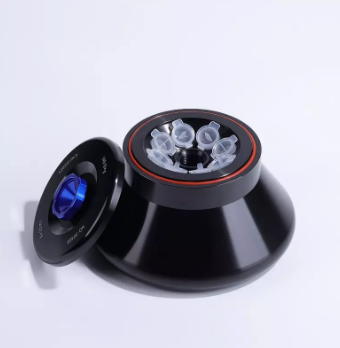

This product is suitable for rapid RNA extraction from tissue , cells, and other clinical samples. RNA can be used directly for RT-PCR, quantitative RT-PCR and so on.
Specifications
| Features | Specifications |
| Main Functions | Isolation total RNA from tissue, cell |
| Applications | RT-PCR, cDNA synthesis, second generation sequencing |
| Purification method | Polydisperse magnetic beads |
| Purification technology | Magnetic beads technology |
| Process method | Manual or automatic |
| Adaptive instrument | Nucleic acid extractor, pipetting workstation |
| Sample type | Tissues, cells, lymphocytes and other clinical sample |
| Sample amount | Cells grown in suspension:3~5 x 10⁶Animal tissue: 10~20mgPlant tissue: ≤100mg |
The Kit combines the speed and efficiency of silica-based technology with the convenient handling of magnetic particles for purification of total RNA. Samples are lysed and RNA is purified from lysates in one step through its binding to the silica surface of the particles in the presence of a chaotropic salt. The particles are separated from the lysates using a magnet and DNA is removed by treatment with RNase-free DNase I. The magnetic particles are efficiently washed, and RNA is eluted in RNase-free water
Advantages
Kit Contents
| Contents | IVD3020 |
| Purification Times | 200 Preps |
| MagPure RNA Particles | 7 ml |
| DNase I | 4 x 600 µl |
| DNase Buffer | 80 ml |
| RTL Lysis Buffer | 150 ml |
| Buffer MCB* | 75 ml |
| Buffer MW1* | 110 ml |
| Buffer MW2* | 50 ml |
| RNase Free Water | 60 ml |
| Cat.No | Reagent | IVD3020-F-96 |
| DNase Buffer | 60 ml | |
| DNase I | 2 x 600 μl | |
| RTL Lysis Buffer | 80 ml | |
| Buffer MCB | 18 ml | |
| 96-Tip | 1 | |
| Sample plate (DW Plate) | 500μl Buffer MCB | 1 |
| Wash 1 Plate (DW Plate) | 700μl Buffer MW130μl MagPure RNA Partilces | 1 |
| DNase Plate | Empty | |
| Wash 2 Plate (DW Plate) | 700μl Buffer MW1 | 1 |
| Wash 3 Plate (DW Plate) | 900μl Buffer MW2 | 1 |
| Elution plate (DW Plate) | 80μl RNase Free Water | 1 |
| Cat.No | Reagent | IVD3020-TL-06 |
| Purification times | 96 Preps | |
| DNase I | 2 x 600 μl | |
| DNase Buffer | 60 ml | |
| RTL Lysis Buffer | 60 ml | |
| Buffer MCB | 40 ml | |
| 96-Tip | 12 PCS | |
| 2.0ml V-bottom plate | Row 1/7:500μl Buffer MCBRow 2/8:500μl Buffer MW1Row 3/9:emptyRow 4/10:30μl Magpure RNA Particles500μl Buffer MW2 Row 5/11:900μl Buffer MW2 Row 6/12:80μl RNase Free Water | 6 |
Storage and Stability
MagPure RNA Particles should be stored at 2–8°C upon arrival. DNase I should be stored at -20°C. However, short-term storage (DNase I up to 1 weeks, MagPure RNA Particles up to 8 weeks) at roomtemperature (15–25°C) does not affect their performance. The remaining kit components can be stored at room temperature (15–25°C) and are stable for at least 18 months under these conditions.
This product is suitable for rapid RNA extraction from tissue , cells, and other clinical samples. RNA can be used directly for RT-PCR, quantitative RT-PCR and so on.

Bis-Sulfone-PEG9-DBCO is a bis-alkylating labeling reagent that is selective for the cysteine sulfur atoms from a native disulfide. These reagents undergo bis-alkylation to conjugate both thiols derived from the two cysteine residues of a reduced native disulfide bond such as the interchain disulfide bonds of an antibody. The reaction results in covalent rebridging of the disulfide bond via a three carbon bridge leaving the protein structurally intact. Reagent grade, for research purpose. Please contact us for GMP-grade inquiries.

Bis-Sulfone-PEG9-DBCO is a bis-alkylating labeling reagent that is selective for the cysteine sulfur atoms from a native disulfide. These reagents undergo bis-alkylation to conjugate both thiols derived from the two cysteine residues of a reduced native disulfide bond such as the interchain disulfide bonds of an antibody. The reaction results in covalent rebridging of the disulfide bond via a three carbon bridge leaving the protein structurally intact. Reagent grade, for research purpose. Please contact us for GMP-grade inquiries.

Bis-propargyl-PEG13 comprises two propargyl groups which can form triazole linkages with azide-bearing compounds or biomolecules in copper catalyzed Click Chemistry reactions. The hydrophilic PEG units help improve the solubility of the molecule in aqueous media. Reagent grade, for research purpose. Please contact us for GMP-grade inquiries.

Bis-propargyl-PEG13 comprises two propargyl groups which can form triazole linkages with azide-bearing compounds or biomolecules in copper catalyzed Click Chemistry reactions. The hydrophilic PEG units help improve the solubility of the molecule in aqueous media. Reagent grade, for research purpose. Please contact us for GMP-grade inquiries.