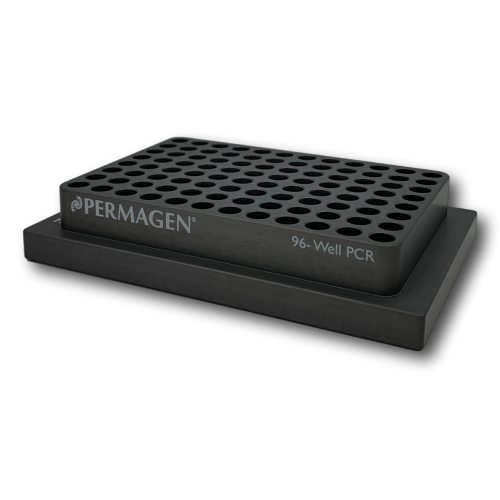
The Permagen 96-Well Chiller Block was designed as a temperature control device that can be used manually or on a liquid handling robot for PCR applications from individual 0.2 mL Tubes, 0.2 mL strips, or PCR plates.
Other Products
Biotin-PEG12-DBCO
Product Info
Document
Product Info
Biotin-PEG12-DBCO is a biotinylating reagent comprised of DBCO, a click chemistry handle that is frequently used to conjugate with azides on target molecules, and biotin, which is useful for affinity-based applications such as pull-down assays or for ligating with streptavidin proteins. The PEG12 imparts the hydrophilicity of the compound. Reagent grade, for research purpose. Please contact us for GMP-grade inquiries.
Document
Biotin-PEG12-DBCO is a biotinylating reagent comprised of DBCO, a click chemistry handle that is frequently used to conjugate with azides on target molecules, and biotin, which is useful for affinity-based applications such as pull-down assays or for ligating with streptavidin proteins. The PEG12 imparts the hydrophilicity of the compound. Reagent grade, for research purpose. Please contact us for GMP-grade inquiries.
CE-IVD marked version available for in vitro diagnostic use
Available in TaqMan format for analysis
Candida albicans is an opportunistic yeast and is the most common fungal pathogen found in the human body. C. albicans can be detected in the gastrointestinal tract, mouth, and vagina of approximately half of healthy adults. It is typically a commensal organism and makes up part of the natural human microflora; however it can overgrow and become pathogenic as a result of various conditions. For example, individuals who have taken recent courses of antibiotics, have a weakened immune system or have diabetes have an increased risk of developing a Candida albicans infection. When an overgrowth occurs, this can lead to common infections such as urinary tract infections, genital yeast infections, oral thrush, and mucocutaneous candidiasis. In the more severe cases, when Candida albicans enters the bloodstream or organs, it can lead to loss of sight, blood and bone infections, endocarditis, meningitis or inflammation of the intraabdominal lining.
Storage Conditions and Product Stability All kit components can be stored for 2 years after the date of production without showing any reduction in performance.
All kit components should be stored at -20°C upon arrival.