
Biotin-PEG2-alkyne is a short PEG linker featuring a biotin group and a terminal alkyne. Biotin is useful for affinity-based applications such as pull-down assays while terminal alkynes are used in copper (I) click chemistry with azides.


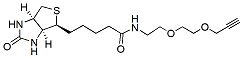
Biotin-PEG2-alkyne is a short PEG linker featuring a biotin group and a terminal alkyne. Biotin is useful for affinity-based applications such as pull-down assays while terminal alkynes are used in copper (I) click chemistry with azides.
Ki-67 is a nuclear, non-histone protein that is expressed only during active phases of the cell cycle (G1, S, G2 and M), but not in the resting phases (G0 and G1 early phase). Although the antigen has also been associated with ribosomal RNA transcription, it is strongly linked to cell proliferation and has thus been indicated as an effective marker in grading the proliferation rate of tumors, including those of the brain, breast, cervix, and prostate.

Product advantages
1. The instantaneous centrifugal function rises to the maximum speed for about 6 seconds, allowing for rapid detachment of hanging droplets from the wall;
2. Faster acceleration and deceleration rate, required to complete the experiment in a shorter time;
3. Door cover protection, overspeed and imbalance detection system, capable of real-time monitoring of the centrifugal process, ensuring the safe operation of the instrument; When the operation ends, an error occurs, or an imbalance occurs, the sound signal prompts, and the operation stops at the same time. The LCD displays the result code
Host Parameters
| Product model | Mini-3 |
| Input power supply | DC24V/2.75A |
| Input power | 55W |
| Motor/Drive Method | DC24V brushless DC variable frequency motor |
| Display method | High brightness LCD screen |
| Effective centrifugal time | 1-99min.1-59sec |
| speed | 300~3000±15rpm |
| Speed step increase | 10rpm |
| Maximum capacity | 2 *96 well PCR plates/ELISA plates |
| MAX. RCF | 608 xg |
| Misoperation/alarm failure | Sound prompt+display code |
| weight | 3.9Kg |
| Noise | 60dB (A) |
| Fastest acceleration time | <6s |
| Fastest deceleration time | <5s |
| Permissible ambient temperature/relative temperature | +5-40°C/80% |
The micro porous plate centrifuge adopts international advanced design concepts and manufacturing technology, with a smooth and beautiful appearance, compact and stable structure, adhering to the advantages of high universality and easy operation. It also has the functional characteristics of “smooth start” and “smooth braking”; This micro porous plate centrifuge is very suitable for 96 or 384 well and small capacity micro porous plates, as well as various standard PCR micro porous plates with or without skirts .

