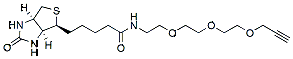
Biotin-PEG3-alkyne is a biotin PEG reagent with an alkyne group that enables click reaction with azido molecules in the presence of Cu catalyst. The hydrophilic PEG spacer arm imparts water solubility that is transferred to the biotinylated molecule.
Detail
Biotin-PEG3-alkyne is a biotin PEG reagent with an alkyne group that enables click reaction with azido molecules in the presence of Cu catalyst. The hydrophilic PEG spacer arm imparts water solubility that is transferred to the biotinylated molecule.
Other Products
024048P1 Tryptic Soy Broth
Product Info
Document
Product Info
Introduction
Usages: For cultivating of bacteria.And sterility test of drugs and biological products.
Principle: Tryptone, peptone and yeast extract multivalent powder provides a nitrogen source, vitamins, and growth factors; sodium chloride to maintain osmotic balance; glucose carbon source; dipotassium hydrogen phosphate as a buffering agent.
Formulation(per liter): Pancreatic Digest of Casein 17g Papaic Digest of Soybean 3g Sodium chloride 5g Dipotassium hydrogen phosphate 2.5g Glucose Monohydrate 2.5g Final pH 7.3±0.2
How to use: 1.Suspend 30g in 1L of distilled water , stirring heated to boiling to completely dissolve ,autoclave at 121℃ for 15 minutes. 2.Diluted and treated samples.
Storage: Keep container tightly closed, store in a cool, dry place, away from bright light. Storage period of 3 years.
DBCO-PEG8-amine TFA salt is a PEG linker which contains DBCO and amine moieties. The DBCO group is commonly used in copper-free Click Chemistry reactions. The amine group is reactive with carboxylic acids, activated NHS esters, carbonyls (ketone, aldehyde) etc. The hydrophilic PEG spacer increases the water solubility of the compound. Reagent grade, for research purpose. Please contact us for GMP-grade inquiries.
Document
DBCO-PEG8-amine TFA salt is a PEG linker which contains DBCO and amine moieties. The DBCO group is commonly used in copper-free Click Chemistry reactions. The amine group is reactive with carboxylic acids, activated NHS esters, carbonyls (ketone, aldehyde) etc. The hydrophilic PEG spacer increases the water solubility of the compound. Reagent grade, for research purpose. Please contact us for GMP-grade inquiries.
N-(Aminooxy-PEG2)-N-bis(PEG3-propargyl) consists of two terminal propargyl groups and an aminooxy group. The propargyl groups reacts with azide-bearing compounds or biomolecules via copper catalyzed Click Chemistry. The aminooxy group is reactive towards aldehydes to form oxime bonds. If a reductant is used, it will form a hydroxylamine linkage. Reagent grade, for research purpose. Please contact us for GMP-grade inquiries. Aminooxy compounds are very reactive and sensitive; they cannot be stored for long term. Immediate use (within 1 week) is highly recommended.
Document
N-(Aminooxy-PEG2)-N-bis(PEG3-propargyl) consists of two terminal propargyl groups and an aminooxy group. The propargyl groups reacts with azide-bearing compounds or biomolecules via copper catalyzed Click Chemistry. The aminooxy group is reactive towards aldehydes to form oxime bonds. If a reductant is used, it will form a hydroxylamine linkage. Reagent grade, for research purpose. Please contact us for GMP-grade inquiries. Aminooxy compounds are very reactive and sensitive; they cannot be stored for long term. Immediate use (within 1 week) is highly recommended.