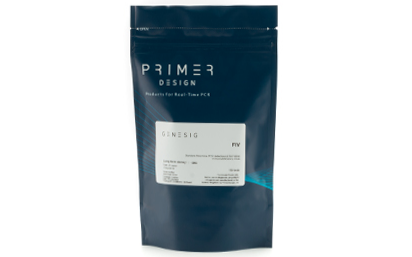
Primer and probe mix (150 reactions) Reverse Transcription, target specific primers (RNA genome viruses only) Copy number standard curve (sufficient for multiple standard curves) Internal extraction control – Read through VIC channel* Endogenous control (150 tests) RNAse/DNAse free water *alternative fluorophores available on request
Nucleic acid testing (NAT) is the method of choice for detection and quantification of a wide range of micro organisms. Primerdesign manufactures and supplies high quality quantitative real-time PCR kits for the detection and simultaneous quantification of numerous significant pathogens . A copy number standard curve is provided for quantification and an the internal extraction template (DNA or RNA), controls for the quality of the nucleic acid extraction and eliminates false negative results.
The kit is designed with the broadest possible detection profile to ensure that all clinically relevant strains and subtypes are detected. Target sequences are selected by working with data from key opinion leaders in the field. Multiple sequence alignments and unprecedented real-time PCR expertise in design and validation ensure the best possible kit. Details of the target and priming specificity are included in the individual handbooks above.
Packaged, optimised and ready to use. Expect Better Data.
Other Products
Purple-Jelley Hyaluronic Acid assay kit
Product Info
Document
Product Info
Purple-Jelley Hyaluronic Acid assay kit
Biocolor’s Purple-Jelley assay kit is the perfect tool for accurate measurement of hyaluronic acid / Hyaluronan levels in your samples. This colorimetric assay is optimised for quantitative analysis in-vivo, tissue-derived hyaluronic acid / Hyaluronan and includes full step-by-step instructions.
Colorimetric Detection (655nm) (Endpoint)
Hyaluronic Acid: A gentle giant!
Hyaluronic acid, in its hydrated form, is a unique carbohydrate polymer, often referred to as a ‘gentle giant.’ It consists of a lengthy, flexible, non-branching chain with a repeating disaccharide pattern. This disaccharide is composed of alternating uronic acid and aminosugar units.
Why is our kit called ‘Purple-Jelley’?
Discovering the J-Aggregate Effect in Cyanine DyesIn 1936, Edwin Jelley made a fascinating observation, documented it in a letter to Nature (Nature 138, 1009 – 1010). He noted a peculiar behaviour of certain cyanine dyes, that when dissolved in 5 M NaCl, they dyes exhibited a third absorbance peak at a longer wavelength, around 650nm. In deionized water, however, they displayed only a double peak at approximately 540nm and 570nm. The 650nm peak in concentrated dye solutions resulted from the aggregation of dye molecules and was later termed a ‘J-aggregate,’ in honor of Edwin Jelley. The J-aggregate is known as a supra-molecular complex, formed by stacking individual dye molecules.
Subsequent research in the 1960s, notably by Kay et al. (J. Physical Chem. 68, 1896 – 1906), revealed that various biological polymers, including proteins, DNA, polar lipids, and glycosaminoglycans, could also induce this third absorbance peak. This phenomenon led to the development of the Purple-Jelley assay, named after the purple color of the dye reagent and Edwin Jelley himself.
An overview of the Purple-Jelley assay steps:
During the assay, hyaluronic acid is selectively purified during the assay sample preparation protocol. This is then reacted with the Purple-Jelley dye reagent, and the absorption of the characteristic third wavelength recorded. By comparison with a calibration curve the hyaluronic acid content of the sample can be measured.
Step 1. The assay protocol takes tissue samples through a sequential sample preparation protocol which involves enzymatic protein digestion, followed by precipitation and purification of GAGs, culminating in the precipitation of purified Hyaluronic acid.
Step2. The processed sample is then incubated for 10 minutes with the Purple-Jelley dye reagent, forming a coloured product which can be measured spectrophotometrically.
Step 3. The Hyaluronic acid content of unknown samples can be calculated by comparison against a calibration curve prepared using a standard comprising hyaluronic acid (supplied with the kit).
Assay range
10 – 100µg/ml
Limit of Detection
10µg/ml
Detection Method
Colorimetric Detection (655nm) (Endpoint)
Measurements per kit
100 in total (allows a maximum of 46 samples to be run in duplicate alongside a standard curve).
Suitable Samples
In-vivo: Hyaluronic acid purified from in-vivo tissues. The kit protocol involves extraction and purification of hyaluronic acid prior to reaction with the Purple-Dye reagent.
Precautions
This kit is designed for research use only. Not for use in diagnostic procedures. Kit requires access to a centrifuge, as well as a spectrophotometer/colorimeter capable of colorimetric, absorbance detection at 655nm. Specific sample preparation protocols may require customer to provide further reagents, consult assay manual for further information.
2. Hyaluronan Reference Standard (1x 5ml, 0.2mg/ml soluble Hyaluronic Acid)
3. Precipitating Reagent (2x 34ml)
4. Sodium Chloride (1x 20ml)
5. Cetylpyridinium Chloride (1x 20ml)
6. TRIS-buffered Saline (5x tablets)
7. 2ml screw-cap tubes for preparation of samples.
8. Assay kit manual
NB: Additional reagents may be required for sample preparation prior to assay. Consult manual or contact us for further details.
Document
Biocolor’s Purple-Jelley assay kit is the perfect tool for accurate measurement of hyaluronic acid / Hyaluronan levels in your samples. This colorimetric assay is optimised for quantitative analysis in-vivo, tissue-derived hyaluronic acid / Hyaluronan and includes full step-by-step instructions.
TGL18 Tabletop 21000rpm High Speed large capacity Swing out rotor 4x800ml universal Refrigerated Centrifuge Adapters for 5/10/15/50ml tubes
Product Info
Document
Product Info
TGL18 Tabletop 21000rpm High Speed large capacity Swing out rotor 4x800ml universal Refrigerated Centrifuge Adapters for 5/10/15/50ml tubes. And holding Angle Rotors like 24×1.5/2ml, 6x50ml, 12x15ml…in high speed separation smooth.
Holding lots of Swing Out Rotors & Angle Rotors for options. Mainly used in animal and plant molecular biology, cell biology, food safety, life science, agriculture and forest science, animal husbandry science, biological products, pharmaceutical products and other fields of ideal equipment for the separation and precipitation of samples preparation.
TGL18 Universal Refrigerated Centrifuge Features:
1. With silent-block and shock absorbers that guarantees smooth and quiet operations & fast cooling.
2. The centrifuge body is made of high-quality steel, safe and reliable.
3. Microprocessor digital control of all functions:speed, time,
temperature, acceleration/deceleration, RCF, 10 program memory, operation fault display.
4. Electronic safety lock alarm inside, just press down the top lid until it will lock in sealed and open up after separation automatically.
5. Easy open the centrifuge lid via pneumatic springs; the operation area of the centrifuge is at the front end.
6. RPM/RCF adjustable along with the speed setting calculating automatically.
7. 10 selective acceleration and deceleration rates for options
8. The self-diagnostic system provides a protection for imbalance over speed/voltage and electronic lock fault.
The Corners of our Company____________________________________
Document
Metal housing with 3-tiers protection. It can hold both swing out rotors and angle rotors in low speed and high speed spining to switch smoothly. And its Quiet noise, Less vibration & Fast cooling guarantee a perfect separation.
The Kit is designed for purification of total RNA, including miRNA and other small RNA molecules (18nt), from cultured cells and various animal and human tissues, including difficult-to-lyse tissues samples.
Details
Specifications
Features
Specifications
Main Functions
Isolation total RNA and miRNA from cell and tissue without MagZol reagent
Applications
RT-PCR, Northern Blot, poly A+purification, nucleic acid protection and in vitro translation
Purification method
Mini spin column
Purification technology
Silica technology
Process method
Manual (centrifugation or vacuum)
Sample type
Cell, Animal tissue, Plant tissue
Sample amount
Cells: ≤ 5 x 10^6, Animal tissue:<10mg
Elution volume
≥30μl
Time per run
≤40 minutes
Liquid carrying volume per column
800µl
Binding yield of column
100µg
Principle
Biological samples are first lysed and homogenized in a highly denaturing guanidine isothiocyanate-containing buffer, which immediately inactivates DNases and RNases to ensure isolation of intact DNA and RNA. The lysate is then passed through a Mini spin column. This column, in combination with the high-salt buffer, allows selective and efficient binding of genomic DNA. Flow-through from the column is digested by Proteinase K in the presence of ethanol. This optimized digestion, together with the subsequent addition of further ethanol, allows appropriate binding of total RNA, including miRNA, to the column. Contaminants are efficiently washed away and high-quality RNA is eluted.
Advantages
High quality – one step RNA extraction reagent combined with silica gel column can obtain the highest concentration
Fast – several samples can be extracted in 40 minutes
High applicability – samples including animals, plants, bacteria, cells, etc.
High concentration – efficiently remove macromolecular RNA, enrich small RNA and improve sensitivity
Safe – no phenol chloroform extraction and no use of Trizol reagent
Kit Contents
Contents
R431102
R431103
Purification Times
50 Preps
250 Preps
HiPure RNA Mini Columns
100
2 x 250
2ml Collection Tubes
100
2 x 250
Proteinase K
48 mg
240 mg
Protease Dissolve Buffer
5 ml
15 ml
Buffer RLC
40 ml
200 ml
Buffer RWC
20 ml
80 ml
Buffer RW2*
20 ml
2 x 50 ml
RNase Free Water
10 ml
60 ml
Storage and Stability
Proteinase K should be stored at 2-8°C upon arrival. However, short-term storage (up to 12 weeks) at room temperature (15-25°C) does not affect their performance. The remaining kit components can be stored at room temperature (15-25°C) and are stable for at least 18 months under these conditions.
Document
The Kit is designed for purification of total RNA, including miRNA and other small RNA molecules (18nt), from cultured cells and various animal and human tissues, including difficult-to-lyse tissues samples.