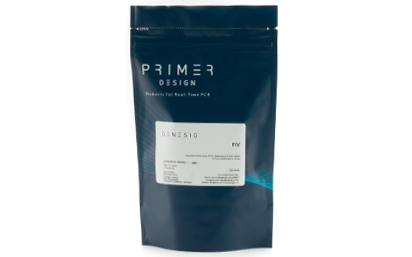
Exceptional value for money Rapid detection of all clinically relevant subtypes Positive copy number standard curve for quantification Highly specific detection profile High priming efficiency Broad dynamic detection range (>6 logs) Sensitive to < 100 copies of target
Accurate controls to confirm findings
Nucleic acid testing (NAT) is the method of choice for detection and quantification of a wide range of micro organisms. Primerdesign manufactures and supplies high quality quantitative real-time PCR kits for the detection and simultaneous quantification of numerous significant pathogens . A copy number standard curve is provided for quantification and an the internal extraction template (DNA or RNA), controls for the quality of the nucleic acid extraction and eliminates false negative results.
The kit is designed with the broadest possible detection profile to ensure that all clinically relevant strains and subtypes are detected. Target sequences are selected by working with data from key opinion leaders in the field. Multiple sequence alignments and unprecedented real-time PCR expertise in design and validation ensure the best possible kit.
Details of the target and priming specificity are included in the individual handbooks above.
Packaged, optimised and ready to use. Expect Better Data.
Other Products
Portable Low Speed Centrifuge
Product Info
Document
Product Info
TD4B Technical Parameter:
Max. Speed
5000rpm
Max. RCF
2635×g
Max. Capacity
4×50ml
Time Range
0~99min
RPM/RCF Convert
Yes
Noise (dB)
≤ 55
Temperature
Normal
Acc/Dec
10 Kinds
Speed Accuracy
±20r/min
Temperature Accuracy
/
Voltage(V/Hz)
AC 220V/110V 50HZ/60HZ
Size (W x D x Hmm)
280×220×175mm
Net Weight(Kg)
3.5KG
Certificates
CE,ISO & Calibration report are available
Matched Rotors for TD4B
Order No.
Rotor Type
Max Speed (rpm)
Max Volume(ml)
Max RCF(g)
NO31501
Angle Rotor
5000
4×50ml
2615
NO31502
Angle Rotor
5000
6×15/10ml
2635
6x7ml vacuum tube adapter
2635
6x5ml vacuum tube adapter
2635
Document
Features 1.Maintenance -free brushless motor 2.LCD display of Speed, RCF and time. 3.Adjustable speed from 300r/min to 5000r/min 4.Timer from 1s to 99min or continuous operation 5.For 6x15ml centrifuge tube &10ml/7ml/5ml/3ml blood collection tube or 4x50ml centrifuge tube 6.Lid automatically open at the end of run to revent sample warming and to reduce handling time. 7.10 Program stored in memory and editable by ender user. 8.10 Acceleration/ 10 Deceleration profiles ,with soft brake system to get the good separation effect. 9.Electric cover lock, compact design, super speed and imbalance protection.
DBCO-Acid is a non-activated building block and adds minimal spacer to modified molecules. In the presence of activators such as EDC or HATU, this reagent can be used to derivatize amine-containing molecules through a stable amide bond. DBCO is commonly used for copper-free Click Chemistry reactions. Reagent grade, for research purpose. Please contact us for GMP-grade inquiries.
Document
DBCO-Acid is a non-activated building block and adds minimal spacer to modified molecules. In the presence of activators such as EDC or HATU, this reagent can be used to derivatize amine-containing molecules through a stable amide bond. DBCO is commonly used for copper-free Click Chemistry reactions. Reagent grade, for research purpose. Please contact us for GMP-grade inquiries.
Plasmid DNA is ready for various downstream applications including restriction digestion, bacterial transformation, sequencing and more
Available in 4 formats: MiniPrep, MiniPrep (Magnetic Bead System), 96-Well MiniPrep (Magnetic Bead System), and MaxiPrep
These kits are designed for the rapid preparation of plasmid DNA from Escherichia coli.
Plasmid MiniPrep Kit
This kit is designed for the rapid preparation of plasmid DNA from small cultures of Escherichia coli using convenient spin columns. The plasmid DNA is preferentially purified from other cellular components such as genomic DNA and RNA. This kit is able to purify plasmids up to 13,000 bp in size, and the typical purification yield is up to 20 μg from 1.5 mL of bacterial culture. Purified DNA is of excellent quality for transformation, restriction enzyme digestion, sequencing and more. Also available in a 96-well format.
Plasmid MiniPrep Kit (Magnetic Bead System and High Throughput Magnetic Bead System)
Norgen’s Plasmid MiniPrep Kit (Magnetic Bead System) is designed for the rapid preparation of plasmid DNA from small batch cultures of Escherichia coli. Norgen’s magnetic beads bind DNA under optimized salt concentrations and release the bound DNA under low salt and slightly alkali conditions. The plasmid DNA is preferentially purified from other cellular components such as genomic DNA and RNA. The purified plasmids are fully digestible with all restriction enzymes tested, and are completely compatible with real-time PCR and NGS.
Norgen’s Plasmid MiniPrep Kit (Magnetic Bead System) is also available in a 96-well (HT) format for high throughput applications. Purification with the 96-well plates can be integrated with a robotic automation system.
Plasmid MaxiPrep Kit
This kit is designed for the rapid spin column preparation of plasmid DNA from up to 100 mL of Escherichia coli cultures. The kit allows for the isolation of plasmid DNA with final endotoxin levels of 0.1 EU/µg of DNA or less. The kit is able to purify plasmids up to 13,000 bp in size, and typical yields from a 100 mL culture for a high copy number plasmid are between 0.4 and 1.0 mg. The purified DNA is fully digestible with all restriction enzymes tested, and is completely compatible with manual or automated sequencing to achieve 95-100% accuracy.
Storage Conditions and Product Stability All solutions should be kept tightly sealed and stored at room temperature. The RNase vial should be stored at -20°C upon arrival. Once RNase has been added to the Resuspension Solution AZ the solution should be stored at 4°C. This kit is stable for 1 year after its date of shipment.
Component
Cat. 13300 (50 preps)
Cat. 46400 (250 preps)
Cat. 46500 (4 preps)
Cat. 46600 (20 preps)
Cat. 60300 (50 preps)
Cat. 63000 (192 preps)
Resuspension Solution AZ
12 mL
60 mL
20 mL
100 mL
12 mL
2 x 20 mL
Lysis Buffer N
40 mL
80 mL
40 mL
2 x 80 mL
40 mL
2 x 40 mL
Buffer TN
20 mL
130 mL
55 mL
2 x 130 mL
20 mL
1 x 55 mL 1 x 20 mL
Wash Solution E
12 mL
2 x 18 mL
–
–
–
–
Elution Buffer K
8 mL
30 mL
–
–
8 mL
2 x 8 mL
Wash Solution J
–
–
25 mL
3 x 25 mL
–
–
Elution Buffer J
–
–
24 mL
120 mL
–
–
RNase A
1 vial
1 vial
1 vial
1 vial
1 vial
1 vial
Magnetic Bead Suspension
–
–
–
–
1 x 1.1 mL
4 x 1.1 mL
Spin Columns
50
250
–
–
–
–
Collection Tubes
50
250
–
–
–
–
DNA Maxi Spin Columns with Collection Tubes (Clear ring in column)
–
–
4
20
–
–
Maxi Spin Filter Columns with Collection Tubes (Grey ring in column)