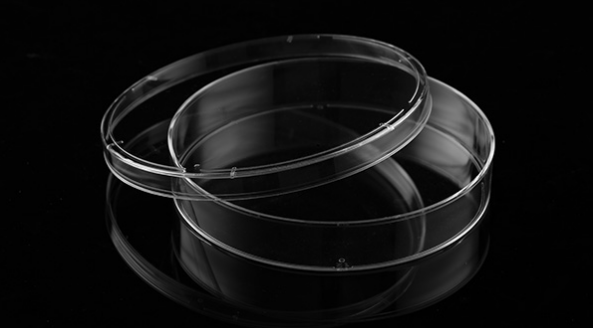
The product is made of medical grade USP CLASS VI polymer polystyrene
The product is made under a 100,00- class dust-free manufacturing site
Two kinds of product line up are providing.
For adherent cell culture: Initial adherence and proliferative property of cells via hydrophilic surface treatment.
For suspension cell culture: The surface is resistant to cell adherence, which minimizes damage or loss of cell.
Gamma radiation sterilization
Non-Pyrogenic, DNase/Rnase free.
Other Products
Clostridium difficile TaqMan PCR Detection Kits
Product Info
Document
Product Info
Overview
Detection kits for Clostridium difficile
CE-IVD marked version available for in vitro diagnostic use
Available in TaqMan format for analysis
Clostridium difficile is rod-shaped, gram positive bacterium. It is the main causal agent of antibiotic-associated diarrhea and pseudomembranous colitis. The colonization of intestines by C. difficile is usually associated with the elimination of natural intestinal flora as a result of antibiotic application and is frequently reported in health care centers. While C. difficile infection could be severe and life-threatening, particularly among the elderly, many patients are asymptomatic making diagnosis challenging during outbreaks. The tradition method of detecting C. difficile infection is by cytotoxicity test of the toxin produced by the bacterium, but such protocols usually require extensive time before conclusion can be made.
Storage Conditions and Product Stability All kit components can be stored for 2 years after the date of production without showing any reduction in performance.
All kit components should be stored at -20°C upon arrival. Repeated thawing and freezing (> 2 x) of the Master Mix and Positive Control should be avoided, as this may affect the performance of the assay. If the reagents are to be used only intermittently, they should be frozen in aliquots.
Plasmid MiniPrep Kit & High Throughput Kit (Magnetic Beads)
Product Info
Document
Product Info
Plasmid MiniPrep Kit & High Throughput Kit (Magnetic Beads)
The kits were developed for plasmid miniprep directly from bacterial cultures. 100% centrifuge-free; NO vacuum needed; No column needed.
Plasmid MiniPrep Kit (Magnetic Beads), Cat.# 50012 – Use 2 ml of bacteria culture directly
Plasmid MiniPrep High Throughput Kit (Magnetic Beads), Cat.# 50011 – High throughput: Use 0.2 ml of bacteria culture directly with 96-well plates – Low throughput: Use 0.2 ml of bacteria culture directly with 1.5 ml tubes
The kits can be used for both high copy and low copy numbers of plasmid DNA. With BioDynami’s proprietary magnetic beads technology, the kits eliminate the requirement of centrifuge, vacuum, and column. Our magnetic beads provide a robust and reliable tool for both high throughput and low throughput applications of plasmid DNA isolation with high binding capacity and fast magnetic response time.
The High Through kit (Cat.# 50011) can be used for both high throughput and low throughput extraction of plasmid DNA. Up to 96 samples can be extracted simultaneously when using a 96-well plate.
Yield of plasmid DNA may vary dependent on the bacteria strain, plasmid type, copy numbers, and growth conditions etc. DNA extracted using the kit is suitable for downstream applications such as qPCR, PCR, DNA sequencing, molecular cloning, restriction enzymatic digestion, transfection, and transformation etc. The isolated plasmid DNA with the magnetic beads is free of contaminations such as RNA, bacterial DNA, proteins, and other impurities.
Plasmid DNA were loaded on 1% of agarose gel after extraction.
Comparison of workflows of Magnetic Beads based kits
Features
100% centrifuge-free
Culture medium can be used directly without centrifuge to pellet the bacteria
Simple
No centrifuge
No column
No vacuum
Flexible applications with simplified miniprep protocol
High throughput: 96-well plates with 0.2 ml of each culture (Cat.# 50011)
Low throughput: 1.5 ml tubes with 0.2 ml of each culture (Cat.# 50011)
Low throughput: 1.5 ml tubes with 2 ml of each culture (Cat.# 50012)
Water-soluble, substrate for sortase mediated labeling of proteins. Sortase catalyzes a transpeptidase reaction between a specific internal sequence of a protein and an amine group present on the N-terminus of triglycine recently has become an area of great interest. This method of labeling proteins has been denoted as “Sortagging”. Proteins conjugated to DBCO-Gly-Gly-Gly can be further modified with azide-containing molecules creating site-specific protein conjugates. Examples of creating protein conjugates using sortagging include site-specifically PEGylating proteins,1 site-specific protein-lipid conjugates,2 and constructing peptides and glycosylphosphatidylinositol chimeras.3 Sortase has also been used in peptide synthesis to cyclize peptides to create macrocyclic peptides, glycopeptides4 and protein−protein conjugates.
Document
Water-soluble, substrate for sortase mediated labeling of proteins. Sortase catalyzes a transpeptidase reaction between a specific internal sequence of a protein and an amine group present on the N-terminus of triglycine recently has become an area of great interest. This method of labeling proteins has been denoted as “Sortagging”. Proteins conjugated to DBCO-Gly-Gly-Gly can be further modified with azide-containing molecules creating site-specific protein conjugates. Examples of creating protein conjugates using sortagging include site-specifically PEGylating proteins,1 site-specific protein-lipid conjugates,2 and constructing peptides and glycosylphosphatidylinositol chimeras.3 Sortase has also been used in peptide synthesis to cyclize peptides to create macrocyclic peptides, glycopeptides4 and protein−protein conjugates.