
Introduction
Usage: For cultivating, enumerating and preserving non-fastidious bacteria. (ISO)

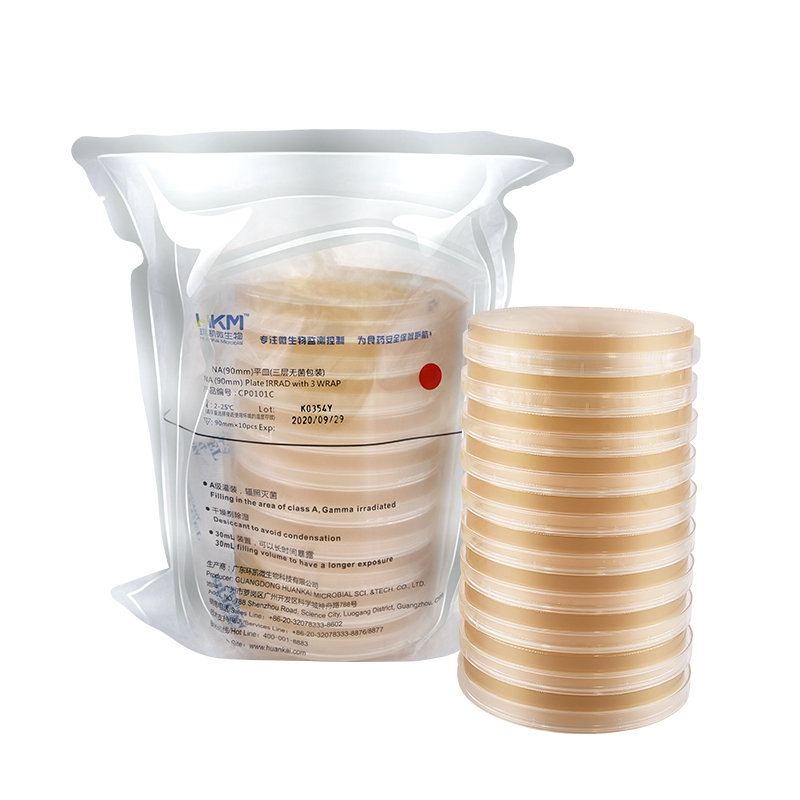
Usage: For cultivating, enumerating and preserving non-fastidious bacteria. (ISO)

More than 70 types of human papillomavirus (HPV) have been identified, and are generally classified as high-risk or low-risk depending on their relationship or lack of relationship with cancer and high-grade cervical intraepithelial neoplasia (CIN 2-3). HPV viruses are predominantly sexually transmitted and high-risk HPV types are a major risk factor for development of cervical cancer. Low-risk HPV types 6 and 11 have been associated with the presence of genital warts. There are many other low-risk HPV types that are not associated with genital warts or cervical cancer. Until now, HPV cannot be cultured in vitro, and immunological tests are inadequate to determine the presence of HPV cervical infection. On the other hand, biopsies can be analyzed by nucleic acid hybridization to directly detect the presence of HPV DNA. HPV 16 and HPV 18 have been considered as high-risk cancer associated HPV types.
HPV (High Risk) TaqMan PCR Kit, 100 reactions
HPV (High Risk) TaqMan PCR Probe/Primer Set and Controls, 100 reactions
For research use only and NOT intended for in vitro diagnostics.
Figure 1 / 5

Click for expanded view
Storage Conditions and Product Stability
All kit components can be stored for 2 years after the date of production without showing any reduction in performance.
All kit components should be stored at -20°C upon arrival. Repeated thawing and freezing (> 2 x) of the Master Mix and Positive Control should be avoided, as this may affect the performance of the assay. If the reagents are to be used only intermittently, they should be frozen in aliquots.
| Component | Cat. TM32250 (100 preps) | Cat. TM32210 (100 preps) |
|---|---|---|
| MDx TaqMan 2X PCR Master Mix | 2 x 700 μL | – |
| HPV (High Risk) Primer & Probe Mix | 280 μL | 280 μL |
| HPV (High Risk) Positive Control | 150 μL | 150 μL |
| Nuclease-Free Water (Negative Control) | 1.25 mL | 1.25 mL |
| Product Insert | 1 | 1 |

Bisulfite seq is a well know technology to detect DNA methylation and several technologies such as WGBS, RRBS, MeDIP-Seq, and MSBS are used for whole genome DNA methylation analysis. DNA methylation is important for regulation of cell development, differentiation and gene expression in molecular biology, genetics and epigenetics. Most methylated cytosines are found at CpG sites, and 70-80% of cytosines are methylated. The number of CpG sites in human genome is around 28 million, which is less than 1% of the genome compared with 4.4% expected.
Whole genome bisulfite sequencing (WGBS) is the most effective method of DNA methylation analysis. The only limitation is the sequencing cost is very high because the whole genome is sequenced including all the non-methylated regions.
Reduced Representation Bisulfite Sequencing (RRBS) is the reduced representation of a smaller fraction of the methylated CpG sites. RRBS combines restriction enzyme digestion and bisulfite sequencing, and enriches the sequencing for methylated CpG sites. It is an efficient technology for estimate the whole genome methylation patterns at the single base level. Although this allows a higher coverage depth and reduces the sequencing cost, the limitation is only 10% of the methylated CpG sites are covered.
Methylated DNA Immunoprecipitation Sequencing (MeDIP-Seq) is another whole genome enrichment technique used for selection of methylated DNA. Using antibodies against 5-methylcytosine, methylated DNA is enriched from whole genomic DNA via immunoprecipitation. 5-methylcytosine antibodies are incubated with fragmented genomic DNA and precipitated, followed by DNA purification and sequencing. There are several drawbacks of MeDIP-Seq: 1. Low resolution (150~200 bp) as opposed to the single base resolution; 2. Non-specific interaction due to antibody specificity and selectivity. 3. Bias towards hypermethylated regions.
The Methylation Specific Bisulfite Seq (MSBS) Library Prep Kit (illumina platform) was developed for construction of NGS libraries for methylated CpG sites using bisulfite treated DNA (20 ng – 500 ng) as input. The kit enriches methylated CpG regions, thus significantly reduce the sequencing cost. The kit estimates the whole genome methylation patterns at the single base level since it is based on a bisulfite-seq technology.
It is known that bisulfite treatment of completed NGS libraries causes tremendous damage to the libraries. By using bisulfite treated DNA as input, the kit overcomes the significant library loss due to the bisulfite conversion. The kit contains a mixture of PCR polymerases that have high-fidelity amplification and uracil tolerance which is ideal for bisulfite treated DNA.

Methylation Specific Bisulfite Seq Library Prep Kit Workflow
Three index types are available for the kit:
Non-index (Cat.# 30101): Libraries do not have index.
Index (Cat.# 30102): Each primer contains a unique barcode sequence of 6 bases to identify the individual library. Library multiplexing capacity is up to 48 samples. Index information can be downloaded here.
Unique dual index (Cat.# 30103): The multiplexing of bisulfite sequencing library is up to 96 samples with unique dual indexes. We used a Four-Base Difference Index System to generate indexes that have at least 4 bases different from each other in the 8-base index. The index primers remove NGS errors including index cross-contamination, index hopping, reads mis-assignment etc. Index information can be downloaded here.

MSBS Library Prep Kit enriches CpG sites

High methylation regions and low methylation regions in human genome.

High methylation region in human genome.

Low methylation region in human genome.
Sequencing setting: Single-end 35 cycles (Read 1, 35 bases) recommended
To maximize the methylated CpG enrichment, we recommend to sequence the MSBS libraries with single end 35 cycles (read1, 35 bases). This is because the enriched methylated CpG sites are mainly located around the beginning of read 1 sequences. Shorter single end reads tend to have better methylated CpG enrichment.
Bisulfite seq is a well know technology to detect DNA methylation and several technologies such as WGBS, RRBS, MeDIP-Seq, and MSBS are used for whole genome DNA methylation analysis. DNA methylation is important for regulation of cell development, differentiation and gene expression in molecular biology, genetics and epigenetics. Most methylated cytosines are found at CpG sites, and 70-80% of cytosines are methylated. The number of CpG sites in human genome is around 28 million, which is less than 1% of the genome compared with 4.4% expected.

t-Boc-N-Amido-PEG3-propargyl enables formation of triazole linkage with azide-bearing compound via copper catalyzed Click Chemistry. Under mild acidic conditions, t-Boc group can be removed to yield the free amine. Reagent grade, for research purpose. Please contact us for GMP-grade inquiries.

t-Boc-N-Amido-PEG3-propargyl enables formation of triazole linkage with azide-bearing compound via copper catalyzed Click Chemistry. Under mild acidic conditions, t-Boc group can be removed to yield the free amine. Reagent grade, for research purpose. Please contact us for GMP-grade inquiries.