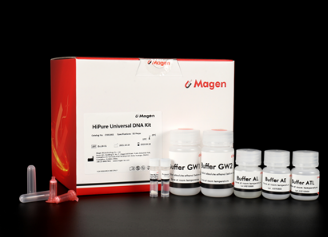
This product is suitable for rapid extraction of total DNA from tissue, cells, blood, saliva, swabs, blood spots, semen and other clinical samples. DNA can be used directly for PCR, quantitative PCR, Southern Blot, test of virus DNA and so on.
Detail
Introduction
This product is suitable for rapid extraction of total DNA from tissue, cells, blood, saliva, swabs, blood spots, semen and other clinical samples. DNA can be used directly for PCR, quantitative PCR, Southern Blot, test of virus DNA and so on.
Details
Specifications
Features
Specifications
Main Functions
Isolation total DNA from tissue / blood / body fluid / swab /dry blood spots
Applications
PCR, qPCR, southern bolt and virus detection, etc
Purification method
Mini spin column
Purification technology
Silica technology
Process method
Manual (centrifugation or vacuum)
Sample type
Tissue, cell, blood, saliva, swab, blood spot,semen and other clinical samples
Sample amount
Solid tissue: 1-10mg; Anticoagulant blood: 200μl
Elution volume
≥20μl
Time per run
30 – 60 minutes
Liquid carrying volume per column
800µl
Binding yield of column
100µg
Principle
This product is based on silica Column purification. The sample is lysed and digested with lysate and protease, DNA is released into the lysate. Transfer to an adsorption column. Nucleic acid is adsorbed on the membrane, while protein is not adsorbed and is removed with filtration. After washing proteins and other impurities, Nucleic acid was finally eluted with low-salt buffer (10mm Tris, pH9.0, 0.5mm EDTA).
Advantages
High quality DNA – meet a variety of downstream applications, including PCR, qPCR, enzyme digestion, hybridization, etc.
Fast – without separation of leukocytes, organic extraction or ethanol precipitation
Simple – all nucleic acids can be obtained by direct digestion
Wide applicability- handle a variety of liquid samples
Kit Contents
Contents
D301802
D301803
Purification Times
50
250
HiPure DNA Mini Columns I
50
250
2ml Collection Tubes
100
500
Buffer ATL
30 ml
150 ml
Buffer AL
30 ml
150 ml
Buffer GW1
22 ml
88 ml
Buffer GW2
12 ml
50 ml
Proteinase K
24 mg
120 mg
Protease Dissolve Buffer
1.8 ml
10 ml
Buffer AE
15 ml
60 ml
Storage and Stability
Proteinase K should be stored at 2-8°C upon arrival. However, short-term storage (up to 12 weeks) at room temperature (15-25°C) does not affect their performance. The remaining kit components can be stored at room temperature (15-25°C) and are stable for at least 18 months under these conditions. The entire kit can be stored at 2-8°C, but in this case buffers should be redissolved before use. Make sure that all buffers are at room temperature when used.
Experiment Data
Other Products
Candida albicans TaqMan PCR Detection Kits
Product Info
Document
Product Info
Overview
Detection kits for Candida albicans
CE-IVD marked version available for in vitro diagnostic use
Available in TaqMan format for analysis
Candida albicans is an opportunistic yeast and is the most common fungal pathogen found in the human body. C. albicans can be detected in the gastrointestinal tract, mouth, and vagina of approximately half of healthy adults. It is typically a commensal organism and makes up part of the natural human microflora; however it can overgrow and become pathogenic as a result of various conditions. For example, individuals who have taken recent courses of antibiotics, have a weakened immune system or have diabetes have an increased risk of developing a Candida albicans infection. When an overgrowth occurs, this can lead to common infections such as urinary tract infections, genital yeast infections, oral thrush, and mucocutaneous candidiasis. In the more severe cases, when Candida albicans enters the bloodstream or organs, it can lead to loss of sight, blood and bone infections, endocarditis, meningitis or inflammation of the intraabdominal lining.
Candida albicans TaqMan PCR Kit, 100 reactions
Ready to use format, including Master Mix for the target and PCR control to monitor for PCR inhibition and validate the quality
Specific Primer and Probe mix for the pathogen/virus/viroid of interest
Primer and Probe mix
Positive and negative control to confirm the integrity of the kit reagents
Candida albicans TaqMan PCR Probe/Primer Set and Controls, 100 reactions
Specific Primer/Probe mix and Positive Control for the pathogen/virus/viroid of interest
Nuclease-free water
Can be used together with Norgen’s PCR Master Mix (#28007) or customer supplied master mix
Storage Conditions and Product Stability All kit components can be stored for 2 years after the date of production without showing any reduction in performance.
All kit components should be stored at -20°C upon arrival. Repeated thawing and freezing (> 2 x) of the Master Mix and Positive Control should be avoided, as this may affect the performance of the assay. If the reagents are to be used only intermittently, they should be frozen in aliquots.
Spring Viremia of Carp is caused by Rhabdovirus carpio, a bullet-shaped RNA virus. The disease has been reported in common carp (or koi) (Cyprinus carpio), grass carp (Ctenopharyngodon idella), bighead carp (Aristichthys nobilis), silver carp (Hypophthalmichthys molitrix), and Crucian carp (Carassius carassius), a close relative of the goldfish. Recent evidence suggests that common goldfish (C. auratus) are also susceptible. The disease was initially diagnosed in Yugoslavia (Fijan et al. 1971). Since then, it has been identified in other European countries, Russia, and the Middle East. Mortality has reached 70% in yearling carp from European populations. Adult fish can also be affected but to a lesser degree.
Document
Exceptional value for money Rapid detection of all clinically relevant subtypes Positive copy number standard curve for quantification Highly specific detection profile High priming efficiency Broad dynamic detection range (>6 logs) Sensitive to < 100 copies of target
Accurate controls to confirm findings
Bioprocessing with Salt Active Nucleases – High Salt Conditions
Product Info
Document
Product Info
Bioprocessing with Salt Active Nucleases – High Salt Conditions
OverView
For SAN HQ, SAN HQ ELISA Kit, and now SAN HQ GMP
SAN HQ GMP is biochemically identical to SAN HQ but produced under GMP conditions.
Applications
Purification of biologics from residual nucleic acids in biopharma manufacturing
Purification of recombinant proteins and enzymes for research and diagnostic use
Removal of unwanted nucleic acids contamination in molecular biology reagents in challenging conditions
Reduction of viscosity in biological samples during production and automation
Vaccine manufacturing and viral vector preparation
DNA removal in high-salt lysates
SAN HQ – Peak performance at high salt conditions
Salt Active Nuclease High Quality (SAN HQ) is a Bioprocessing Grade nuclease developed as the most efficient solution for removal of both single and double stranded DNA and RNA at high salt conditions.
This nonspecific endonuclease has peak activity at salt concentrations between 400 – 700 mM (Fig. 1)
Non-enveloped viruses like Adenoviruses and Adeno-Associated Viruses (AAV’s) are inherently more robust with two distinct advantages: 1) They exhibit higher tolerance to additives like salt and detergents and 2) their production often involves the lysis of host cells, allowing for harvesting non-secreted vectors.
For Adeno-Associated Viruses (AAVs), which are often harvested from crude cell lysate, the high salt tolerance of SAN HQ is particularly beneficial. Salt is typically added to such lysates to reduce viral aggregation, facilitating more effective nuclease action to digest residual DNA.
SAN HQ’s is engineered for optimum activity in these high salt environments ensuring that you achieve unparalleled DNA removal without compromising the integrity of these robust viral vectors.
Key Benefits
Optimized Residual DNA Removal: Ensures efficient degradation of residual DNA in high-salt conditions, meeting stringent quality requirements for biologics and vaccines.
Boosted AAV Vector Purification: Enhances the purification process for adeno-associated viral vectors in high-salt conditions, improving quality and yield.
Streamlined Workflow: Eliminates the need for desalting stages, simplifying the bioprocessing protocol and saving time and resources.
Enable High-Throughput Processes: Facilitates scale-up and automation by working effectively in high-salt environments, increasing operational throughput.
Potential Surge in Virus Yield: Operates under conditions that may boost the titer yield of AAV production, potentially enhancing overall viral yield.
Economized Enzyme Usage: Reduces the need for excess enzyme and additional process adjustments, resulting in significant cost savings.
Minimized Risk of Process Disruptions: Offers reliable performance in various high-salt bioprocessing conditions, reducing the likelihood of disruptions due to enzyme inhibition.
Reliability: Provides consistent enzyme activity in challenging high-salt conditions, adding a layer of predictability and dependability to your operations.
Broader Applicability: Versatile enough to be used in a wide range of viral vector systems, expanding your research and production capabilities.
Enhanced Viral Stability: High-salt levels stabilize viral vectors, and SAN HQ operates effectively in these conditions, maintaining high yield and quality.
Host Cell Lysis: Facilitates efficient lysis of host cells in high-salt conditions, optimizing the harvest of both secreted and non-secreted viral vectors.
Key Features
High purity (≥ 98%)
No protease detected
Supplied with extended product documentation
Compatible with SAN HQ ELISA
The Challenge in Removing Host Cell Chromatin Impurities
In bioprocessing, the primary role of a nuclease is to efficiently digest and fragment host-cell DNA into sufficiently small pieces, facilitating its removal during downstream processing. While most nucleases can effectively degrade naked DNA into tiny fragments under optimal conditions—as demonstrated by M-SAN HQ and SAN HQ, which can digest dsDNA into fragments smaller than 6 nt—the reality in bioprocessing is more complex. (See fig. 5)
The DNA targeted for removal often exists as chromatin, embedded in a complex matrix containing remnants of the lysed host cell as well as large amounts of the therapeutic product.The product may or may not have an affinity for the chromatin you aim to remove.
High salt is often applied to mitigate issues like aggregation. The real challenge lies in a nuclease’s ability to efficiently fragment chromatin under these more complicated, high-salt, conditions—not merely degrading naked DNA under ideal circumstances.
SAN HQ ELISA kit is developed for the detection and quantification of SAN HQ and SAN HQ GMP. The kit is designed as a classical sandwich ELISA, with two monoclonal antibodies specific towards SAN HQ nuclease (fig 6).
Features
Sensitive: 0.4 – 25.6 ng/ml
Precise: RSD ≤ 15%
Accurate: 100% ± 15%
Stability: 12 months when stored between +2°C to +8°C
Document
For SAN HQ, SAN HQ ELISA Kit, and now SAN HQ GMP SAN HQ GMP is biochemically identical to SAN HQ but produced under GMP conditions.