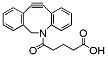
DBCO-C5-acid is an analog of DBCO-Acid with an extended 5-carbon atom spacer arm. The extended 6-carbon atom spacer arm improves its derivatization efficiency and the stability of the yielded conjugates. This spacer arm also improves solubility in organic solvents such as dichloromethane, chloroform, THF, and ethyl acetate. DBCO is commonly used for copper-free Click Chemistry reactions. Reagent grade, for research use only.
Detail
DBCO-C5-acid is an analog of DBCO-Acid with an extended 5-carbon atom spacer arm. The extended 6-carbon atom spacer arm improves its derivatization efficiency and the stability of the yielded conjugates. This spacer arm also improves solubility in organic solvents such as dichloromethane, chloroform, THF, and ethyl acetate. DBCO is commonly used for copper-free Click Chemistry reactions. Reagent grade, for research use only.
Other Products
Acetic Acid Assay Kit (ACS Analyser Format)
Product Info
Document
Product Info
K-ACETAF
SKU: 700004255
141.6 mL of prepared reagent (e.g. 456 assays of 0.31 mL)
Content:
141.6 mL of prepared reagent (e.g. 456 assays of 0.31 mL)
Shipping Temperature:
Ambient
Storage Temperature:
Short term stability: 2-8oC, Long term stability: See individual component labels
Stability:
> 2 years under recommended storage conditions
Analyte:
Acetic Acid
Assay Format:
Auto-analyser
Detection Method:
Absorbance
Wavelength (nm):
340
Signal Response:
Increase
Linear Range:
up to 30 μg/mL of acetic acid per assay
Limit of Detection:
10 mg/L (recommended assay format)
Reaction Time (min):
~ 15 min
Application examples:
Wine, beer, fruit and fruit juices, soft drinks, vinegar, vegetables, pickles, dairy products (e.g. cheese), meat, fish, bread, bakery products (and baking agents), ketchup, soy sauce, mayonnaise, dressings, paper (and cardboard), tea, pharmaceuticals (e.g. infusion solutions), feed and other materials (e.g. biological cultures, samples, etc.).
Method recognition:
Methods based on this principle have been accepted by EN, ISO, ICUMSA, IFU and MEBAK
The Acetic Acid analyser format test kit is suitable for the specific measurement and analysis of acetic acid (acetate) in beverages and food products.
See more of our acetic acid and organic acid test kits.
Advantages
No wasted ACS solution (stable suspension supplied)
PVP incorporated to prevent tannin inhibition
Very stable reagent when prepared for auto-analyser applications (> 3 days at 4oC)
Linear calibration up to 30 μg/mL of acetic acid in final reaction solution
Validated by the University of Wine, Suze la Rousse, France
Very competitive price (cost per mL of reagent)
All reagents stable for > 2 years after preparation
Document
The Acetic Acid analyser format test kit is suitable for the specific measurement and analysis of acetic acid (acetate) in beverages and food products.
Mastitis is the single most costly disease of dairy cattle resulting in the reduction of milk yield and quality. The inflammation of the udder is mainly caused by infection of various bacteria. One of such mastitis bacteria, Streptococcus agalactiae, is highly infectious and causes mainly subclinical infections, which are not identified by the herdsman. As a result, S. agalactiae can spread widely within a herd, causing immediate loss due to reduced milk. S. agalactiae is a gram-positive bacteria belonging to the Group B streptococci. Traditional cultural identification of S. agalactiae is based on S. agalactiae being beta-hemolytic as well as presence of group B Lancefield antigen and by its ability to hydrolyze sodium hippurate.
Storage Conditions and Product Stability All kit components can be stored for 2 years after the date of production without showing any reduction in performance.
All kit components should be stored at -20°C upon arrival. Repeated thawing and freezing (> 2 x) of the Master Mix and Positive Control should be avoided, as this may affect the performance of the assay. If the reagents are to be used only intermittently, they should be frozen in aliquots.
Cluster of differentiation 57 (CD57), also known as NK-1, is an antigen detectable in natural killer cells, some T-lymphocytes and normal peripheral blood mononuclear cells, myeloid cells, and a variety of polypeptides, lipids, and chondroitin sulfate proteoglycans. CD57 is indicated as a marker for tumors of neuroendocrine origin, including pheochromocytomas, paragangliomas, carcinoid tumor, and medulloblastomas, as well as various neural tumors including neuromas, neurofibromas, schwannomas, and granular cell tumors. CD57 is also detectable in ganglioneuroma and prostate carcinoma. Anti-CD57 is used to distinguish nodular lymphocyte-predominant Hodgkin’s lymphoma from T-cell/histiocyte-rich large B-cell lymphoma, nodular sclerosis Hodgkin’s disease, and follicular lymphoma.