


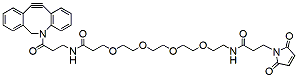

Hydroxy-Amino-bis(PEG2-propargyl) is a 3-arm linker with a terminal hydroxy group and two propargyl groups. The propargyl groups can participate in copper catalyzed azide-alkyne Click Chemistry to yield a stable triazole linkage. Reagent grade, for research purpose. Please contact us for GMP-grade inquiries.

Hydroxy-Amino-bis(PEG2-propargyl) is a 3-arm linker with a terminal hydroxy group and two propargyl groups. The propargyl groups can participate in copper catalyzed azide-alkyne Click Chemistry to yield a stable triazole linkage. Reagent grade, for research purpose. Please contact us for GMP-grade inquiries.

Nucleic acid testing (NAT) is the method of choice for detection and quantification of a wide range of micro organisms. Primerdesign manufactures and supplies high quality quantitative real-time PCR kits for the detection and simultaneous quantification of numerous significant pathogens . A copy number standard curve is provided for quantification and an the internal extraction template (DNA or RNA), controls for the quality of the nucleic acid extraction and eliminates false negative results.
The kit is designed with the broadest possible detection profile to ensure that all clinically relevant strains and subtypes are detected. Target sequences are selected by working with data from key opinion leaders in the field. Multiple sequence alignments and unprecedented real-time PCR expertise in design and validation ensure the best possible kit. Details of the target and priming specificity are included in the individual handbooks above.
Packaged, optimised and ready to use. Expect Better Data.
Exceptional value for money
Rapid detection of all clinically relevant subtypes
Positive copy number standard curve for quantification
Highly specific detection profile
High priming efficiency
Broad dynamic detection range (>6 logs)
Sensitive to < 100 copies of target
Accurate controls to confirm findings
150 reactions

The NGS Library Quantification Standards with PCR Primers (for illumina platform) were developed for quantification of the NGS library concentration for illumina sequencing platform. It is comprised of Library Standards (six 10-fold dilutions) and a primer mix.
Quantification of the NGS library of the amplifiable molecules is critical for the quality of the sequencing data. Adequate library concentration will maximize sequencing capacity. Poor library concentration results in either low or high cluster density on the flow cell, which can lead to low sequencing capacity.
It is not accurate to measure the concentration of NGS library with standard DNA quantification methods such as spectrophotometer or fluorometer. QPCR is the best way for library quantification with high consistency and reproducibility of library quantitation.

BioDynami Library Quantification Standards with PCR Primers (for illumina platform): Amplification curve of 6 standards.
Our reagent is a highly sensitive, Real time PCR-based quantification that specifically designed for NGS libraries using illumina sequencing platform. The amplification uses illumina adaptor sequences as primers, and only the fully adaptor-ligated libraries will be amplified. Therefore the reagent provides an accurate estimation of the library concentration based on true sequenceable illumina libraries. In addition, this kit can also be used for confirmation of ligation reaction after completion of library preparation.
Our library quantification standards is compatible with commercial SYBR Green based QPCR reagents. This makes it more flexible for scientists who want to use their real time PCR reagent. Quantification of library concentration is achieved by comparison with a standard curve generated from the Library Standards.
The NGS Library Quantification Standards with PCR Primers (for illumina platform) were developed for quantification of the NGS library concentration for illumina sequencing platform. It is comprised of Library Standards (six 10-fold dilutions) and a primer mix.