

endo-BCN-PEG4-Boc-amine is a PEG linker containing a BCN group and a Boc-protected amine. The protected amine can be deprotected under mild acidic conditions. The BCN group can react with azide-tagged biomolecules. Reagent grade, for research purpose. Please contact us for GMP-grade inquiries.

endo-BCN-PEG4-Boc-amine is a PEG linker containing a BCN group and a Boc-protected amine. The protected amine can be deprotected under mild acidic conditions. The BCN group can react with azide-tagged biomolecules. Reagent grade, for research purpose. Please contact us for GMP-grade inquiries.

| Clone | IHC072 |
| Source | Mouse Monoclonal |
| Positive Control | Lung Adenocarcinoma |
| Dilution Range | 1:200 |
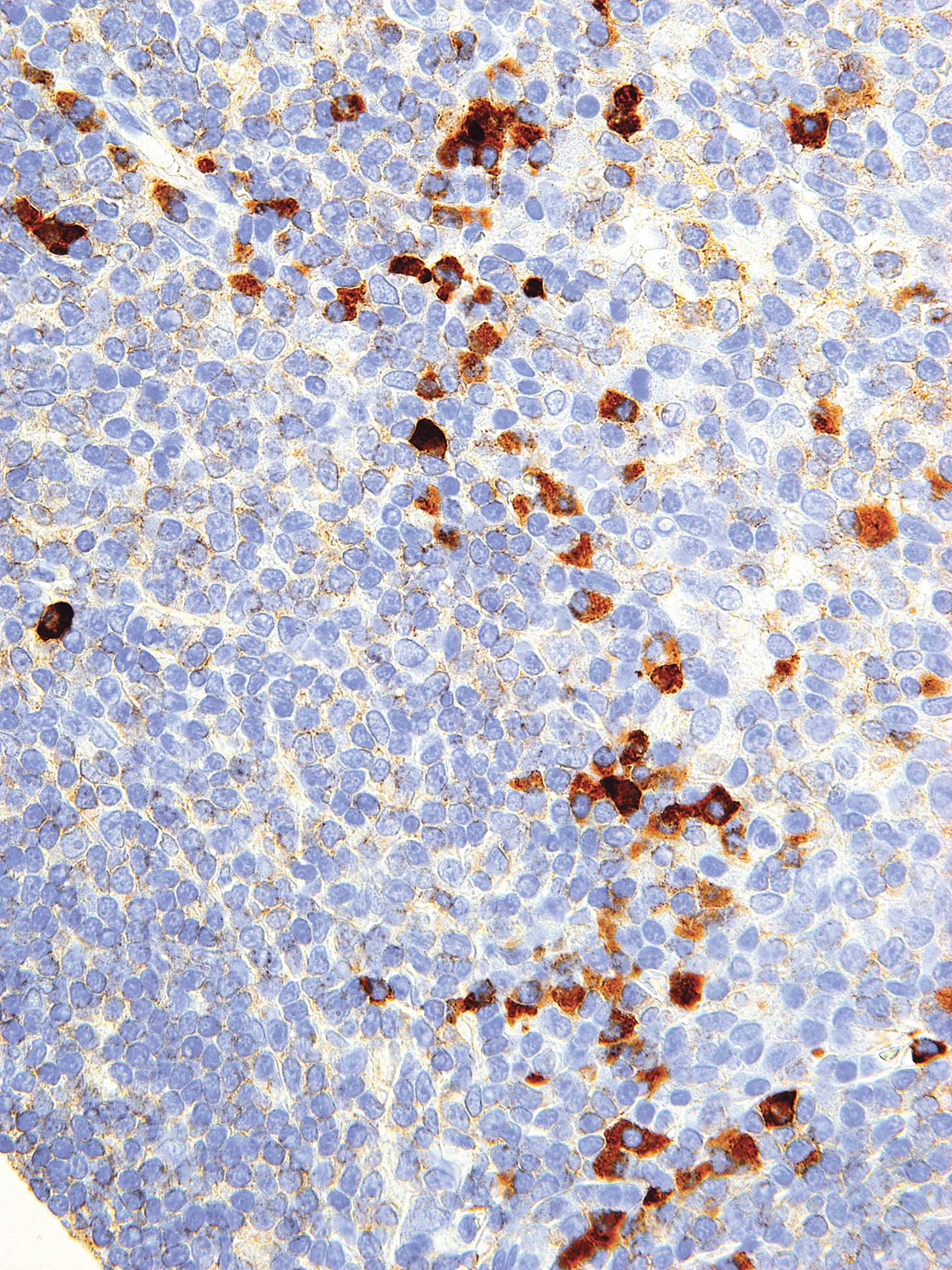
Tumor-Associated Glycoprotein 72 (TAG-72) is a glycoprotein found on the surface of many cancer pathologies. Anti-TAG-72 can be useful for detecting some adenocarcinomas and non-neoplastic tissues. This diagnostic grade TAG-72 IVD antibody is useful for identifying adenocarcinomas in positive staining, but in mesotheliomas no staining is observed.

RNA/DNA/Protein Purification Plus Kit
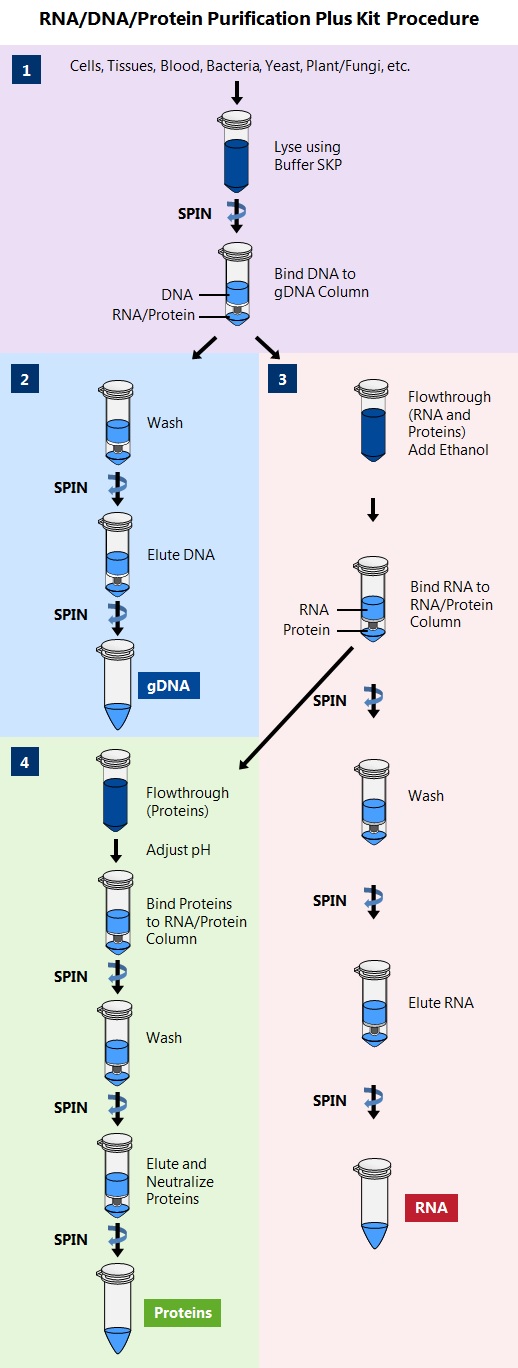
This kit provides a rapid method for the high throughput isolation and purification of total RNA, DNA and proteins sequentially from a single sample of cultured animal cells, small tissue samples, blood, bacteria, or yeast. The kit employs two columns: 1) for gDNA purification and 2) for RNA purification utilizing Norgen’s resin columns (superior for the binding of all RNA sizes including miRNA). The proteins are also purified on the second column after RNA elution. The proteins are eluted in buffer and are ready for downstream application without any further clean up required. The proteins can be quantified directly, used in western blots, ELISA or mass spectrometry. This kit provides a rapid spin-column method for the isolation and purification of total RNA, genomic DNA and proteins sequentially from a single sample of cultured animal cells, small tissue samples, blood, bacteria, yeast, fungi or plants.
RNA/DNA/Protein Purification Plus Micro Kit
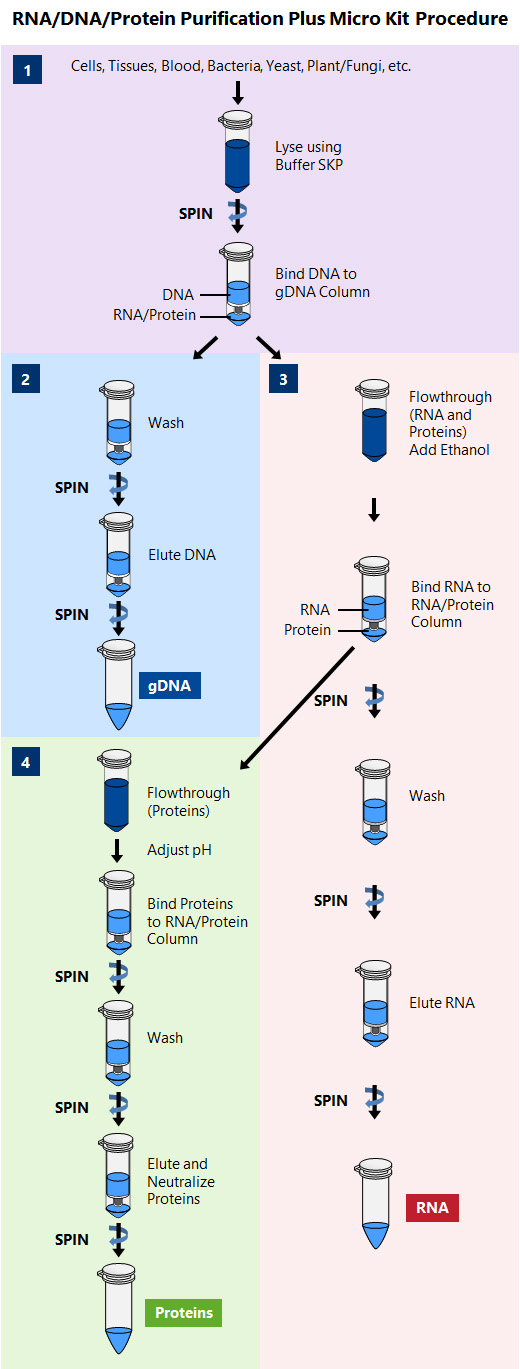
This kit provides a rapid spin-column method for the isolation and purification of total RNA, DNA and proteins sequentially from a single sample of cultured animal cells, small tissue samples, microdissected samples including LCM, stem cells, sorted cells, and CTC. The total RNA, genomic DNA and proteins are all column purified in less than 30 minutes. The RNA and DNA can be eluted in as little as 20 µL while the protein can be eluted in as little as 50 µL. This kit provides the same performance as if the samples were isolated from dedicated kits.
RNA/DNA/Protein Purification 96-Well Plus Kit
The kit employs two plates: 1) for DNA purification and 2) for RNA purification utilizing Norgen’s resin (superior for the binding of all RNA sizes including miRNA). Please see the protocol schematic below.
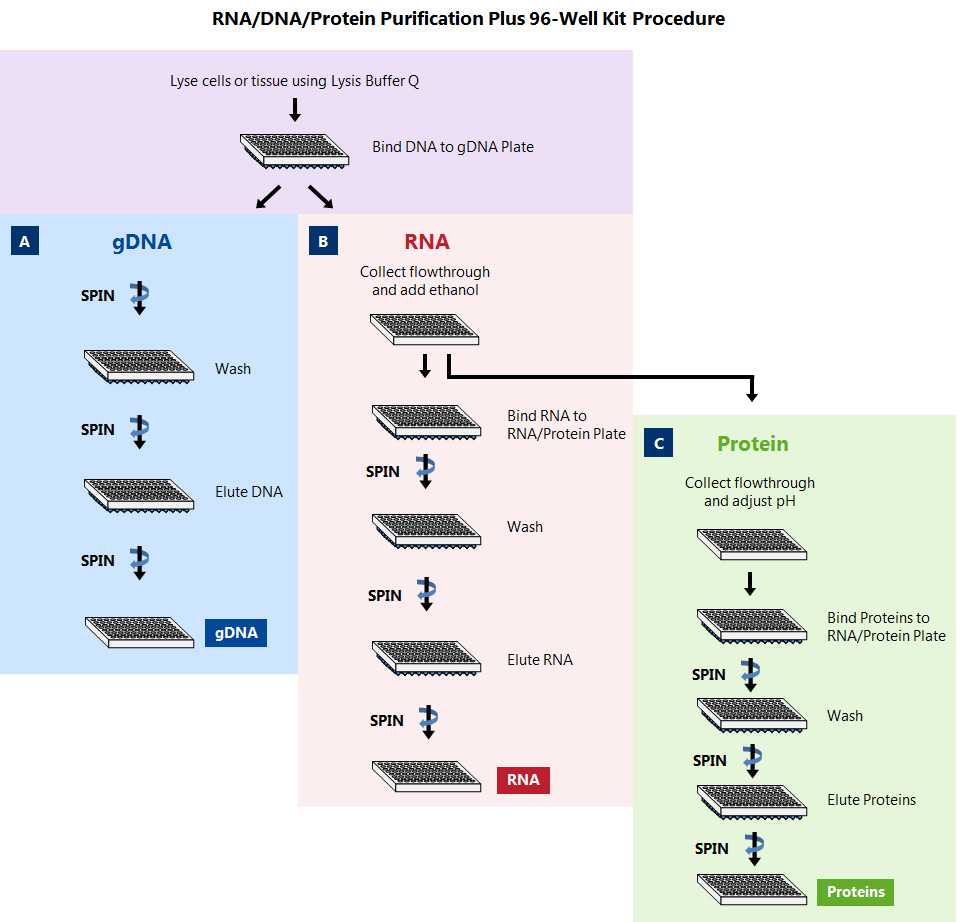
Figure 1 / 4

Click for expanded view
| Kit Specifications | |
| Maximum Column Binding Capacity | 35 μg for RNA 10 μg for DNA 100 μg for protein |
| Maximum Column Loading Volume | 650 μL |
| Size of RNA Purified | All sizes, including small RNA (< 200 nt) |
| Size of DNA Purified | ≥ 30 kb |
| Time to Complete 10 Purifications | 30 minutes |
| Maximum Amount of Starting Material:Animal CellsAnimal TissuesBloodPlant / Fungi Tissues | 5 x 10⁵ cells5 mg (for selected tissues)50 µL25 mg |
| Average Yield* HeLa Cells (5 x 10⁵ cells) HeLa Cells (5 x 10⁵ cells) HeLa Cells (5 x 10⁵ cells) | RNA: 7.5 μg DNA: 1-2 μg Protein: 70 μg |
Storage Conditions and Product Stability
The Protein Loading Dye should be stored at -20°C after the addition of DL-Dithiothreitol (DTT). All solutions should be kept tightly sealed and stored at room temperature. This kit is stable for 1 year after the date of shipment.
| Component | Cat. 47700 (50 preps) | Cat. 51600 (50 preps) | Cat. 51700 (96 preps) |
|---|---|---|---|
| Buffer SKP | 40 mL | 40 mL | – |
| Lysis Buffer Q | – | – | 40 mL |
| Wash Solution A | 2 x 38 mL 1 x 18 mL | 2 x 38 mL 1 x 18 mL | 2 x 38 mL 1 x 18 mL |
| Elution Solution A | 6 mL | 6 mL | 20 mL |
| Elution Buffer F | 15 mL | 15 mL | 2 x 15 mL |
| Wash Solution C | 30 mL | 30 mL | 60 mL |
| Binding Buffer A | 8 mL | 8 mL | 8 mL |
| Elution Buffer C | 8 mL | 8 mL | 30 mL |
| Protein Neutralizer | 4 mL | 4 mL | 4 mL |
| Protein Loading Dye | 2 mL | 2 mL | 3 x 2 mL |
| gDNA Purification Columns | 50 | – | – |
| gDNA Purification Micro Columns | – | 50 | – |
| gDNA Purification 96-Well Plate | – | – | 1 |
| RNA/Protein Purification Columns | 50 | – | – |
| RNA/Protein Purification Micro Columns | – | 50 | – |
| RNA/Protein Purification 96-Well Plate | – | – | 1 |
| Collection Tubes | 150 | 150 | – |
| Collection Plate | – | – | 5 |
| Elution Tubes (1.7 mL) | 150 | 150 | – |
| Elution Plate | – | – | 3 |
| Lysis Preparation Plate | – | – | 2 |
| Adhesive Tape | – | – | 4 |
| Product Insert | 1 | 1 | 1 |
