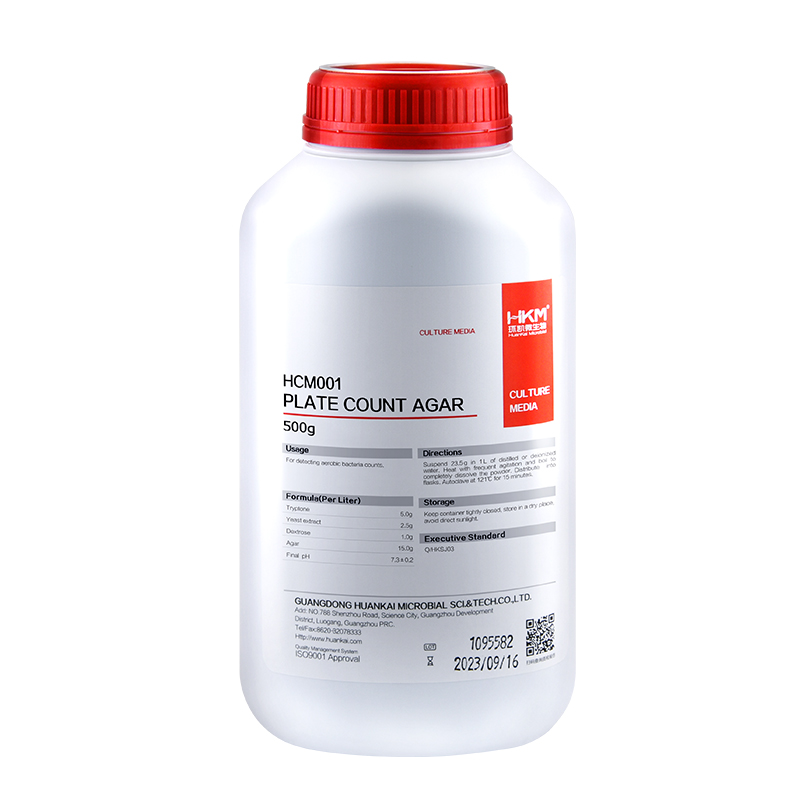
Usages: For determination of total bacterial count .
Principle: Tryptone provide carbon and nitrogen; yeast extract powder provides B vitamins; glucose to provide energy, agar is the solidifying agent. Formulation(per liter): Tryptone 5.0g Yeast extract powder 2.5g Glucose 1.0g Agar 15.0g Final pH 7.0 ± 0.2
How to use: 1.Suspend 23.5g in 1 L of distilled water , stirring heated to boiling until completely dissolved, dispensing flask, 121 autoclave for 15min. 2.Diluted and treated samples.
Storage: Keep container tightly closed, store in a cool, dry place, away from bright light. Storage period of 3 years.
Other Products
AAV Purification Kits
Product Info
Document
Product Info
Overview
AAV Purification from any input – cell fraction or media fraction
High AAV recovery, up to 90%
No specialized equipment needed
Purification from a variety of AAV serotypes (including AAV6 and AAV9)
Yields highly active AAV for in vivo and in vitro experiments
Purification is based on spin column chromatography that uses Norgen’s resin separation matrix
Recombinant adeno-associated virus (AAV) vectors are highly promising tools for both in vitro and in vivo gene transfer. Norgen’s AAV Purification Kits provide fast and simple procedures for concentrating and purifying AAV vectors from cell lysate and cell culture media. Purification is based on precipitation onto Norgen Biotek’s proprietary resin. Contaminating cellular debris is largely removed from the sample via a centrifugation step, while contaminating DNA and RNA is reduced using enzymatic digestion. AAV vector purified in this manner is highly active for use in in vitro and in vivo transduction experiments.
AAV Purification Kit
Norgen’s AAV Purification Kit contains sufficient materials for 15 preparations (33.5 mL per prep of supernatant (SN) or a total of 500 mL of supernatant input). Approximately 1 mL of cell pellet can be purified per prep, up to a maximum of 15 mL of cell pellet in total for the entire kit. Up to 33X sample concentration.
AAV Purification Mini Kit
Each spin column is able to concentrate and purify AAV from 0.5-8 mL of cell pellet, cell culture media, or cells and culture media mixed together. Up to 50X sample concentration. AAV vector purified in this manner is highly active for use in in vitro transduction experiments, and is eluted into a small volume (200 µL). Preparation time for 4 samples is 1.5 hours, with 45 minutes of hands-on time.
AAV Purification Midi Kit
Each spin column is able to concentrate and purify AAV from 8 mL up to 45 mL of input consisting of cell pellet, cell culture media, or cells and culture media mixed together. Up to 50X sample concentration. AAV vector purified in this manner is highly active for use in in vitro transduction experiments, and is eluted into a small volume (1 mL). The kit may be used to purify up to 8 x 25 mL or 4 x 45 mL of samples using the included columns. Preparation time for 4 samples is approximately 2 to 2.5 hours, with 1.5 hours of hands on time.
AAV Purification Maxi Kit (Slurry Format)
Each spin column is able to concentrate and purify AAV from 45 mL to 90 mL of input consisting of cell pellet, cell culture media, or cells and culture media mixed together. Up to 200X sample concentration. AAV vector purified in this manner is highly active for use in in vitro transduction experiments, and is eluted into a small volume (1-10 mL) using the optional concentration step. The kit may be used to purify up to 1 x 900 mL samples or 10 x 45-90 mL samples using the included columns. Preparation time for 1 x 900 mL sample is approximately 2.5 to 3.5 hours, with an optional concentration step requiring an additional 30 min.
At least 5 x 10¹⁰ AAV particles as determined by qPCR
AAV Vector Serotype
AAV6, AAV9 and others
Input Type
Cells, media
Input Volume (AAV supernatant)
1 – 33.5 mL SN per prep (500 mL SN in total)
Input Volume (AAV cell pellet)
1 mL cell pellet per prep (15 mL in total)
Time to Complete Purifications
2.5 to 4.5 hours with 1 hour hands on time
In vivo transduction
Yes
Storage Conditions and Product Stability
HL-SAN Nuclease should be stored at -20°C upon arrival. Elution Buffer O should be stored tightly capped at 4°C upon arrival. All other solutions should be kept tightly sealed and stored at room temperature. Once opened, the solutions should be stored at 4°C. This kit is stable for 2 years after the date of shipment.
Component
Cat. 66100 (15 preps)
Cat. 63200 (20 preps)
Cat. 63300 (4-8 preps)
Cat. 63250 (1-10 preps)
Lysis Buffer S
5.5 mL
5.5 mL
5.5 mL
20 mL
DNAse I
–
2 x 25 uL
2 x 25 uL
210 μL
RNAse A
–
60 μL
60 μL
240 μL
HL-SAN Nuclease
102 μL
–
–
–
Binding Buffer A
20 mL
4 mL
4 mL
2 x 8 mL
Purification Solution C
60 mL
–
–
–
Purification Solution D
130 mL
–
–
–
Wash Solution C
2 x 130 mL
60 mL
60 mL
3 x 60 mL
Slurry E
12.5 mL
–
–
2 x 14.5 mL
Elution Buffer O
66 mL
8.5 mL
8.5 mL
66 mL
Protein Neutralizer
4 mL
4 mL
4 mL
4 mL
Spin Columns
–
20
–
–
Mini Spin Columns
–
20
–
–
Midi Spin Columns (grey contents) with Collection Tubes
–
–
8
10
Midi Spin Columns (white contents) with Collection Tubes
–
–
8
–
Maxi Spin Columns (grey contents) with Collection Tubes
–
–
–
10
Maxi Spin Columns (white contents) with Collection Tubes
This Rapid Test is for the detection of specific Aspergillus Galactomannan Antigen in Serum or Bronchoalveolar Lavage (BAL).
This product is manufactured by GaDia Diagnostics in Switzerland and distributed in Germany exclusively by Milenia Biotec.
Method/Platform
Immunochromatographic Rapid Test
Range/Assay Sensivity
Test Principle
The principle of the test is colloidal gold immunochromatography. If the sample is positive, the antigens in the sample react with the red-colored nanoparticles and form a complex (Antigen – anti-Aspergillus monoclonal antibodies – gold nanoparticles), which was previously pre-dried on the conjugate pad. The mixture then moves upward on the membrane by capillary action. As the sample flows through the test membrane, the binding conjugate complexes migrate. The anti-Aspergillus antibodies present on the membrane (Test Line) capture the colored conjugate complex and a red line will appear.
One cDNA Synthesis, Multiple microRNAs and microRNA-targets analyzed
Time Savings
Cost Efficient
High Sensitivity and Yield
Robust Enzyme
Available in 12 or 50 reaction size
Norgen’s microScript microRNA cDNA Synthesis Kit is an all-in-one, ready-to-use product for the reverse transcription of microRNA from either Total RNA preparations or enriched microRNA preparations. The kit contains the 2x Reaction Mix and the microScript microRNA Enzyme Mix. The kit utilizes Norgen’s microScript Reverse Transcriptase, a mutant version of Moloney Murine Leukemia Virus (M-MuLV) Reverse Transcriptase. It has reduced RNase H activity and increased thermal stability.
The workflow of Norgen’s microScript microRNA cDNA Synthesis Kit involves a simple, single-tube set-up by the mixing of 2x Reaction Mix, Enzyme Mix and the RNA template. The reaction can then be carried out in a thermocycler. A poly (A) tail is first added to the RNA template, followed by cDNA synthesis using an adapter primer. In addition to the ease-of-use, the single-tube set-up provides superb consistency and sensitivity. The cDNA could be used in a PCR or qPCR amplification using a Universal PCR Reverse Primer and the forward primer that contains the sequence of the microRNA of interest. A single cDNA preparation could be used for PCR amplification of a number of different microRNAs. In addition, the cDNA preparation could be used for PCR or qPCR detection (using gene-specific forward and reverse primers) of mRNA or large RNA if total RNA preparation was the starting template. This could allow for parallel evaluation of expression level of microRNAs and microRNA-targets.
Storage Conditions and Product Stability Norgen’s microScript microRNA cDNA Synthesis Kit components should be stored at -20°C. These reagents should remain stable for at least 1 year in their unopened containers.