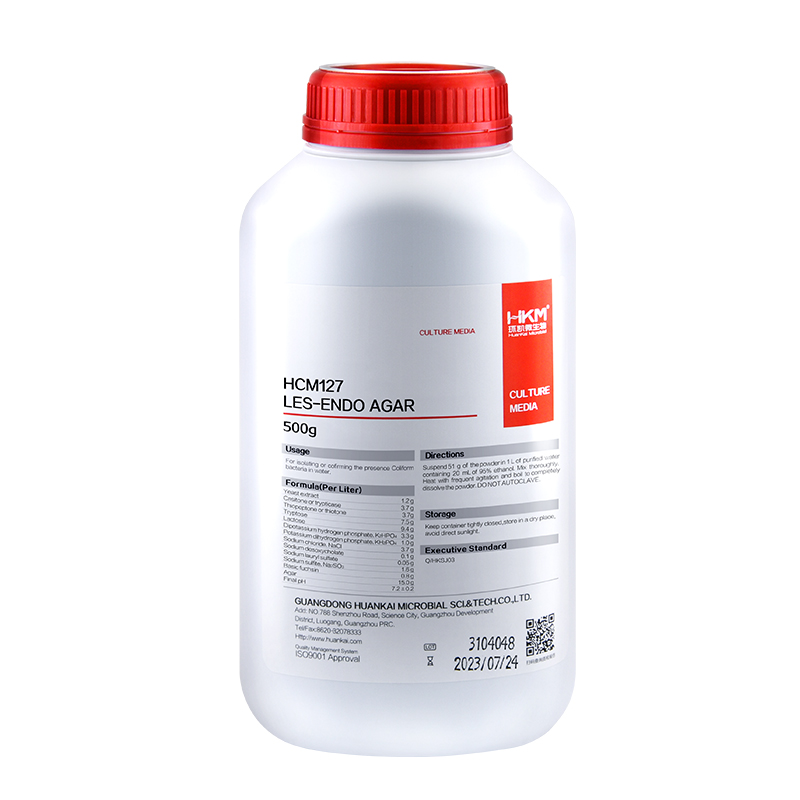
Peptone, yeast extract powder, beef extract powder provides carbon and nitrogen sources, vitamins and minerals; lactose as fermentable sugars; agar as medium coagulant; potassium hydrogen phosphate as buffer.
Formulation(per liter):
Peptone 10g
Yeast extract powder 5g
Beef extract powder 5g
Lactose 10g
Agar 15g
Dipotassium hydrogen phosphate 3.5g
Sodium sulphite 5g
Fuchsin 1g
Final pH 7.2 ± 0.2
How to use:
1.Suspend 54.5g in 1 L of distilled water , stirring heated to boiling until completely dissolved, dispensing flask, autoclave at 115 for 20min. Cool to 50 and pour into petri dishes.
2.Diluted and treated samples.
Storage: Keep container tightly closed, store in a cool, dry place, away from bright light. Storage period of 3 years.
MagZol Reagent is a reagent system for the isolation of total RNA from cells and tissues. The reagent, a single-phase solution consisting of phenol and guanidine isothiocyanate, is modification of the single-step RNA isolation method developed by Chomczynski and Sacchi. The sample is homogenized and lysed in MagZol Reagent which maintains the integrity of the RNA, while disrupting and denaturing endogenous RNases and other cellular components. Extraction of the lysate with chloroform further denatures proteins and separates the mixture into an organic and an aqueous phase. RNA remains exclusively in the aqueous phase, and is subsequently recovered by isopropanol.
This method is suitable for small quantities of tissue (<100mg) and cells (<5 X10⁶), and large quantities of tissue (up to 1g) and cells (<108), of human, animal, plant, or bacterial origin. The simplicity of the MagZol Reagent method allows simultaneous processing of a large number of samples. The entire procedure can be completed in one hour. Total RNA prepared in this manner can be used for Northern blot analysis, dot blot hybridization, poly(A) + selection, in vitro translation, RNase protection assay, and molecular cloning. For use in amplification by thermal cycling, treatment of the isolated RNA with RNase-free DNase I is recommended when the two amplimers lie within a single exon.
Details
Specifications
Features
Specifications
Main Functions
RNA isolation solvent (substitution for Trizol/Qiazol reagent)
Applications
RT-PCR, Northern hybridization, poly (a) enrichment, etc.
Extensive – suitable for various kinds of biological samples, including animals, plants, cultured cells, bacteria, etc.
High yield – efficient cleavage releases more RNA
High purity – purified RNA is suitable for various downstream applications
Flexible – sample amount can be adjusted according to the demand
High cost performance compared with similar products
Storage and Stability
MagZol Reagent should be stored at 2-8°C upon arrival and is stable for at least 24 months under the condition. However, short-term storage (up to 12 weeks) at room temperature (15-25°C) does not affect its performance.
Experiment Data
Document
MagZol Reagent is a reagent system for the isolation of total RNA from cells and tissues. The reagent, a single-phase solution consisting of phenol and guanidine isothiocyanate, is modification of the single-step RNA isolation method developed by Chomczynski and Sacchi. The sample is homogenized and lysed in MagZol Reagent which maintains the integrity of the RNA, while disrupting and denaturing endogenous RNases and other cellular components. Extraction of the lysate with chloroform further denatures proteins and separates the mixture into an organic and an aqueous phase. RNA remains exclusively in the aqueous phase, and is subsequently recovered by isopropanol.
The ITS1 Library Preparation Kit for Illumina consists of the reagents and components required for library preparation of the fungal target ITS1 libraries to be used for next-generation sequencing on Illumina platforms. All molecular reagents including primers, enzyme mixes, indexes, and buffers are provided. Instructions for PCR clean up with the AMPure XPMagneticBeads(supplied by customer) are also included for rapid purification of nucleic acid products generated at two steps of the workflow. The library prep workflow could be used for purified DNA inputs from different sources including stool, soil, water, saliva, plant, urine, skin swab, vaginal swab, cheek swab, nasal/swab, plasma/serum, tongue swab, gum swab, and others.
The ITS1 Library Preparation Kit for Illumina has a streamlined procedure that reduces the handling time such that the library prep procedure can be completed in approximately 4 hours (see diagram below). Input DNA is first subjected to targeted PCR to amplify the ITS1 region of the fungal DNA.The post-PCR reaction is then cleaned up using AMPure XPbeads. Dual index primers are then added using a limited-cycle PCR. The indexed amplicons flanked by 5′ and 3′ barcoded adaptors are then cleaned using AMPure XPbeads. The libraries are then ready for quantification, pooling and sequencing.
Storage Conditions and Product Stability Norgen’s ITS1 Library Prep Kit for Illumina is shipped as one kit box (for the 24 prep kit) or two sub-component kits (for the 96 prep kit). All kits should be stored at -20°C upon arrival.
All kit components will remain stable for at least 1 year when stored at the specified storage conditions.