
Introduction
Discover our Modified Tryptone Soya Broth, designed for the enrichment and cultivation of a wide range of microorganisms, ensuring accurate and reliable microbiological testing.

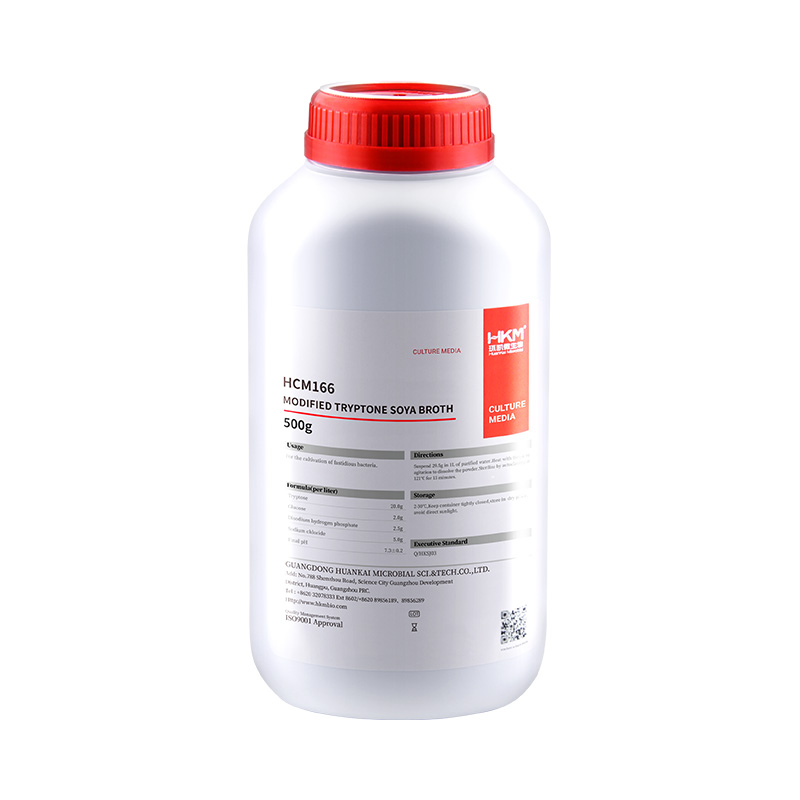
Discover our Modified Tryptone Soya Broth, designed for the enrichment and cultivation of a wide range of microorganisms, ensuring accurate and reliable microbiological testing.

E. coli O157:H7 is a rod-shaped, gram negative bacterium. It is an enterohemorrhagic strain of the common E. coli bacterium and infection by the O157:H7 strain is commonly associated with hemorrhagic colitis. E. coli O157:H7 is recognized by its somatic (cell wall) antigen (O157) and its flagella antigen (H7). In addition, E. coli O157:H7 is known to produce Shiga-like toxins, which cause severe symptoms. While most patients can recover from the infection, up to 15% of the patients may develop hemolytic uremic syndrome, a type of kidney failure that could be fatal. Infection of E. coli O157:H7 usually results from consumption of poorly prepared food including undercooked meat (particularly ground beef), untreated water or raw unpasteurized milk.
Norgen’s E. coli O157:H7 Quantified Bacterial DNA Standards are cloned fragments of the two Shiga-like toxin regions purified using Norgen’s sample preparation technology. They include partial sequences of STX-1 subunit A gene and STX-2 subunit A gene. Please refer to Appendix A for sequence information. The purified DNA is quantified vigorously using multiple methods including spectrophotometry, gel densitometry and real-time PCR. It is intended to be used as positive controls or PCR quantification standards for E. coli O157:H7. This product is compatible with Norgen Biotek’s E. coli O157:H7 Taqman PCR Detection Kit (Cat. TM41350) and E. coli O157:H7 Taqman PCR Detection Probe/Primer and Control Set (Cat. TM41310).
Figure 1 / 1

Click for expanded view
| Volume Provided | 250 μL (for STX1)250 μL (for STX2) |
| DNA Quantity | 2 x 10⁴ copies per μL |
Storage Conditions
Upon receipt, store Norgen’s E. coli O157:H7 Quantified Bacterial DNA Standards at -20°C or lower. Avoid multiple freeze-thaw cycles. If needed, prepare smaller working aliquots and store at -20°C or lower.

K-LACGAR
SKU: 700004307
115 assays per kit
| Content: | 115 assays per kit |
| Shipping Temperature: | Ambient |
| Storage Temperature: | Short term stability: 2-8oC, Long term stability: See individual component labels |
| Stability: | > 2 years under recommended storage conditions |
| Analyte: | D-Galactose, Lactose |
| Assay Format: | Spectrophotometer |
| Detection Method: | Absorbance |
| Wavelength (nm): | 340 |
| Signal Response: | Increase |
| Linear Range: | 4 to 80 µg of D-galactose (or 8 to 160 µg of lactose) per assay |
| Limit of Detection: | 2.96 mg/L |
| Reaction Time (min): | ~ 15 min |
| Application examples: | Milk, dairy products (e.g. cream, milk / whey powder, cheese, condensed milk and yogurt), foods containing milk (e.g. dietetic foods, bakery products, baby food, chocolate, sweets and ice-cream), food additives, feed, cosmetics, pharmaceuticals and other materials (e.g. biological cultures, samples, etc.). |
| Method recognition: | Methods based on this principle have been accepted by AOAC Method 2006.06, NBN, DIN, GOST and IDF |
The Lactose/Galactose (Rapid) test kit is used for the rapid test of lactose, D-galactose and L-arabinose in food and plant products. Galactose dehydrogenase can be used the measurement and analysis of both D-galactose and L-arabinose. Suitable for the analysis of lactose in “low-lactose” or “lactose-free” samples which contain high levels of monosaccharides. The reagents provided in this kit are also suitable for use with AOAC method 2006.06 – Lactose in milk.
Note for Content: The number of manual tests per kit can be doubled if all volumes are halved. This can be readily accommodated using the MegaQuantTM Wave Spectrophotometer (D-MQWAVE).
View our full range of mono/disaccharide test kits.
Advantages
The Lactose/Galactose (Rapid) test kit is used for the rapid test of lactose, D-galactose and L-arabinose in food and plant products. Galactose dehydrogenase can be used the measurement and analysis of both D-galactose and L-arabinose. Suitable for the analysis of lactose in “low-lactose” or “lactose-free” samples which contain high levels of monosaccharides. The reagents provided in this kit are also suitable for use with AOAC method 2006.06 – Lactose in milk.

Product Description
Kit Storage and term of Validity
Storage term: stored at ≤-20℃,keep away from light, avoid heavy weight and repeated freezing and thawing.
Term of Validity: 14 months
Isothermal nucleic acid Principle Summary
The kit is based on room and constant temperature nucleic acid rapid amplification technology, its principle is that at room and constant temperature, the recombinase and primer form a protein/single-stranded nucleotide complex Rec/ssDNA, and invade the double-stranded DNA template with the help of auxiliary proteins and single-stranded binding protein SSB; then form a D-loop region at the invasion point and start to scan the DNA duplex, after finding the target region complementary to the primer and disintegration of the complex Rec/ssDNA, the polymerase also binds to the 3′ end of the primer to start the chain extension. The kit relies on the role of NFO enzyme and adds the designed specific molecular probes according to the template, and get the result by colloidal gold technology (sandwich method).
Technical Parameters:
| Parameters | Details |
|---|---|
| Product Name | DNA Isothermal Amplification Kit NFO |
| Manufacturer | Amp-future |
| Storage Temperature | -20°C |
| Kit Components | Enzymes, Buffers ,Reagents |
| Packaging | 48 Tests/box |
| Detection Limit | 500-1000copies/µL |
| Shipping | ICE |
| Test Time | 5-20mins |
Isothermal nucleic acid Product Features
1/ High sensitivity and specificity, short reaction time.
2/ The reagent form is freeze-dried, stable and easy to operate.
3/ The reaction can be operated by metal bath and water bath pot without purchasing expensive PCR apparatus.
Isothermal nucleic acid Applications
Suitable for DNA isothermal rapid amplification kit(NFO type)
Primer: Require pair of nucleotide primers with the length of 25-35 bp.
DNA basic kit reaction temperature is 39 to 42℃ and time is 5-20 minutes.
Notes
1/ Please avoid nucleic acid contamination and set blank control during reaction due to the high sensitivity of the kit.
2/ Please take out the required quantity of MIRA reaction units for the experiment, and put the rest under storage conditions when performing the experiment.
Storage term: stored at ≤-20℃,keep away from light, avoid heavy weight and repeated freezing and thawing.
Term of Validity: 14 months