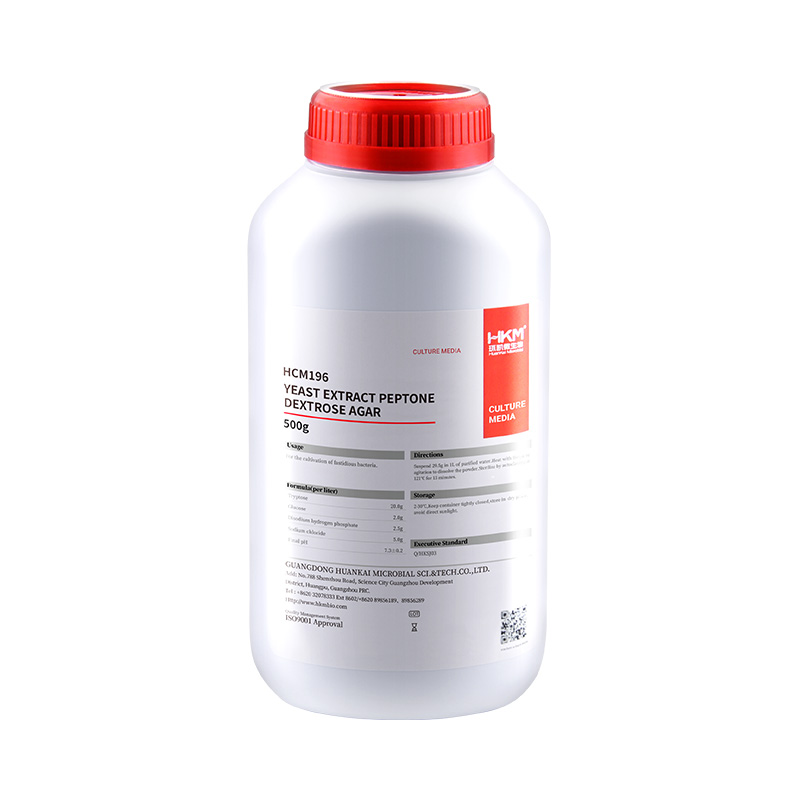
Discover our Yeast Extract Peptone Dextrose (YPD) Agar, designed for the cultivation and growth of yeasts and fungi, including Saccharomyces cerevisiae. This nutrient-rich medium supports robust mi……
Detail
Introduction
Discover our Yeast Extract Peptone Dextrose (YPD) Agar, designed for the cultivation and growth of yeasts and fungi, including Saccharomyces cerevisiae. This nutrient-rich medium supports robust microbial proliferation, making it ideal for molecular biology, fermentation, and genetic research.
1X Tris-Glycine-SDS Running Buffer Powder is used for electrophoresis on Q-PAGE™ TGN Precast Gel or Laemmli Tris-HCl gels in Tris-Glycine buffer system. It is convenient and universal for electrophoresis in Tris-Glycine buffer system.
Features
Reliable: Rigorous quality control for reproducible separation of protein electrophoresis.
Convenient: Premeasured pouches make 1 liter of 1X buffer solution; No pH adjustment is necessary.
Fast: Dissolving in minutes and then ready to use.
Stable: Powder packaging suitable for long-term storage.
Contents
0.025 M Tris, 0.192 M glycine, 0.10% SDS
Applications
Running buffer for Laemmli Tris-HCl gel electrophoresis
Storage
Room temperature for 24 months
Document
1X Tris-Glycine-SDS Running Buffer Powder is used for electrophoresis on Q-PAGE™ TGN Precast Gel or Laemmli Tris-HCl gels in Tris-Glycine buffer system. It is convenient and universal for electrophoresis in Tris-Glycine buffer system.
APN-C3-PEG4-alkyne is a heterobifunctional linker containing an APN moiety with exquisite chemoselectivity for cysteine and an alkyne group. The superior stability of APN-cysteine conjugates in aqueous media, human plasma, and living cells makes this new thiol-click reaction a promising methodology for applications in bioconjugation. Reagent grade, for research purpose. Please contact us for GMP-grade inquiries.
Document
APN-C3-PEG4-alkyne is a heterobifunctional linker containing an APN moiety with exquisite chemoselectivity for cysteine and an alkyne group. The superior stability of APN-cysteine conjugates in aqueous media, human plasma, and living cells makes this new thiol-click reaction a promising methodology for applications in bioconjugation. Reagent grade, for research purpose. Please contact us for GMP-grade inquiries.
Microcystin are a class of hepatotoxins produced by blue-green algae such as Microcystis aeruginosa. Microcystin-LR is the most common of the over 50 different congeners. Cyanobacteria can produce microcystin in large quantities during an algae bloom which then pose a major threat.
This kit can be used for Congener-Independent quantitative test of Microcystin in liquid samples such as drinking, ambient and waste water and algal cultures.
Additional Quality Control, Calibration Verification, and Spiking Solution materials can be obtained separately in optional Supplemental Pack for Method 546 (catalog # EL2024-Q).
Microcystin-LR
Informational sign postings about HABs at recreational waters: < 6 μg/L
Recreational public health advisory: 6 μg/L
Elevated recreational public health advisory (e.g. no contact): 20 μg/L
EPA 10-day drinking water health advisories:
Do Not Drink – 0.3 μg/L for bottle fed infants and preschool children, pregnant and nursing woman, elderly immunocompromised and liver conditions.
Do Not Drink – 1.6 μg/L for school-age children to adults.
Do not Use – 20 μg/L
Document
Format: 96-well microtiter plate (12 test strips of 8 wells) Standards: 0 | 0.15 | 0.4 | 1 | 2 | 5 ppb Incubation Time: 75 Minutes Compatible for use with US EPA Method 546