
m-PEG6-DBCO is a monodisperse PEG reagents which can enable copper-free Click Chemistry through the reaction of DBCO with azide. Reagent grade, for research purpose. Please contact us for GMP-grade inquiries.


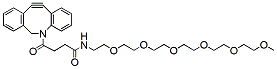
m-PEG6-DBCO is a monodisperse PEG reagents which can enable copper-free Click Chemistry through the reaction of DBCO with azide. Reagent grade, for research purpose. Please contact us for GMP-grade inquiries.


Attogene’s Lead Rapid Lab Lateral Flow Kit can be used for the screening of Lead in water and food samples at greater than or equal to 10 ppb in a laboratory setting. Unlike the field-based kit, the lab kit is intended for a more technical end user who will be evaluating samples in a laboratory setting.
Lead contamination is a serious worldwide environmental problem. As it is difficult to detoxify by chemical or biological methods, gradual Lead ion accumulation in the nervous and cardiovascular systems of the human body can subsequently cause serious diseases. Long-term health consequences of drinking Lead-contaminated food and water include brain, heart, kidney, lungs and immune system problems for adults, and the physical and mental development delays in infants and children. Attogene’s Lead Lateral Flow test gives results conforming of 10ppb or greater in 5-15 minutes.
This is a revolutionary product designed to make Lead testing in easy and affordable. This fast screening test kit contains 10 tests with everything needed for accurate results of unsafe lead levels. With reliable results in only 10 minutes, this test kit clearly gives results confirming Lead in water and conforming to the EPA guideline of 15 ppb (µg/L).
Sample Collection:
1. Take a first-draw sample
Immediately after opening a faucet or valve, collect a 250 mL sample. This sample should be from each tap used for consumption.
2. Take a flush sample
If first-draw sample results show elevated lead levels of 5 ppb or higher, collect a flush sample. To do this, ensure water has not been used for between 8 to 18 hours, then collect the sample at 30 seconds.
3. Take sequential samples
If you want to test a lead service line, collect 8 to 10 sequential samples, depending on how far the line is from the tap.
Standards and Regulations and recommendations for Lead
High Blood lead levels (i.e., greater than 700ppb) can cause serious health effects, including seizure, coma, and death. Blood levels as low as 100ppb have been associated with adverse effects on cognitive development, growth, and behavior among children aged 1-5 years.
Screening of Lead in water samples at 5-10 ppb
Format: 10 tests (5 tests/5 controls)
Run Time: 15 Minutes

N-(t-butyl ester-PEG4)-N-bis(PEG4-Propargyl) is a trifunctional PEG linker that combines a t-butyl ester with two terminal alkynes. The alkynes can be applied in copper-click chemistry with azides to form stable triazole linkages with a target molecule, while the t-butyl ester can be deprotected and reacted with amines or alcohols to form amides or esters.

N-(t-butyl ester-PEG4)-N-bis(PEG4-Propargyl) is a trifunctional PEG linker that combines a t-butyl ester with two terminal alkynes. The alkynes can be applied in copper-click chemistry with azides to form stable triazole linkages with a target molecule, while the t-butyl ester can be deprotected and reacted with amines or alcohols to form amides or esters.