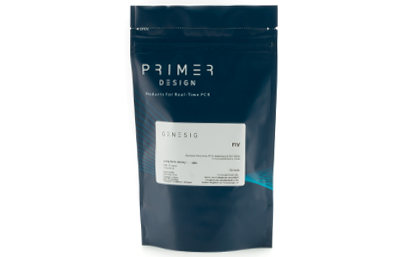
Exceptional value for money Rapid detection of all clinically relevant subtypes Positive copy number standard curve for quantification Highly specific detection profile High priming efficiency Broad dynamic detection range (>6 logs) Sensitive to < 100 copies of target
Accurate controls to confirm findings
Nucleic acid testing (NAT) is the method of choice for detection and quantification of a wide range of micro organisms. Primerdesign manufactures and supplies high quality quantitative real-time PCR kits for the detection and simultaneous quantification of numerous significant pathogens . A copy number standard curve is provided for quantification and an the internal extraction template (DNA or RNA), controls for the quality of the nucleic acid extraction and eliminates false negative results.
The kit is designed with the broadest possible detection profile to ensure that all clinically relevant strains and subtypes are detected*. Target sequences are selected by working with data from key opinion leaders in the field. Multiple sequence alignments and unprecedented real-time PCR expertise in design and validation ensure the best possible kit.
Details of the target and priming specificity are included in the individual handbooks above.
*Not all mammalian babesiosis can be detected with this kit.
Packaged, optimised and ready to use. Expect Better Data.
Other Products
ProteoSpin™ Total Protein Concentration, Detergent Clean-Up and Endotoxin Removal Kits
Product Info
Document
Product Info
Overview
Columns bind proteins of interest while endotoxins flow through
Reduce endotoxin levels to less than 0.01 EU/µg of protein
Proteins are desalted
Greater than 95% protein recovery
Concentrate protein samples and remove detergents at the same time
Effectively remove a wide range of detergents including SDS, Triton® X-100, CHAPS, NP-40, and Tween 20
Purification is based on spin column chromatography that uses Norgen’s resin separation matrix
The ProteoSpin™ Total Protein Concentration, Detergent Clean-Up and Endotoxin Removal Kits are designed for the rapid removal of endotoxins from previously purified proteins or peptides, with protein recoveries of > 95% being achieved. Endotoxins, also known as lipopolysaccharides, are cell-membrane components of Gram-negative bacteria such as E. coli. Endotoxins liberated by Gram-negative bacteria are frequent contaminations of protein solutions derived from bioprocesses. Due to the high toxicity of endotoxins in vivo and in vitro, their removal from protein preparations is often necessary prior to the use of the protein in downstream applications. These kits efficiently reduce endotoxin levels to ≤ 0.01 EU/mg of protein, using spin column chromatography based on Norgen’s proprietary resin as the separation matrix. These kits are highly efficient in removing many different salts commonly used in the laboratory including, but not limited to, MgCl2, NaCl, KCl, CaCl2, LiCl and CsCl. The purified protein samples can be used in a number of downstream applications including sequencing, cloning, and in vitro and in vivo introduction into cells and organisms for various purposes. The simultaneous removal of salts while concentrating a dilute protein solution makes the kit a convenient method for preparing proteins before running many downstream applications such as SDS-PAGE, isoelectric focusing, X-ray crystallography, NMR spectroscopy, mass spectroscopy and other applications.
Mini Kit
The ProteoSpin™ Total Protein Concentration, Detergent Clean-Up and Endotoxin Removal Mini Kit is designed for the rapid removal of endotoxins from up to 200 μg of previously purified proteins or peptides, with protein recoveries of > 95% being achieved.
Maxi Kit
The ProteoSpin™ Total Protein Concentration, Detergent Clean-Up and Endotoxin Removal Maxi Kit is designed for the rapid removal of endotoxins from up to 4 mg of previously purified proteins or peptides, with protein recoveries of > 95% being achieved.
Including Triton® X-100, CHAPS, NP-40 and Tween 20
Elution Volume
2-4 mL
Time to Complete 10 Purifications
30-40 minutes
Storage Conditions All solutions should be kept tightly sealed and stored at room temperature. This kit is stable for 2 years after the date of shipment.
Component
Cat. 22800 (25 preps)
Cat. 22200 (4 preps)
Binding Buffer J
8 mL
8 mL
Binding Buffer N
4 mL
20 mL
Wash Solution M
50 mL
130 mL
Wash Solution CIP
20 mL
60 mL
Wash Solution N
30 mL
130 mL
Wash Solution NIP
20 mL
60 mL
Elution Buffer G
6 mL
20 mL
Endotoxin Removal Solution
1.5 mL
1.5 mL
Protein Neutralizer EF
2 mL
2 mL
Maxi Spin Columns (assembled with Collection Tubes)
–
4
Mini Spin Columns
25
–
Collection Tubes
25
–
Maxi Spin Columns (assembled with Collection Tubes)
The Opentrons Flex 96-Channel pipette enables accurate high throughput pipetting, optimized for working in 96-well plates. Flex Pipettes use air displacement technology to offer highly accurate pipetting with pipette volume ranges from 5 – 1000 μL.
Smart sensors support automatic calibration, real-time positioning, and error detection. The 96-channel pipette occupies both pipette mounts and can easily be removed and swapped to an alternate pipette configurations to adapt your workflow needs.
Four 96-Channel Tip Rack Adapters are included with the purchase of one Flex 96-Channel Pipette.
Document
The Opentrons Flex 96-Channel pipette enables accurate high throughput pipetting, optimized for working in 96-well plates. Flex Pipettes use air displacement technology to offer highly accurate pipetting with pipette volume ranges from 5 – 1000 μL.
Smart sensors support automatic calibration, real-time positioning, and error detection. The 96-channel pipette occupies both pipette mounts and can easily be removed and swapped to an alternate pipette configurations to adapt your workflow needs.
Four 96-Channel Tip Rack Adapters are included with the purchase of one Flex 96-Channel Pipette.
Short term stability: 2-8oC, Long term stability: See individual component labels
Stability:
> 2 years under recommended storage conditions
Analyte:
α-Amylase
Assay Format:
Spectrophotometer, Auto-analyser
Detection Method:
Absorbance
Wavelength (nm):
400
Signal Response:
Increase
Limit of Detection:
0.003 U/g
Reproducibility (%):
~ 3%
Total Assay Time:
~ 30 min
Application examples:
Cereal flours, fermentation broths and other materials.
Method recognition:
AACC Method 22-02.01, AOAC Method 2002.01, ICC Standard No. 303, RACI Standard Method and CCFRA (Flour Testing Working Group Method 0018)
The Ceralpha Method: α-Amylase test kit is suitable for the specific measurement and analysis of α-amylase in cereal grains and fermentation broths (fungal and bacterial).
All reagents stable for > 2 years after preparation
Very specific
Simple format
Mega-Calc™ software tool is available from our website for hassle-free raw data processing
Standard included
Validation of Methods
Document
The Ceralpha Method: α-Amylase test kit is suitable for the specific measurement and analysis of α-amylase in cereal grains and fermentation broths (fungal and bacterial).