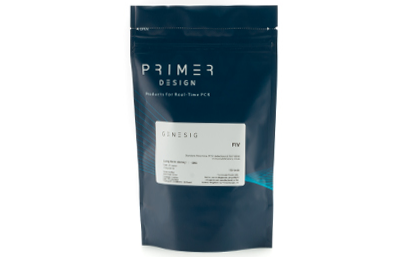
Exceptional value for money Rapid detection of all clinically relevant subtypes Positive copy number standard curve for quantification Highly specific detection profile High priming efficiency Broad dynamic detection range (>6 logs) Sensitive to < 100 copies of target
Accurate controls to confirm findings
Nucleic acid testing (NAT) is the method of choice for detection and quantification of a wide range of micro organisms. Primerdesign manufactures and supplies high quality quantitative real-time PCR kits for the detection and simultaneous quantification of numerous significant pathogens . A copy number standard curve is provided for quantification and an the internal extraction template (DNA or RNA), controls for the quality of the nucleic acid extraction and eliminates false negative results.
The kit is designed with the broadest possible detection profile to ensure that all clinically relevant strains and subtypes are detected*. Target sequences are selected by working with data from key opinion leaders in the field. Multiple sequence alignments and unprecedented real-time PCR expertise in design and validation ensure the best possible kit.
Details of the target and priming specificity are included in the individual handbooks above.
Packaged, optimised and ready to use. Expect Better Data.
Other Products
Cell Culture Plate 12 Wells
Product Info
Document
Product Info
Cell Culture Plate 12 Wells
Cell Culture Plate provide excellent smoothness and uniformity based on accurate molding technology. By such property, clear view can be available when examine with a microscope.
Specifications: 6wells,
12wells, 24wells., 48wells, 96wells
PRODUCT FEATURES
The product is made of medical grade USP CLASS VI polymer polystyrene
The product is made under a 100,00- class dust-free manufacturing site
Two kinds of product line up are providing.
For adherent cell culture: Initial adherence and proliferative property of cells via hydrophilic surface treatment.
For suspension cell culture: The surface is resistant to cell adherence, which minimizes damage or loss of cell.
Gamma radiation sterilization
Non-Pyrogenic, DNase/Rnase free.
Document
Cell Culture Plate provide excellent smoothness and uniformity based on accurate molding technology. By such property, clear view can be available when examine with a microscope.
Compatible with mass spectrometry and NMR spectroscopy
Purification is based on spin column chromatography that uses Norgen’s proprietary resin separation matrix
This kit provides a fast and simple procedure for the isolation of total proteins from tissue, bacteria, yeast or mammalian cells without the use of SDS, Triton® X-100 and other detergents. Detergents are extensively used to prepare protein samples; however, these detergents have undesirable effects on downstream analysis. These effects include extraneous peaks in mass spectrometry, artifacts with chromatography and electrophoresis, interference with microinjection into cells and interference with protein immunization.
The Detergent-Free Total Protein Isolation Kit maintains high protein recovery and yields proteins that are 100% detergent-free. Purification is based on using Norgen’s proprietary resin together with Lysis Solution, followed by protein filtration using a filter column (provided). The purified proteins can be used in a number of downstream applications including mass spectrometry, SDS-PAGE, isoelectric focusing, NMR spectroscopy and more.
Each Lysis Tube is able to process up to 50 mg of tissue, 1010 bacterial cells, 109 yeast cells or 107 mammalian cells. Preparation time for 12 samples is less than 10 minutes.
Maximum Amount Of Starting Material: Tissues Animal Cells Bacteria Yeast
50 mg 1 x 10⁷ cells 1 x 10¹⁰ cells 1 x 10⁹ cells
Time to Process 12 Samples
Less than 10 minutes
Storage Conditions and Product Stability The Lysis Solution should be kept tightly sealed and stored at room temperature. Once opened, the solution should be stored at 4°C. This kit is stable for 2 years after the date of shipment.
For selective enrichment culture of Listeria monocytogenes in food.
Principle and Interpretation
Tryptone, proteose peptone, meat extract, yeast paste powder provide nitrogen sources, vitamins, amino acids, and growth factors; sodium chloride can maintain a balanced osmotic pressure; sodium dihydrogen phosphate and potassium dihydrogen phosphate as buffering agents; esculin are fermentable sugars; lithium chloride and other antibiotics can inhibit Gram negative bacteria and most Gram positive bacteria.
Formulation
Ingredients
/liter
Enzymatic digest of animal tissues ( Proteose peptone)
5.0g
Enzymatic digest of casein ( Tryptone)
5.0g
Meat extract
5.0g
Yeast extract
5.0g
Sodium chloride
20.0g
Disodium hydrogen phosphate dihydrate
12.0g
Potassium dihydrogen phosphate
1.35g
Aesculin
1.0g
Lithium chloride
3.0g
pH7.2±0.2 at 25°C
Preparation
Suspend 57.4g in 1 L of distilled or deionized water. Heat with frequent agitation and boil to completely dissolve the powder. Distribute into flasks. Autoclave at 121℃ for 15 minutes. Cool to 45-50℃,aseptically add the contents of 1 vial of Fraser Selective Supplement (SR0120) to each 225 mL of base to prepare FB1 solution; Add one reagent (SR0130) to each100 mL of FB2 culture medium to prepare FB2 enrichment solution.
Quality Control
Cultural characteristics observed after incubation at 35-37°C for 46~50 hours
2-30℃,Keep container tightly closed, avoid direct sunlight.
Use before expiry date on the label.
Precautions
1. When weighing the dehydrated medium, please wear masks to avoid causing respiratory system discomfort
2. Keep container tightly closed after using to prevent clumping.
Waste Disposal
Microbiological contamination was disposed by autoclaving at 121°C for 30 minutes.
Revision
On June 14, 2024
References
ISO 11290
Document
Intended Use For selective enrichment culture of Listeria monocytogenes in food. Principle and Interpretation Tryptone, proteose peptone, meat extract, yeast paste powder provide nitrogen ……