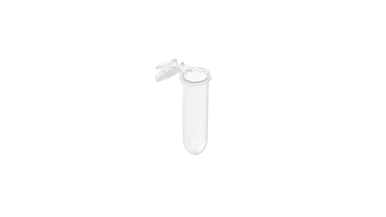
NEST 2.0 mL Microcentrifuge Tube, polypropylene, sterile, DNase, RNase, pyrogen and endotoxin free. Relative centrifugal force (RCF): 30000 x g. Easy-open, secure safelock cap seal. 500 count.
Labware definition is available for immediate use in Opentron’s Labware Library.
Detail
NEST 2.0 mL Microcentrifuge Tube, polypropylene, sterile, DNase, RNase, pyrogen and endotoxin free. Relative centrifugal force (RCF): 30000 x g. Easy-open, secure safelock cap seal. 500 count.
Labware definition is available for immediate use in Opentron’s Labware Library.
MutL Homolog 1 (MLH1) is a protein involved in the mismatch-repair pathway. This protein is commonly associated with hereditary non-polyposis colorectal cancer, as the MLH1 gene is frequently mutated in patients with this cancer. Studies have shown MLH1 to be deficient in a high percentage of patients with microsatellite instability, as well as endometrial and ovarian cancers. Use of Anti-MLH1 is optimized when paired in an IHC panel with MSH6, MSH2, and PMS2. Anti-MLH1 is useful in the detection of MLH1 in a number of normal and neoplastic tissues, and for identifying a loss of MLH1 in tumors that are microsatellite-unstable.
Q-PAGE™ Bis-Tris Precast Gel is a high-performance and easy to use precast polyacrylamide gel for electrophoresis in Bis-Tris buffer system (MOPS or MES). The optimized gel formula allows Q-PAGE™ Bis-Tris Precast Gel to show improved resolution, accurate results, and an extended shelf-life over conventional Laemmli Tris-HCl gels.
Q-PAGE™ Bis-Tris Precast Gels are available in gradient (4 to 12%) and fixed (8% and 12%) concentrations of polyacrylamide in 12-and 15-well formats. Two available cassette sizes, Mini (10 x 8.3 cm) and Midi (10 x 10 cm), are compatible with most popular protein electrophoresis systems. Q-PAGE™ Mini (QP2XXX) Gels are suitable for Bio-Rad® and other systems. Q-PAGE™ Midi (QP3XXX) Gels are suitable for Invitrogen® XCell SureLock® Mini-Cell, Invitrogen® Mini Gel Tank, Hoefer SE260, and other systems.
Key Features
User-friendly gel cassette:
Numbered and framed wells for sample loading
Labeled warning sign and green tape as reminder
Enhanced gel performance:
Enhanced band sharpness
Better resolution of small proteins
Stable for shipping at ambient temperature
Easy compatibility:
Available as homogeneous and adjusted gradient gels for a wide range of protein separation.
Compatible with most popular protein electrophoresis systems
Storage and stability
Store Q-PAGE™ Precast Gels at 4°C for periods up to 12 months.
Do not freeze Q-PAGE™ Precast Gels. Remove tape and comb before electrophoresis.
Keep Q-PAGE™ Precast Gels flat during storage.
Document
Q-PAGE™ Bis-Tris Precast Gel is a high-performance and easy to use precast polyacrylamide gel for electrophoresis in Bis-Tris buffer system (MOPS or MES). The optimized gel formula allows Q-PAGE™ Bis-Tris Precast Gel to show improved resolution, accurate results, and an extended shelf-life over conventional Laemmli Tris-HCl gels.
Q-PAGE™ Bis-Tris Precast Gels are available in gradient (4 to 12%) and fixed (8% and 12%) concentrations of polyacrylamide in 12-and 15-well formats. Two available cassette sizes, Mini (10 x 8.3 cm) and Midi (10 x 10 cm), are compatible with most popular protein electrophoresis systems. Q-PAGE™ Mini (QP2XXX) Gels are suitable for Bio-Rad® and other systems. Q-PAGE™ Midi (QP3XXX) Gels are suitable for Invitrogen® XCell SureLock® Mini-Cell, Invitrogen® Mini Gel Tank, Hoefer SE260, and other systems.
Propargyl-PEG10-NHS ester serves as a bifunctional PEG linker with a terminal propargyl that participates in click reactions with azide-bearing moieties and an NHS ester group that reacts readily and efficiently with amine-bearing molecules. The PEG10 units improve the water solubility of the molecule. Reagent grade, for research purpose. Please contact us for GMP-grade inquiries.
Document
Propargyl-PEG10-NHS ester serves as a bifunctional PEG linker with a terminal propargyl that participates in click reactions with azide-bearing moieties and an NHS ester group that reacts readily and efficiently with amine-bearing molecules. The PEG10 units improve the water solubility of the molecule. Reagent grade, for research purpose. Please contact us for GMP-grade inquiries.