
This H14 filter is a replacement for use with the OT-2 HEPA Module GEN1. The HEPA Module enables you to run sensitive contamination-prone applications on the OT-2.

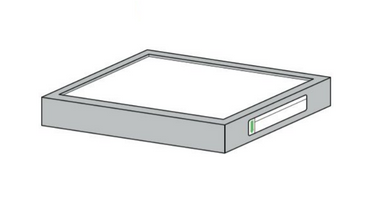
This H14 filter is a replacement for use with the OT-2 HEPA Module GEN1. The HEPA Module enables you to run sensitive contamination-prone applications on the OT-2.

2 Layer Cell Factory Double Narrow Mouth
Huayi Cell Factory is a robust and easy-to-use cell culture platform for applications in the production of human and animal vaccines, therapeutic proteins, cell therapy, and gene therapy.
To address the needs of your workflow, We have three kinds of mouth, which is available on most cell culture products to ensure consistent performance from lot to lot and from format to format.
Specifications: 1 layer, 2 layers, 5 layers, 10 layers and 40 layers.
PRODUCT FEATURES
of one 10-layer Cell Factory unit is equivalent to the area
of 36 T-175 flasks

Huayi Cell Factory is a robust and easy-to-use cell culture platform for applications in the production of human and animal vaccines, therapeutic proteins, cell therapy, and gene therapy.
To address the needs of your workflow, We have three kinds of mouth, which is available on most cell culture products to ensure consistent performance from lot to lot and from format to format.
Specifications: 1 layer, 2 layers, 5 layers, 10 layers and 40 layers.

The NGS DNA Fragmentation & Library Prep Kit (illumina and MGI Platforms) was developed for construction of high quality libraries for next generation sequencing. The kit uses intact genomic DNA (EDTA-free DNA or DNA resuspended in TE buffer) as input DNA without an additional DNA fragmentation step. Our technology provides a fast and simple workflow. DNA libraries can be generated around 2 hours with only 10 min hands-on time. Library multiplexing is possible.

NGS DNA Fragmentation & Library Prep Kit Workflow
The incorporation of DNA fragmentation in the kit makes it possible to directly use intact genomic DNA as input DNA without the need of mechanical DNA shearing or enzymatic DNA fragmentation. The NGS DNA Fragmentation & Library Prep Kit does not generate sequencing bias as compared to library using mechanical sheared DNA as input. Sequence coverage is also consistent between enzymatic shearing and mechanical shearing. The library size is inversely correlated with the incubation time of step 1 at 20°C.
Three index types are available for the kit of the illumina platform:
Non-index (Cat.# 30026): Libraries do not have index.
Index (Cat.# 30028): Each of the index primers contains a unique index sequence of 6 bases. Library multiplexing for 48 samples is possible. Index information can be downloaded here.
Unique dual index (Cat.# 30030): Library multiplexing for 96 samples is possible. With the unique features of our 4-Base Difference Index System, the index sequence is 8-base long and each index has 4 bases different from others. Our unique dual index primers effectively identify sequencing errors such as index hopping, mis-assignment of reads, and de-multiplexing errors etc. The unique dual index primers set consists of 96 pre-mixed unique pairs of index primers. Index information can be downloaded here.
Indexes are available for the MGI platform kits (Cat.# 34028).
Kit features:

Library conversion efficiency: 100 ng, 300 ng and 500 ng of intact genomic DNA were used as input.

The library size is inversely correlated with the incubation time of step 1 at 20°C.

NGS data comparison: enzymatic shearing versus mechanical shearing
Enzymatic shearing
• DNA shearing and library prep: BioDynami NGS DNA Fragmentation & Library Prep Kit
Mechanical shearing
• DNA shearing: Covaris sonication
• Library prep: BioDynami NGS DNA Library Prep Kit.
The NGS DNA Fragmentation & Library Prep Kit (illumina and MGI Platforms) was developed for construction of high quality libraries for next generation sequencing. The kit uses intact genomic DNA (EDTA-free DNA or DNA resuspended in TE buffer) as input DNA without an additional DNA fragmentation step. Our technology provides a fast and simple workflow. DNA libraries can be generated around 2 hours with only 10 min hands-on time. Library multiplexing is possible.
