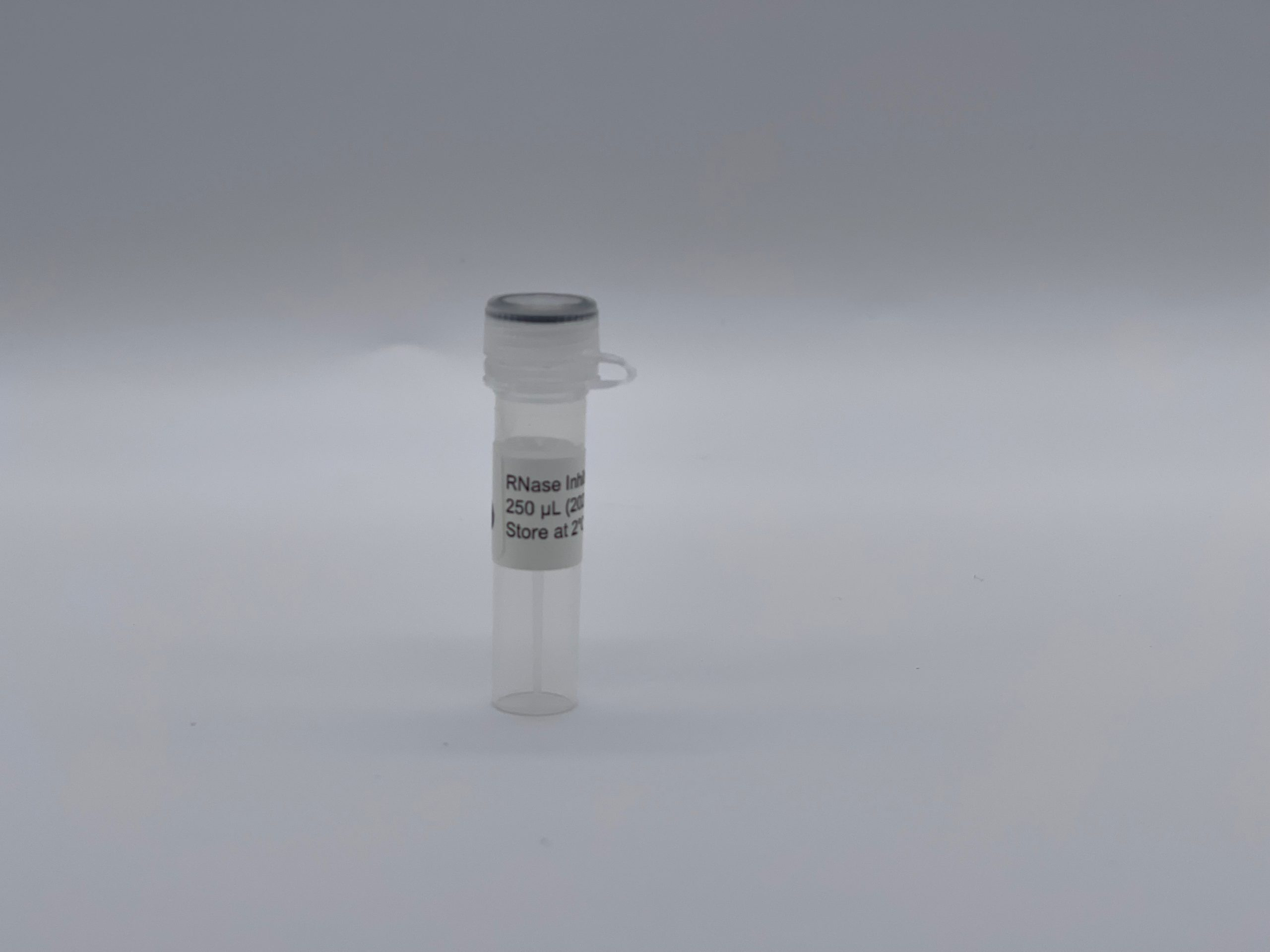
RNase Inhibitor (10,000 units) Concentration: 40 units/μL Volume: 0.25 mL Storage Conditions: Store at 2°C – 8°C Inhibits: RNases A, B, and C Supplied in: 1X PBS with 0.05% Sodium Azide.
Attogene’ s RNase Inhibitor is a protein-based ribonuclease inhibitor which noncovalently binds and inactivates a wide variety of RNases in a range of temperature (37–65°C) and pH (5.5–8.5) conditions. This product is distinct from placental RNase Inhibitor protein in that it inactivates RNases I and T1 in addition to RNases A, B and C. NA2021 is distinct from RNase Inhibitor protein in that it is less expensive, have more robust interactions with RNAses.
MADE AND FUNCTIONALLY TESTED AT ATTOGENE (MADE IN AUSTIN TEXAS – USA)
Other Products
D2111 HiPure Gel DNA Mini Kit
Product Info
Document
Product Info
Introduction
HiPure Gel Pure DNA Kit uses proprietary chemistry and HiPure technology to recover DNA fragments between 60bp-10kbp with yields exceeding 80%. DNA is suitable for ligations, PCR, sequencing, restriction digestion, or various labeling reactions. In addition, this kit can be also used to recover DNA directly from enzymatic reactions such as PCR and enzyme digestion reactions.
Details
Specifications
Features
Specifications
Main Functions
Recover DNA fragments >100bp from agarose gel(<0.5g), purification of DNA from PCR, enzymatic reaction solution or crude gDNA
Applications
PCR, NGS, labeling, ligation and enzyme digestion, etc.
Purification method
Mini spin column
Purification technology
Silica technology
Process method
Manual (centrifugation or vacuum)
Sample type
Agarose gel, PCR products, enzyme products
Sample amount
Agarose gel: ≤500mg
Recovery
≥80%
Elution volume
≥15μl
Time per run
≤20 minutes(1-24 samples)
Liquid carrying volume per column
800µl
Binding yield of column
35µg
Principle
The HiPure system uses a simple bind-wash-elute procedure. Gel slices are dissolved in a buffer containing a pH indicator, allowing easy determination of the optimal pH for DNA binding, and the mixture is applied to the column. Nucleic acids adsorb to the silica-gel membrane in the high-salt conditions provided by the buffer. Impurities are washed away and pure DNA is eluted with a small volume of low-salt buffer provided or water, ready to use in subsequent applications.
Advantages
High recovery efficiency – ≥80% DNA recovery
General – recover DNA from gel or enzyme-driven reaction solutions such as PCR
Fast – isolation can be completed in 10-15 minutes by column gel method
Great cost-effectiveness performance
Kit Contents
Contents
D211102
D211103
Purification Times
100 Preps
250 Preps
Buffer GDP
120 ml
250 ml
Buffer DW2
50 ml
2 x 50 ml
Elution Buffer
20 ml
30 ml
HiPure DNA Mini Columns II
100
250
2 ml Collection Tubes
100
250
Storage and Stability
The Kit should be stored dry at room temperature (15-25°C) and are stable for at least 18 months under these conditions. If any precipitates form in the buffers, warm at 37℃ to dissolve.
Experiment Data
Document
HiPure Gel Pure DNA Kit uses proprietary chemistry and HiPure technology to recover DNA fragments between 60bp-10kbp with yields exceeding 80%. DNA is suitable for ligations, PCR, sequencing, restriction digestion, or various labeling reactions. In addition, this kit can be also used to recover DNA directly from enzymatic reactions such as PCR and enzyme digestion reactions.
t-Boc-aminooxy-PEG1-propargyl is a click chemistry PEG linker with a t-Boc-aminooxy group. The propargyl group can react with azide-bearing compounds or biomolecules via copper catalyzed azide-alkyne Click Chemistry to yield a stable triazole linkage. The t-Boc aminooxy group can be deprotected under mild acidic conditions and then can react with an aldehyde or ketone group to form a stable oxime linkage. The hydrophilic PEG spacer increases solubility in aqueous media. Reagent grade, for research purpose. Please contact us for GMP-grade inquiries.
Document
t-Boc-aminooxy-PEG1-propargyl is a click chemistry PEG linker with a t-Boc-aminooxy group. The propargyl group can react with azide-bearing compounds or biomolecules via copper catalyzed azide-alkyne Click Chemistry to yield a stable triazole linkage. The t-Boc aminooxy group can be deprotected under mild acidic conditions and then can react with an aldehyde or ketone group to form a stable oxime linkage. The hydrophilic PEG spacer increases solubility in aqueous media. Reagent grade, for research purpose. Please contact us for GMP-grade inquiries.
The MagPure Plasmid purification system uses the paramagnetic bead technology for high-throughput preparation of high-copy or low-copy plasmid DNA from E. coli cells. This kit also can be used with fosmid and BAC vector-based constructs. The system uses alkaline lysis followed by a MagPure purification to differentially bind plasmid DNA to paramagnetic beads. While the DNA is bound to the beads, contaminants can be rinsed away using a simple washing procedure. Because MagPure uses magnetic separation technology, the protocol does not require vacuum filtration. This makes kit extremely amenable to automation. Plasmid DNA purified with this system is most commonly used in Sanger Sequencing and PCR amplification.
Details
Specifications
Features
Specifications
Main Functions
Isolation up to 15μg endotoxin free plasmid DNA from 1-5ml bacterial culture
Applications
Enzyme digestion, sequencing, PCR and labeling, etc.
Purification technology
Magnetic beads technology
Process method
Manual or automatic
Sample type
Conventional plasmid, plasmid≤30KB
Sample amount
1-5ml
Elution volume
≥50μl
Time per run
≤80 minutes
Principle
This product is based on the purification method of high binding magnetic particles. The sample is lysed and digested under the action of lysate and Lysozyme. DNA is released into the lysate. After adding magnetic particles and binding solution, DNA will be adsorbed on the surface of magnetic particles, and impurities such as proteins will be removed without adsorption.The adsorbed particles were washed with washing solution to remove proteins and impurities, washed with ethanol to remove salts, and finally DNA was eluted by Elution Buffer.
Advantages
High purity – purified plasmid can be directly used in sequencing, enzyme digestion and PCR, etc.
Fast – it takes only 80 minutes to complete the isolation
High yield – up to 15μg plasmid can be binded in one column
RNase A and MagPure Particles should be stored at 2–8°C upon arrival. However, short-termstorage (up to 12 weeks) at room temperature (15–25°C) does not affect its performance. Theremaining kit components can be stored dry at room temperature (15–25°C) and are stable for atleast 18 months under these conditions.The entire kit can be stored at 2–8°C, but in this case buffers should be redissolved before use. Make sure that all buffers are at room temperature whenused. If any precipitates form in the buffers,warm at 37℃ to dissolve. After addition of RNase A, Buffer P1 is stable for 6 months when stored at
Document
The MagPure Plasmid purification system uses the paramagnetic bead technology for high-throughput preparation of high-copy or low-copy plasmid DNA from E. coli cells. This kit also can be used with fosmid and BAC vector-based constructs. The system uses alkaline lysis followed by a MagPure purification to differentially bind plasmid DNA to paramagnetic beads. While the DNA is bound to the beads, contaminants can be rinsed away using a simple washing procedure. Because MagPure uses magnetic separation technology, the protocol does not require vacuum filtration. This makes kit extremely amenable to automation. Plasmid DNA purified with this system is most commonly used in Sanger Sequencing and PCR amplification.