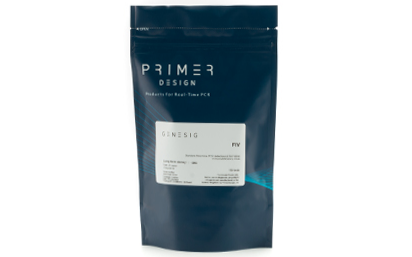
For the detection of the SARS-CoV-2 variants with the 20I/501Y.V1, VOC-21FEB-02 and variants carrying the E484K mutation Rapid detection of specific detection profiles High priming efficiency Sensitive to < 100 copies of target
Positive copy number standard curve for quantification
Accurate controls to confirm findings
96 reactions, includes master mix
Our SNPsig® kits use our own proprietary genotyping method to enable the identification of SARS-CoV-2 variants of concern. These products can be used on any real-time PCR machine using familiar protocols, whilst resulting in exceptional genotyping data.
Positive control templates for wild-type and variants are supplied in every kit to make data interpretation simple.
Our SNPsig® technology provides an alternative to sequencing as well as S gene target failure (SGTF) that enables scientists to analyse and monitor these specific genomic mutations. Our kits can provide a pivotal role in screening for SARS-CoV-2 variants for the purpose of genomic surveillance and studies.
For rapid, sensitive and accurate screening of potential Tyrosinase inhibitors
Tyrosinase (EC 1.14.18.1) is a copper-binding enzyme that is expressed across a vast range of species ranging from bacteria and fungi to mammals. It is involved in two sequential reactions of the melanin synthesis pathway: first being the hydroxylation of a monophenol and second the conversion of an ortho-diphenol to a quinone. Quinone then undergoes a series of reactions including polymerization to form melanin.
Tyrosinase is of great interest to the agriculture industry since it causes browning of fruits, vegetable, and mushrooms, as well as to the cosmetic industry as it causes skin darkening. Development and screening of tyrosinase inhibitors, therefore, is very useful for conditions such as hyperpigmentation and melasma. Tyrosinase activity is significantly increased in melanoma. Therefore, the detection of tyrosinase activity could be promising as a specific diagnostic test for melanoma and may be useful in monitoring patient response to melanoma treatments.
This Tyrosinase Activity Assay Kit is a simple one-step, plate-based assay for the measurement of tyrosinase activity in biological samples. In this assay, tyrosinase catalyzes the conversion of a phenolic substrate to a Quinone intermediate, which reacts with the tyrosine enhancer forming a highly stable chromophore with absorbance at 520 nm. The assay can detect as low as 30 μU Tyrosinase in biological samples.
Document
Highly reproducibility Highly Sensitive Assay to Screen for Tyrosinase Activity Stable formulation of ready to use Reaction Facilitator (tyrosinase)
This product is suitable for rapid extraction of RNA (include miRNA) from tissue, cells, blood, s and other clinical samples. RNA can be used directly for RT-PCR, quantitative RT-PCR, test of virus DNA and so on.
Details
Specifications
Features
Specifications
Main Functions
Isolation total RNA(miRNA)from tissue, cell using two columns and DNase plus reagent
Applications
RT-PCR, cDNA synthesis, second generation sequencing
Products
RNA, miRNA
Purification method
Mini spin column
Purification technology
Silica technology
Process method
Manual (centrifugation or vacuum)
Sample type
Clinical tissues, cells, lymphocytes
Sample amount
Tissue: <20 mgCells: <5 x 10⁶
Yield
2-50μg
Elution volume
≥30μl
Time per run
≤25 minutes
Principle
This product is based on silica column purification. Remove paraffin by Buffer DPS. Sample lysis withproteinase K digestion requires only 15 minutes. After lysis, samples are incubated at 80ºC for 15 minutes. Transfer to an adsorption column and RNA is adsorbed on the membrane, while protein is not adsorbed andis removed with filtration. After washing proteins and other impurities, RNA was finally eluted with low-saltbuffer.
Advantages
Efficient DNA removal – one step RNA extraction can effectively remove genomic DNA
High quality – one step RNA extraction reagent combined with silica gel column can obtain the highest concentration
Fast – the whole extraction only takes 15-25 minutes
Nontoxic – no toxic phenol chloroform extraction is required in the extraction
Kit Contents
Contents
IVD4121
Purification Times
50 Preps
HiPure DNA Mini Column Ⅱ
50
HiPure RNA Mini Columns
50
2ml Collection Tubes
150
Proteinase K
24 mg
Protease Dissolve Buffer
1.8 ml
DNase I
600 μl
DNase Buffer
6 ml
Buffer RTL
40 ml
RNA Digestion Buffer
15 ml
Buffer RWC*
20 ml
Buffer RW2*
20 ml
Nuclease Free Water
10 ml
Storage and Stability
Proteinase K should be stored at 2–8°C upon arrival. DNase I should be stored at -20°C. However, short-term storage (DNase I up to 1 weeks, Proteinase K up to 8 weeks) at room temperature (15–25°C) does not affect their performance. The remaining kit components can be stored at room temperature (15–25°C) and are stable for at least 18 months under these conditions.
Document
This product is suitable for rapid extraction of RNA (include miRNA) from tissue, cells, blood, s and other clinical samples. RNA can be used directly for RT-PCR, quantitative RT-PCR, test of virus DNA and so on.
DBCO-PEG6-acid is an analog of DBCO-Acid with PEG linker and a DBCO group. The DBCO groups is commonly used for copper-free Click Chemistry reactions due to its strain promoted high energy. The hydrophilic PEG chain allows for increased water solubility. The terminal carboxylic acid can react with primary amine groups in the presence of activators (e.g. EDC, or HATU) to form a stable amide bond. Reagent grade, for research purpose. Please contact us for GMP-grade inquiries.
Document
DBCO-PEG6-acid is an analog of DBCO-Acid with PEG linker and a DBCO group. The DBCO groups is commonly used for copper-free Click Chemistry reactions due to its strain promoted high energy. The hydrophilic PEG chain allows for increased water solubility. The terminal carboxylic acid can react with primary amine groups in the presence of activators (e.g. EDC, or HATU) to form a stable amide bond. Reagent grade, for research purpose. Please contact us for GMP-grade inquiries.