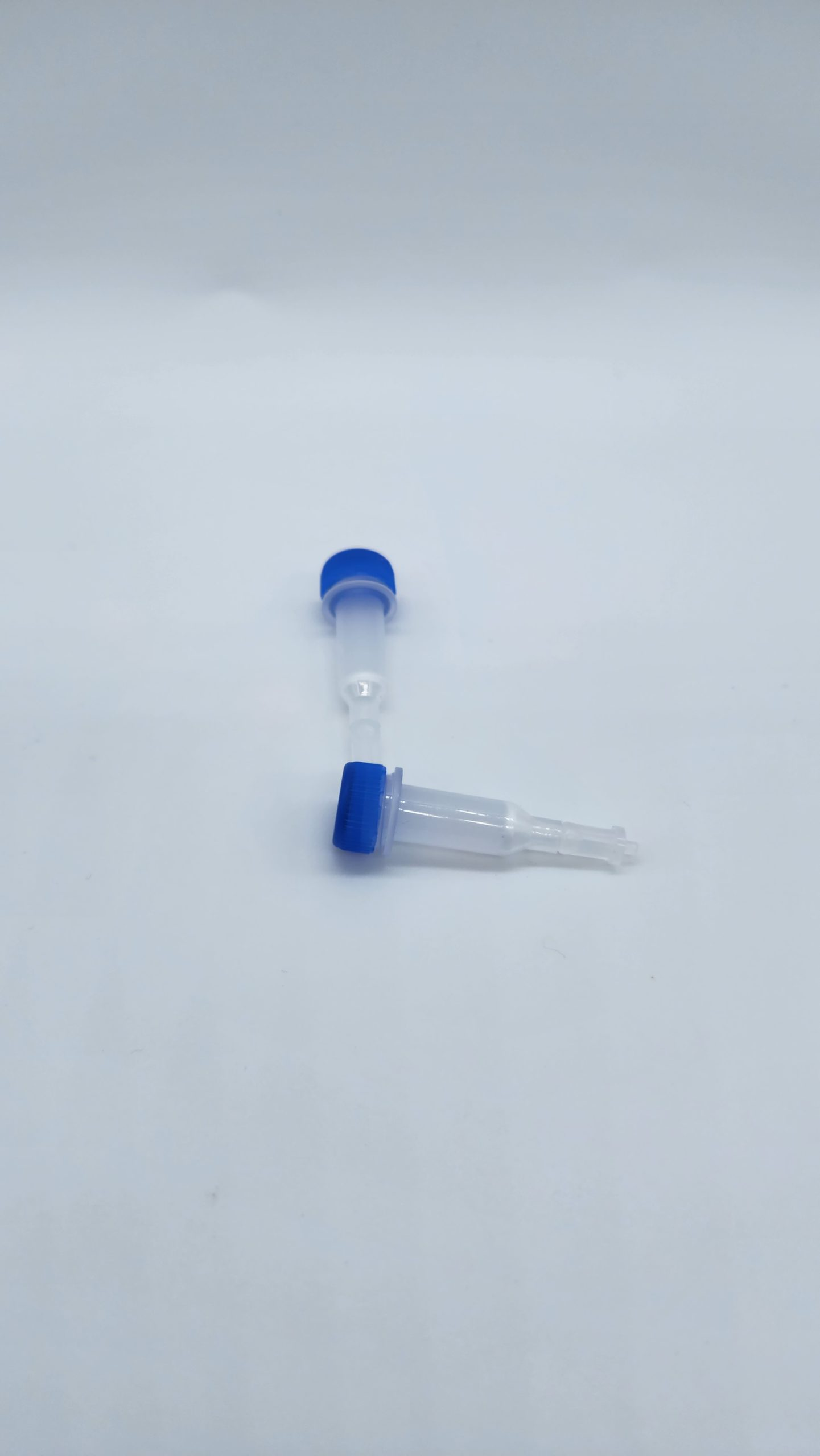
Attogene’s 0.5mL Micro Spin Desalting Columns are convenient, simple, and ready to be used out of the box. We provide a product that facilitates equal, if not superior results to leading brands products at a significantly better cost. Superlative recovery of proteins and other macromolecules (>7000 MW) with greater than 95% retention of salts, and other small molecules (<1000 MW), are possible even with very dilute (25 ug/mL) samples. Our columns, which are constructed with a simple break away tab at the bottom, are comprised of polypropylene and contain our own proprietary resin slurry that we’ve developed in house to achieve optimal results. Sample volumes between 30-130uL can be loaded while still achieving expected purification numbers.
Plasma/Serum Exosome and Free-Circulating RNA Isolation Kits
Product Info
Document
Product Info
Overview
Isolate all sizes of RNA, including microRNA, irrespective of size or GC content, without bias.
Versatile sample input ranges
Isolate all sizes of free-circulating RNA, including microRNA
The purified exosomal RNA is free from any circulating RNA-binding proteins
No phenol extractions, Proteinase K treatment, nor carrier RNA
No time-consuming ultracentrifugation, filtration nor special syringes are required
No precipitation reagents, nor overnight incubation required
Concentrate isolated exosomal RNA and are free-circulating RNA into a flexible elution volume ranging from 50 µL to 100 µL
Purification is based on spin column chromatography that uses Norgen’s proprietary resin separation matrix
These kits provide a fast, reliable and convenient method to sequentially isolate and concentrate exosomal RNA as well as Free-Circulating RNA from different plasma/serum sample volumes. The purification is based on spin column chromatography that employs Norgen’s proprietary resin. These kits are designed to isolate all sizes of RNA, including microRNA as well as all sizes of the free-circulating protein-bound RNA, including microRNA. These kits provide a clear advantage over other available kits in that they do not require any special instrumentation, protein precipitation reagents, extension tubes, phenol/chloroform or protease treatments. Moreover, these kits allow the user to elute into a flexible elution volume ranging from 50 µL to 100 µL. The RNA isolated from the purified exosomes is free from any protein-bound circulating RNA and is of the highest integrity. Moreover, the free-circulating, protein-bound, RNA is free from any exosomal RNA. The purified RNA can be used in a number of downstream applications including real time PCR, reverse transcription PCR, Northern blotting, RNase protection and primer extension, and expression array assays.
Plasma/Serum Exosome and Free-Circulating RNA Isolation Mini Kit
For sample volumes ranging from 50 µL to 1 mL.
Plasma/Serum Exosome and Free-Circulating RNA Isolation Midi Kit
For sample volumes ranging from 1 mL to 4 mL.
Plasma/Serum Exosome and Free-Circulating RNA Isolation Maxi Kit
All sizes, including miRNA and small RNA (< 200 nt)
Elution Volume
50 – 100 µL
Time to Complete 10 Purifications
40 – 45 minutes
Average Yields*
Variable depending on specimen
*Please check page 5 of the product insert for the average yields and the common RNA quantification methods
Storage Conditions and Product Stability All solutions should be kept tightly sealed and stored at room temperature. This kit is stable for 2 years after the date of shipment. It is recommended to warm Lysis Buffer A for 20 minutes at 60°C if any salt precipitation is observed.
Important Note This kit is suitable for the purification of exosomes from fresh or frozen serum or plasma prepared from blood collected on either EDTA or Citrate. Plasma samples prepared from blood collected on heparin should not be used as heparin can significantly interfere with many downstream applications such as RT-PCR.
All-in-one solution for inclusion body protein isolation and purification
Fast and convenient spin column protocol
Complete kit with Cell Lysis Reagent, Inclusion Body Solubilization Reagent, buffers and spin columns to purify proteins
Purification is based on spin column chromatography that uses Norgen’s resin separation matrix
These kits provide everything required to isolate and purify inclusion body proteins from induced bacterial cultures. First a proprietary Cell Lysis Reagent is used to selectively lyse the cells and release inclusion bodies in their solid form. Next, inclusion bodies are dissolved and their contents released using the provided IB Solubilization Reagent. Inclusion body proteins are then further purified using spin columns for rapid and convenient buffer exchange and desalting. This kit provides a convenient way to screen recombinants prior to scaling up.
ProteoSpin™ Inclusion Body Protein Isolation Micro Kit
The process is efficient and streamlined and can process up to 12 samples in only 60 minutes. Each spin column is able to recover up to 50 µg of acidic or basic proteins. Purified recombinant proteins are then ready for SDS-PAGE, 2D gels, Western blots, Mass Spectrometry analysis, and other applications.
ProteoSpin™ Inclusion Body Protein Isolation Maxi Kit
The procedure is efficient and streamlined and can process up to 4 samples in approximately 2 hours. Each spin column is able to recover up to 12 mg of acidic or basic proteins from 100 mL of induced bacterial culture. Purified recombinant proteins are then ready for SDS-PAGE, 2D gels, Western blots, Mass Spectrometry analysis, and other applications.
About Inclusion Bodies
Bacteria are widely used for the expression of different proteins. However, 70-80% of the proteins expressed in bacteria by recombinant techniques are typically contained in insoluble inclusion bodies (i.e., protein aggregates). The protein of interest found in these subcellular structures is often inactive, due to incorrect folding. The production rate of recombinant proteins stored in inclusion bodies is invariably higher than those synthesized as soluble proteins. The reason behind this is thought to be the resistance of insoluble proteins to proteolysis by cellular enzymes. In addition, separation of insoluble recombinant proteins in inclusion bodies is considerably easier than that of soluble proteins. These factors have been the major influences favoring scale-up of high-value proteins using bacterial fermentation for example. Procedures for the purification of the expressed proteins from inclusion bodies are often labour-intensive, time-consuming and not cost-effective. This kit provides the essential reagents for cell disruption, inclusion body solubilization and purification using spin column chromatography – all optimized to work together thereby simplifying the process and saving a tremendous amount of time and cost.
Storage Conditions The Cell Lysis Reagent and IB Solubilization Reagent should be stored at 4°C upon receipt of this kit. This kit is stable for 2 years after the date of shipment. Once opened, the solutions should be stored at 4°C when not in use except for Binding Buffer C and Binding Buffer N. Some precipitation will occur with 4°C storage. This precipitation should be dissolved with slight heating to room temperature before using.
Component
Cat. 10300 (Micro – 25 preps)
Cat. 17700 (Maxi – 4 preps)
Wash Solution C
30 mL
130 mL
Wash Solution N
30 mL
130 mL
Binding BUffer A
4 mL
20 mL
Binding Buffer N
4 mL
20 mL
Elution Buffer C
8 mL
2 x 30 mL
Protein Neutralizer
4 mL
4 mL
Cell Lysis Reagent
15 mL
110 mL
IB Solubilization Reagent
2 mL
50 mL
Syringes, 1cc, slip tip
25
–
Needles (Bev, 20G x 1 inch)
25
–
Syringes, 10 mL, Luer-Lok™ Tip
–
4
Needles (18G x 1.5 inch)
–
4
Micro Spin Columns
25
–
Maxi Spin Columns (filled with SiC) inserted into 50 mL collection tubes
IST-121 QuickSeal qPCR CrystalTM Self Adhesive Sealing Film
Product Info
Document
Product Info
Overview
Optically clear adhesive film with pressure activated adhesive. Seal is peelable; suitable for qPCR and other imaging techniques including crystallization.
Optically clear seal specifically developed for optical applications, particularly qPCR
It is non sticky when removed from the packaging; this aids handling when wearing gloves
The adhesive is contained within small capsules, allowing light to pass through to ensure the optical clarity of the seal
When the seal is in position, pressure can be applied to burst the capsules, releasing a strong adhesive only where the seal touches the raised well rims of the plate – the rest of the seal area above the wells remains optically clear
For all adhesive seals, the best sealing results are achieved using our Hand Roller or KAPS 500 Auto Sealer
Document
Optically clear adhesive film with pressure activated adhesive. Seal is peelable; suitable for qPCR and other imaging techniques including crystallization.