
Introduction
SR0030 Novobiocin
Usage:Additice reagent for culture media.
Specification:4.5mg*10vials

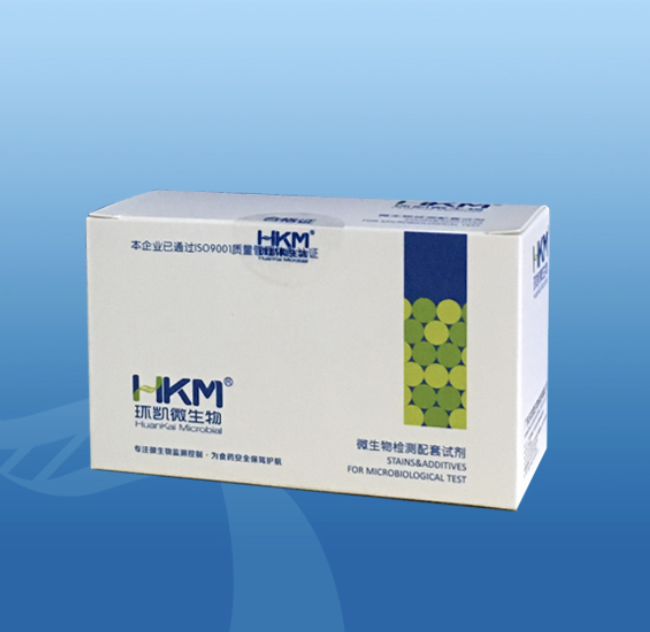
SR0030 Novobiocin
Usage:Additice reagent for culture media.
Specification:4.5mg*10vials

The Opentrons Flex HEPA/UV Module enables you to run sensitive contamination-prone applications. It removes 99.99% of 0.3 μm DNA-containing particulates and biological contaminants like bacteria, fungi, and other microorganisms from the air, creating a clean work environment inside the Opentrons Flex.
The Opentrons Flex HEPA/UV Module enables you to run sensitive contamination-prone applications. It removes 99.99% of 0.3 μm DNA-containing particulates and biological contaminants like bacteria, fungi, and other microorganisms from the air, creating a clean work environment inside the Opentrons Flex.

Norgen’s FFPE RNA Purification Kits provide a rapid method for the isolation and purification of total RNA (including microRNA) from formalin-fixed paraffin-embedded (FFPE) tissue samples in as little as 1 hour. Using formalin to fix tissues leads to crosslinking of the RNA and proteins, and the process of embedding the tissue samples can also lead to fragmentation of the RNA over time. Norgen’s FFPE RNA Purification Kits provide conditions that allow for the partial reversing of the formalin modifications, resulting in a high quality and yield of RNA. These kits are able to purify all sizes of RNA, from large mRNA and ribosomal RNA down to microRNA (miRNA) and small interfering RNA (siRNA), depending on the age of the FFPE tissue as fragmentation of the RNA is known to occur over time. The RNA is preferentially purified from other cellular components without the use of phenol or chloroform.
FFPE RNA Purification Kit (Spin Column)
Maximum loading volume of 650 μL per column, and a maximum binding capacity of 50 μg per column.
FFPE RNA Purification 96-Well Kit (High Throughput)
Purification is based on 96-well column chromatography using Norgen’s proprietary resin as the separation matrix. Purification can be performed using either a vacuum manifold or centrifugation. Maximum loading volume of 400 μL per well, and a maximum binding capacity of 50 μg per well.
Figure 1 / 5

Click for expanded view
| Kit Specifications | |
| Maximum Binding Capacity Per Well | 50 μg |
| Maximum Loading Volume Per Well | 400 μL |
| Size of RNA Purified | All sizes, including small RNA (< 200 nt) |
| Maximum Amount of Starting Material: | 5 slices of < 20 µm thick paraffin 25 mg of unsectioned block |
Storage Conditions and Product Stability
All solutions should be kept tightly sealed and stored at room temperature. The DNAse I should be stored at -20°C upon arrival. The Proteinase K should be stored at -20°C upon arrival and after reconstitution. This kit is stable for 1 year after the date of shipment.
| Component | Cat. 25300 (50 preps) | Cat. 25400 (2 x 96 preps) |
|---|---|---|
| Digestion Buffer A | 25 mL | 2 x 25 mL |
| Buffer RL | 30 mL | 2 x 30 mL |
| Enzyme Incubation Buffer | 6 mL | 2 x 6 mL |
| Wash Solution A | 38 mL | 2 x 38 mL |
| Elution Solution A | 6 mL | 2 x 20 mL |
| Proteinase K | 12 mg | 2 x 20 mg |
| DNase I | 1 vial | 2 x 500μL |
| Micro Spin Columns | 50 | – |
| 96-Well Incubation Plate | – | 2 |
| 96-Well Plate | – | 2 |
| Adhesive Tape | – | 8 |
| Collection Tubes | 50 | – |
| 96-Well Collection Plate | – | 2 |
| Elution Tubes (1.7 mL) | 50 | – |
| 96-Well Elution Plate | – | 2 |
| Product Insert | 1 | 1 |

This product is suitable for extracting RNA from anticoagulant blood, lymphocytes, buffy coat, bone marrow, cultured cells and other samples.
Specifications
| Features | Specifications |
| Main Functions | Isolation total RNA from 1-1.5ml whole blood, 0.5-1ml bone marrow, buffy coat |
| Applications | RT-PCR, cDNA synthesis, second generation sequencing |
| Purification method | Polydisperse magnetic beads |
| Purification technology | Magnetic beads technology |
| Process method | Manual or automatic |
| Sample type | anticoagulant blood, lymphocytes, buffy coat, bone marrow, cultured cells |
| Sample amount | 1-1.5ml whole blood, 0.5-1ml bone marrow |
| Yield | 1-30μg |
This product is suitable for extracting RNA from anticoagulant blood, lymphocytes, buffy coat, bone marrow, cultured cells and other samples. This product is based on the purification method of high binding magnetic particles. The sample is lysed and digested by lysis buffer and protease, and RNA/DNA is released into the lysis buffer. Add binding solution and magnetic particles to adsorb RNA/DNA, while proteins are not adsorbed and removed. The particles adsorbed with DNA/RNA are washed with washing buffer to remove proteins and other impurities, then washed with ethanol to remove salt, and finally digested with DNase to remove DNA. RNA is recovered by adding binding solution, and finally the RNA is eluted with low salt buffer. The eluted RNA can be directly used for experiments such as RT-PCR,NGS and virus detection.
Advantages
Kit Contents
| Contents | R661101 | R661102 | R661103 |
| Purification Times | 48 Preps | 96 Preps | 480 preps |
| 10 x RBC Lysis Buffer | 50 ml | 2 x 50 ml | 4 x 100 ml |
| Proteinase K | 12 mg | 24 mg | 120 mg |
| Protease Dissolve Buffer | 1.8 ml | 1.8 ml | 10 ml |
| DNase I | 600 μl | 2 x 600 μl | 10 x 600 µl |
| DNase Buffer | 20 ml | 30 ml | 150 ml |
| MagPure Particles N | 1.2 ml | 2.5 ml | 11 ml |
| Buffer RTL | 30 ml | 60 ml | 300 ml |
| Buffer ALB2 | 40 ml | 60 ml | 300 ml |
| Buffer MW1* | 22 ml | 44 ml | 220 ml |
| Buffer MW2* | 20 ml | 50 ml | 2 x 100 ml |
| RNase Free Water | 10 ml | 20 ml | 60 ml |
Storage and Stability
DNase I should be shipped with ice pack or dry ice and stored at -20°C upon arrival. MagPure Particles N and Proteinase K should be stored at 2–8°C upon arrival. However, short-term storage(up to 8 weeks) at room temperature (15–25°C) does not affect their performance.The remaining kit components can be store at room temperature and are stable for up to 18 months under these conditions.
This product is suitable for extracting RNA from anticoagulant blood, lymphocytes, buffy coat, bone marrow, cultured cells and other samples.