Mastitis is the single most costly disease of dairy cattle resulting in the reduction of milk yield and quality. The inflammation of the utter is mainly caused by infection of various bacteria. Streptococcus uberis is a gram-positive bacterium that is known worldwide as an environmental pathogen responsible for a high proportion of cases of mastitis in lactating cows and is also the predominant organism isolated from mammary glands during the non-lactating period. Often it is resistant to treatment and causes persistent high somatic cell counts without clinical mastitis.
Storage Conditions and Product Stability All kit components can be stored for 2 years after the date of production without showing any reduction in performance.
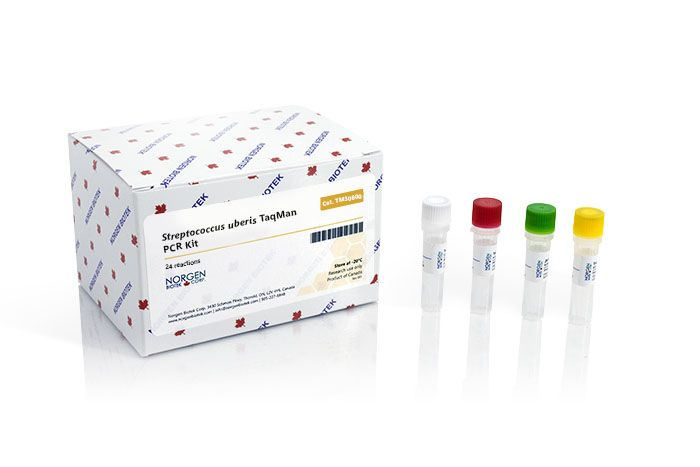
All kit components should be stored at -20°C upon arrival.
Component
Cat. TM30850 (100 preps)
Cat. TM30810 (100 preps)
MDx TaqMan 2X PCR Master Mix
2 x 700 μL
–
S. uberis Primer & Probe Mix
280 μL
280 μL
S. uberis Positive Control
150 μL
150 μL
Nuclease-Free Water (Negative Control)
1.25 mL
1.25 mL
Product Insert
1
1
Other Products
Cell Culture Flask T75
Product Info
Document
Product Info
Cell Culture Flask T75
Cell Culture Flask surface is very smooth based on precise molding technology and it gives clear view when examined with microscope.
Volume: 25mL75mL175mL225mL
PRODUCT FEATURES
The product is made of medical grade USP CLASS VI polymer polystyrene
The product is made under a 100,00- class dust-free manufacturing site
Two kinds of product line up are providing.
For adherent cell culture: Initial adherence and proliferative property of cells via hydrophilic surface treatment.
For suspension cell culture: The surface is resistant to cell adherence, which minimizes damage or loss of cell.
Large mouthed design makes easy operation of pipet or cell scraper. The surface of flask is uniform and smooth, hence the clear view can be obtained when microscopic observation.
The hydrophobic filter cap can prevent invasion of fungi and bacteria without water absorb.
Gamma radiation sterilization
Non-Pyrogenic, DNase/Rnase free.
Document
Cell Culture Flask surface is very smooth based on precise molding technology and it gives clear view when examined with microscope.
Plasma/Serum Exosome Purification and RNA Isolation Kits
Product Info
Document
Product Info
Overview
Purification and enrichment of intact plasma/serum exosomes for functional studies
Isolate all sizes of RNA, including microRNA, irrespective of size or GC content, without bias
Versatile plasma/serum input volume
No phenol extractions, Proteinase K treatment, nor carrier RNA required
No time-consuming ultracentrifugation, filtration nor special syringes required
No precipitation reagents, nor overnight incubation required
Compatible with plasma/serum from most species
Pure exosomes are purified and are free from any other RNA-binding proteins
Purification is based on spin column chromatography that uses Norgen’s proprietary resin
The purified RNA is suitable for a variety of downstream applications, including Small RNA Sequencing. Find out more information on Norgen’s NGS services
Norgen’s Plasma/Serum Exosome and RNA Isolation Kits constitute all-in-one systems for the purification of exosomes and the sequential isolation of exosomal RNA from different plasma/serum sample volumes. The purification is based on spin column chromatography that employs Norgen’s proprietary resin. These kits are designed to isolate all sizes of RNA, including microRNA, irrespective of size or GC content, without bias. These kits provide a clear advantage over other available kits in that they do not require any special instrumentation, protein precipitation reagents, extension tubes, phenol/chloroform or protease treatments. The RNA isolated from the purified exosomes is free from any protein-bound circulating RNA and is of the highest integrity. The purified RNA can be used in a number of downstream applications including real time PCR, reverse transcription PCR, Northern blotting, RNase protection and primer extension, and expression array assays.
Norgen’s Plasma/Serum Exosome and RNA Isolation Mini Kit
For sample volumes ranging from 50 µL to 1 mL. This kit allows the user to elute into a flexible elution volume ranging from 50 µL to 100 µL.
Norgen’s Plasma/Serum Exosome and RNA Isolation Midi Kit
For sample volumes ranging from 1 mL to 4 mL. This kit allows the user to elute into a flexible elution volume ranging from 50 µL to 100 µL.
Norgen’s Plasma/Serum Exosome and RNA Isolation Maxi Kit
For sample volumes ranging from 4 mL to 10 mL. This kit allows the user to elute into a flexible elution volume ranging from 50 µL to 100 µL.
All sizes, including miRNA and small RNA (< 200 nt)
Elution Volume
50-100 μL
Time to Complete 10 Purifications
35 – 40 minutes
Average Yields*
Variable depending on specimen
*Please check page 4 of the product insert for the average yields and the common RNA quantification methods.
Storage Conditions and Product Stability All solutions should be kept tightly sealed and stored at room temperature. This kit is stable for 2 years after the date of shipment. It is recommended to warm Lysis Buffer A for 20 minutes at 60°C if any salt precipitation is observed.
Important Note This kit is suitable for the purification of exosomes from fresh or frozen serum or plasma prepared from blood collected on either EDTA or Citrate. Plasma samples prepared from blood collected on heparin should not be used as heparin can significantly interfere with many downstream applications such as RT-PCR.
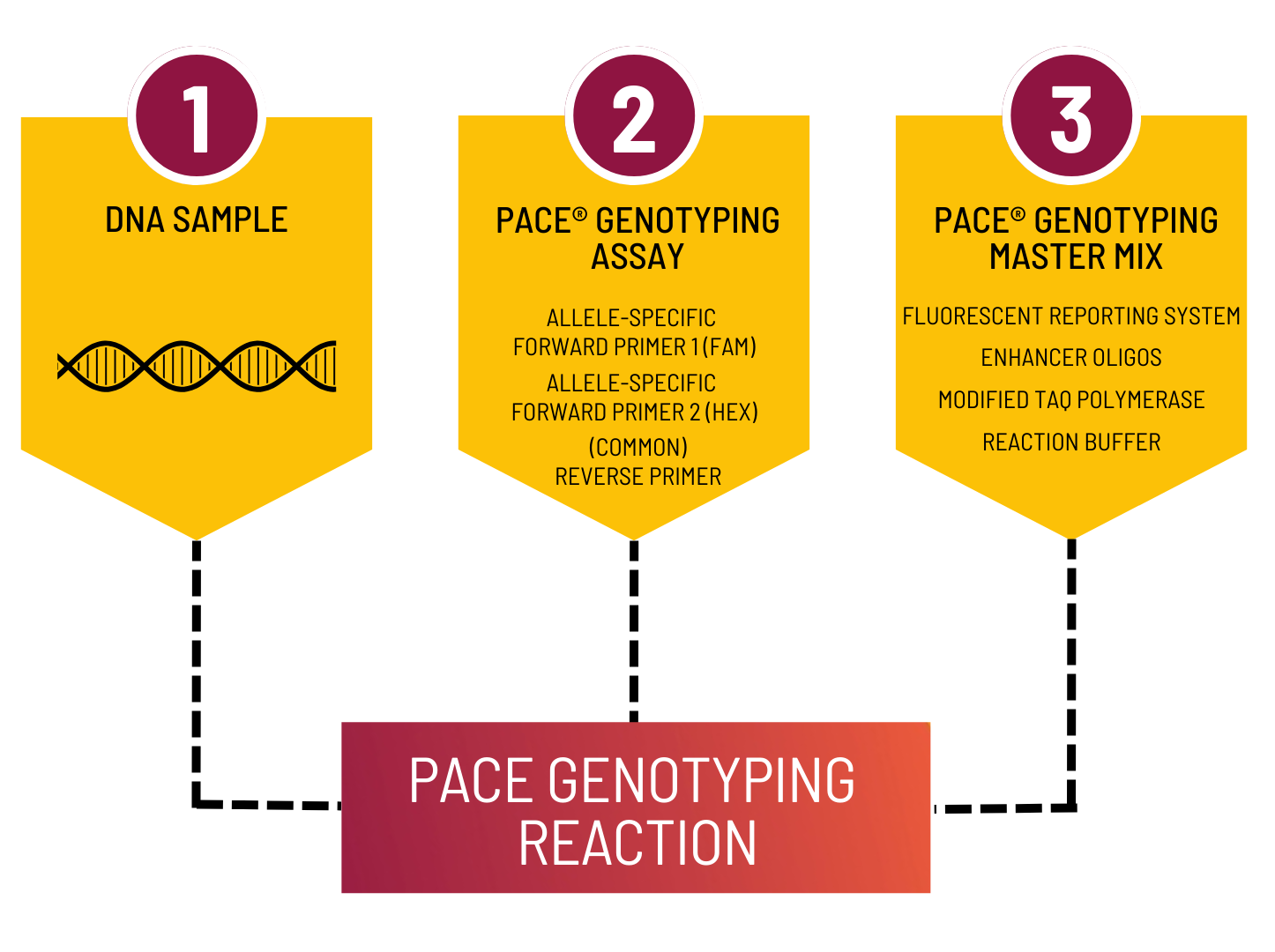
Everything you need to run a trial PACE® allele-specific PCR Genotyping Reaction on your existing lab equipment. Each PACE Trial Kit includes Test DNA samples, PACE Genotyping Assays, PACE Master Mix and a comprehensive PACE Genotyping Trial Kit Manual.
WHO IS THIS TRIAL KIT FOR?
Anyone who wants to try PACE genotyping reagents in their lab for the first time with a set of validated DNA samples, SNP assays and PACE Master Mix.
TRIAL KIT OVERVIEW
Step 1. Dispense each of the three trial DNA samples (DNA 1, 2 and 3) plus water (No Template Control) in triplicate onto a PCR plate using the suggested volumes.
Step 2. Combine appropriate volumes of PACE Genotyping Master Mix with PACE Genotyping Assay in a tube, as directed, then mix.
Step 3. Dispense the combined mixtures into each of the wells containing DNA using volumes indicated. Each test now contains a complete PACE Genotyping Reaction.
Step 4. Seal your PCR plate with an optically clear seal and centrifuge to ensure all components are at the bottom of the wells.
Step 5.Thermally cycle the reaction plate using the thermal cycling conditions provided.
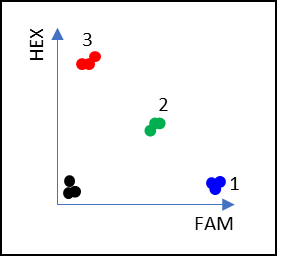
Step 6. Read the plate and compare data produced with the expected results provided in the manual. Simple!
PACE MECHANISM
More information on the PACE genotyping chemistry and how it works can be found here: www.3crbio.com/#pace. PACE allele-specific PCR is used for the detection of SNPs, Indels and other sequence variants.
REQUIRED COMPONENTS
qPCR machine or Thermocycler + Fluorescent plate reader
PCR plate or equivalent and appropriate optically clear seal