t-Boc-aminooxy-PEG5-propargyl is a click crosslinker. Propargyl group is reactive with azide-bearing compounds or biomolecules via copper catalyzed azide-alkyne Click Chemistry to yield a stable triazole linkage. T-Boc-aminooxy can be converted to free aminooxy under mild acidic conditions and then can react with an aldehyde or ketone. The hydrophilic PEG spacer increases solubility in aqueous media. Reagent grade, for research purpose. Please contact us for GMP-grade inquiries.
Detail
t-Boc-aminooxy-PEG5-propargyl is a click crosslinker. Propargyl group is reactive with azide-bearing compounds or biomolecules via copper catalyzed azide-alkyne Click Chemistry to yield a stable triazole linkage. T-Boc-aminooxy can be converted to free aminooxy under mild acidic conditions and then can react with an aldehyde or ketone. The hydrophilic PEG spacer increases solubility in aqueous media. Reagent grade, for research purpose. Please contact us for GMP-grade inquiries.
Other Products
HAM010 Agar Bacteriological
Product Info
Document
Product Info
Introduction
Usages: Soytone is an enzyme digest of soy, widely used in culture media.
Technical specification: Total nitrogen(TN)—————————≥8.0% Amino nitrogen(AN) ————————≥2.0% Moisture—————————————≤6.0% Ash———————————————≤12.5%
Storage: Keep container tightly closed, store in a cool, dry place, away from bright light.
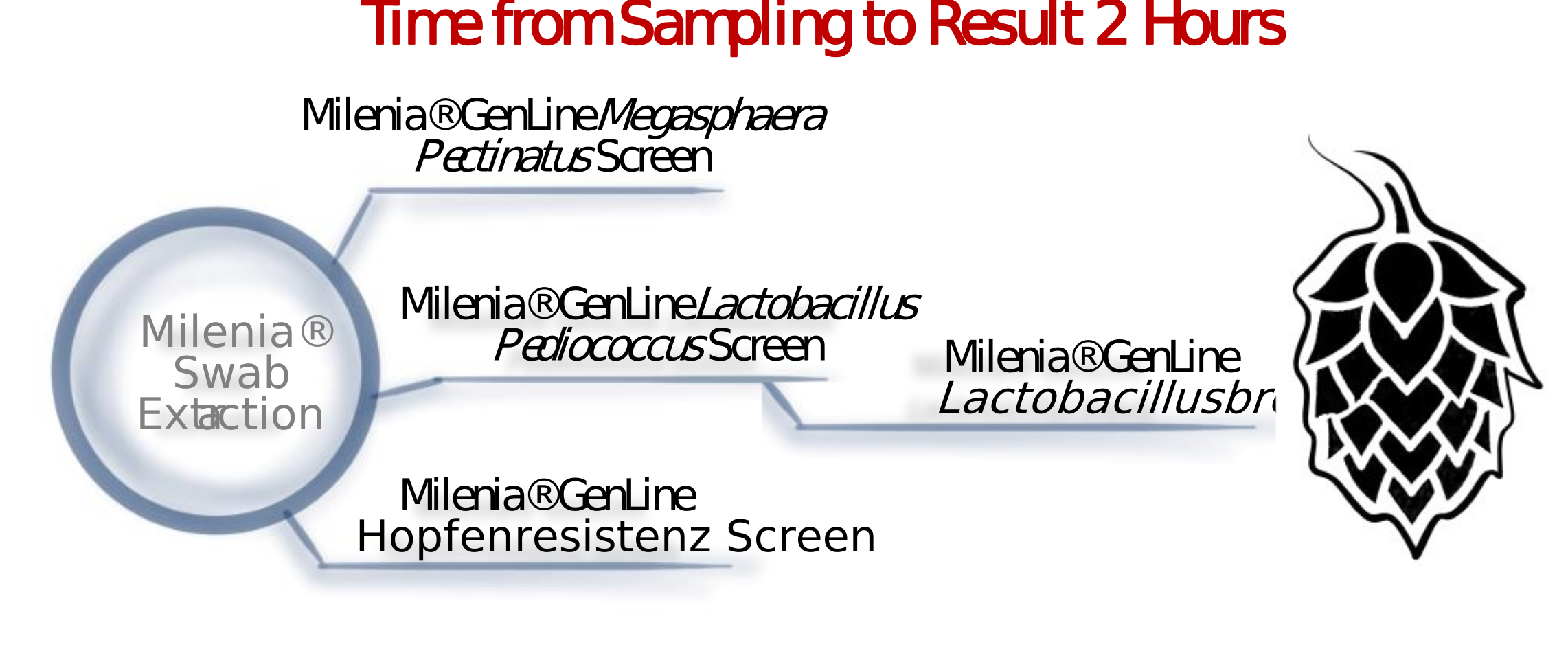
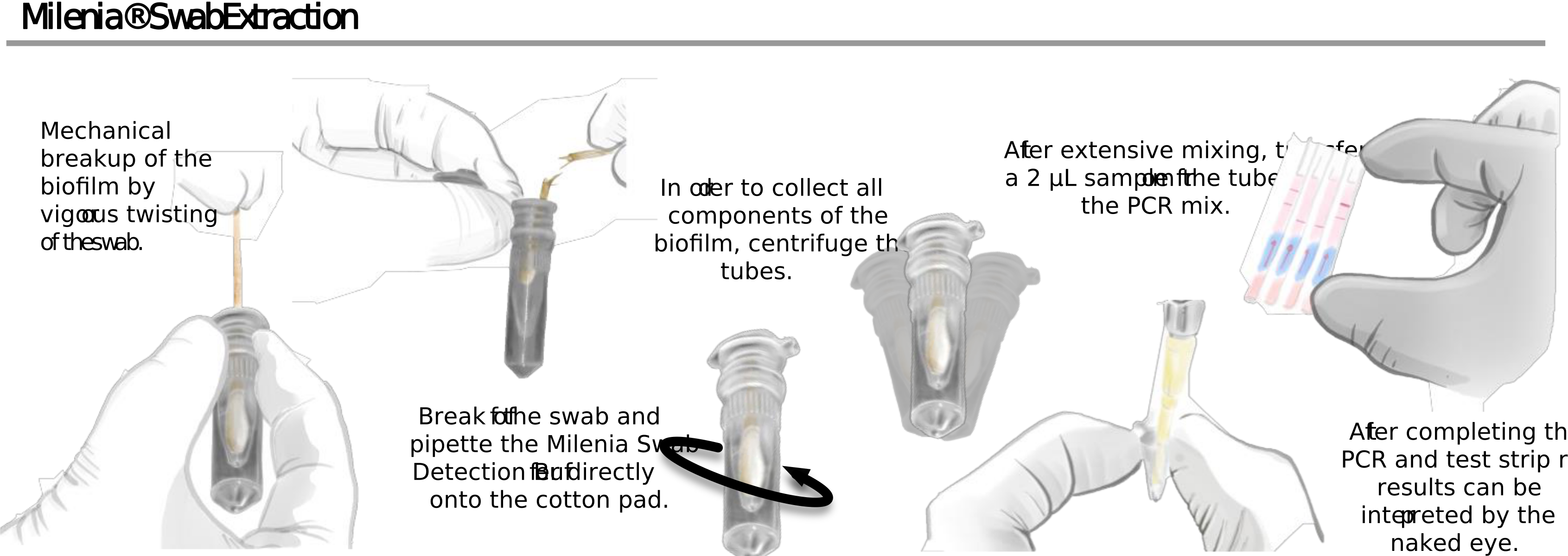
The Milenia swab PCR-System allows the direct detection of obligate spoilers from a swab. Areas of poor Hygiene and hotspots of Biofilm Formation can be quickly identified and monitored.
Brief Instructions
Storage
Components
Document
Name of Product Swab Detection Buffer Catalog Number MGSDB Short Info Extractionbuffer for swabs
Method/Platform Buffer for lateral flow assay Range/Assay Sensivity Test Principle The Milenia swab PCR-System allows the direct detection of obligate spoilers from a swab. Areas of poor Hygiene and hotspots of Biofilm Formation can be quickly identified and monitored.
High yield and high purity DNA ready for any application
Available in a variety of formats to properly suit your needs
Compatible with blood collected on a variety of commercially available tubes
These kits allow for the isolation of DNA from the blood of various species, including humans and will recover genomic DNA, mitochondrial DNA, viral DNA and bacterial DNA. The purified DNA is of excellent quality and yield and completely compatible with any downstream application including PCR, qPCR and genotyping.
Blood DNA Isolation Mini Kit
Norgen’s Blood DNA Isolation Mini Kit is designed for the rapid preparation of DNA from up to 200 µL of whole blood using a rapid spin column protocol. Preparation time for a single sample is less than 30 minutes and each kit contains sufficient materials for 50 preparations.
Blood DNA Isolation Midi Kit
Norgen’s Blood DNA Isolation Kit is designed for the rapid spin column preparation of DNA from 0.3 to 2 mL volumes of whole blood. Preparation time for a single sample is less than 30 minutes, and each kit contains sufficient materials for 20 preparations.
Blood DNA Isolation Maxi Kit
This kit is designed for the rapid preparation of DNA from 3 mL up to 10 mL of whole blood. Preparation time for a single sample is less than 30 minutes.
Blood DNA Isolation 96-Well Kit (High Throughput)
This kit provides a rapid method for the high-throughput isolation of DNA from up to 200 µL of whole blood. Fast and easy processing using either a vacuum manifold or centrifugation.
Blood DNA Isolation Kit (Magnetic Bead System)
Norgen’s Blood DNA Isolation Kit (Magnetic Bead System) is designed for the rapid preparation of genomic DNA from up to 200 µL of whole blood from various species, including human. Purification is based on magnetic beads as the separation matrix. Norgen’s magnetic beads bind DNA under optimized salt concentrations and releases the bound DNA under low salt and slightly alkali conditions. The genomic DNA is preferentially purified from other cellular proteinaceous components. Typical yields of genomic DNA will vary depending on the cell density of the blood sample. The purified genomic DNA is fully digestible with all restriction enzymes tested, and is completely compatible with downstream applications including real-time PCR, NGS and microarray analysis.
Blood DNA Isolation 96-Well Kit (High Throughput Magnetic Bead System)
96-well format for high throughput applications. Purification with the 96-well plates can be integrated with a robotic automation system.
*Yield will vary depending on the type of blood processed
Storage Conditions and Product Stability All solutions should be kept tightly sealed and stored at room temperature. This kit is stable for 1 year after the date of shipment. The kit contains a ready-to-use Proteinase K, which is dissolved in a specially prepared storage buffer. The buffered Proteinase K is stable for up to 1 year after the date of shipment when stored at room temperature.