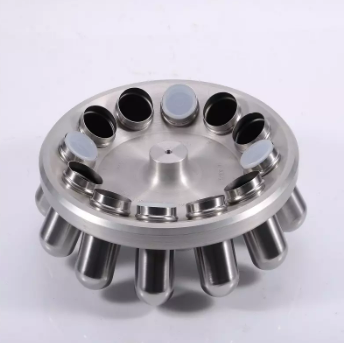

This kit provides a rapid spin column method for the purification of total DNA from a broad spectrum of bacteriophages propagated in bacteria grown in liquid cultures. The DNA is isolated without the use of phenol, chloroform or cesium chloride banding procedures. The spin-column based procedure is rapid and can be completed in less than 45 minutes. The kit is highly efficient for processing small volumes of phage supernatant (500 µL – 1 mL) and with the optional DNase and Proteinase K treatments phage DNA yields are maximized while host DNA contamination is minimized. Purified total phage DNA is of the highest integrity, and can be used in a number of downstream applications including PCR, qPCR, Restriction Fragment Length Polymorphism (RFLP), sequencing, cloning, Southern Blot and more.
Figure 1 / 2
Click for expanded view
| Kit Specifications | |
| Column Binding Capacity | 50 µg |
| Maximum Column Loading Volume | 650 µL |
| Size of DNA Purified | All sizes |
| Maximum Amount of Starting Material | 1 x 10¹⁰ pfu/mL enriched phages |
| Average Yield* | 3-15 µg DNA from 106-1010 pfu/mL of enriched phages |
| Time to Complete 10 Purifications | 45 minutes |
* Average yields will vary depending upon a number conditions used and developmental stage.
Storage Conditions and Product Stability
All solutions should be kept tightly sealed and stored at room temperature. This kit is stable for 1 year after the date of shipment.
| Component | Cat. 46800 (50 preps) | Cat. 46850 (100 preps) |
|---|---|---|
| Lysis Buffer B | 40 mL | 2 x 40 mL |
| Wash Solution A | 38 mL | 2 x 38 mL |
| Elution Buffer B | 8 mL | 2 x 8 mL |
| Spin Columns | 50 | 100 |
| Collection Tubes | 50 | 100 |
| Elution Tubes (1.7 mL) | 50 | 100 |
| Product Insert | 1 | 1 |
For the detection of Salmonella spp. in food, animal feed and in environmental samples from the food production area as described in ISO 6579-1:2017.
Meat extract and casein provide a source of nitrogen and amino acids and sodium chloride maintain theosmotic balance. Ox bile and brilliant green act as selective agents against non-target microorganisms. Tetrathionate is generated from the sodium thiosulfate. Iodine and calcium carbonate buffer the sulfuric acid generated from tetrathionate reduction.
| Ingredients | /liter |
| Meat extract | 4.3g |
| Enzymatic digest of casein | 8.6g |
| Sodium chloride | 2.6g |
| Calcium carbonate | 38.7g |
| Sodium Thiosulfate (anhydrous) | 30.4g |
| Ox bile | 4.78g |
| pH8.0±0.2 at 25°C | |
Suspend 89.4g in 1 L of purified water. Heat with frequent agitation and boil to completely dissolve the powder. Distribute into flasks,and then cool to below 45°C. Add a vial of novobiocin sodium salt (SR0640), a vial of iodine solution and a vial of brilliant green (SR0040) into 100 mL of base medium. Mix thoroughly.
Cultural characteristics observed after incubation at 35-37°C for 24 hours
| Quality control strains | Approx. Inoculum(CFU) | Expected Results |
| Salmonella typhimurium ATCC14028 | 10 – 100 | ≥ 10 cfu on XLD |
| Escherichia coli ATCC25922 | > 104 | ≤100 cfu on TSA |
| Enterococcus faecalis ATCC29212 | > 104 | <10 cfu on TSA |
2-30℃,Keep container tightly closed, avoid direct sunlight.
Use before expiry date on the label.
1. When weighing the dehydrated medium, please wear masks to avoid causing respiratory system discomfort
2. Keep container tightly closed after using to prevent clumping.
Microbiological contamination was disposed by autoclaving at 121°C for 30 minutes.
On June 14, 2024
ISO 6579:2017 Microbiology of food and animal feeding stuffs – Horizontal method for the detection, enumeration and serotyping of Salmonella spp.
Intended Use For the detection of Salmonella spp. in food, animal feed and in environmental samples from the food production area as described in ISO 6579-1:2017. Principle and Interpretation……
Adenoviral vectors are useful tools for both in vitro and in vivo gene transfer, and oncolytic viruses based on adenovirus are highly promising for cancer treatment. Norgen’s Adenovirus Purification Kit provides a fast and simple procedure for concentrating and purifying adenoviral vectors from cell lysate and cell culture media. Purification is based on spin column chromatography using Norgen’s proprietary resin as an ion exchanger. Contaminating cellular debris is largely removed from the sample via a centrifugation step, while contaminating DNA and RNA is reduced using enzymatic digestion. Adenoviral vectors purified in this manner are highly active for use in transduction experiments.
Norgen’s Adenovirus Purification Kit contains sufficient materials for 15 preparations (33.5 mL per prep of supernatant or a total of 500 mL of supernatant input). Approximately 1 mL of cell pellet can be purified per prep, up to a maximum of 15 mL of cell pellet in total for the entire kit.
Figure 1 / 3
Click for expanded view
| Kit Specifications | |
| Resin Binding Capacity (total per kit) | At least 3×10¹¹ adenovirus particles as determined by qPCR At least 3×10⁸ transducing units as determined by transduction assay |
| Input type | Cells, media |
| Input volume (Supernatant) | 1 – 33.5 mL SN per prep (500 mL SN in total) |
| Input Volume (Cell pellet) | 1 mL cell pellet per prep (15 mL in total) |
| Minimum elution volume | 1.3 mL per prep |
| Time to complete purification | 2.5 to 4.5 hours with 1 hour hands on time |
| In vivo transduction | Yes |
Storage Conditions and Product Stability
HL-SAN Nuclease should be stored at -20°C upon arrival. Elution Buffer P should be stored tightly capped at 4°C upon arrival. All other solutions should be kept tightly sealed and stored at room temperature. This kit is stable for 2 years after the date of shipment.
| Component | Cat. 67600 (15 preps) |
|---|---|
| Lysis Buffer S | 5.5 mL |
| HL-SAN Nuclease | 102 µL |
| Binding Buffer A | 20 mL |
| Purification Solution C | 60 mL |
| Purification Solution D | 130 mL |
| Wash Solution C | 2 x 130 mL |
| Slurry E | 12.5 mL |
| Elution Buffer P (store at 4°C) | 66 mL |
| Protein Neutralizer | 4 mL |
| Elution tubes (1.7 mL) | 50 |
| Product Insert | 1 |