
Thermal adapter for deep well plates, e.g., NEST 96 Deepwell Plate 2 mL. Compatible with the Opentrons Heater-Shaker Module.

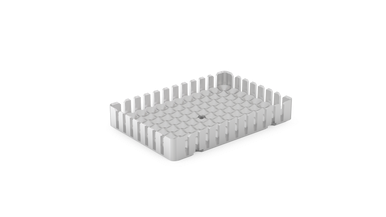
Thermal adapter for deep well plates, e.g., NEST 96 Deepwell Plate 2 mL. Compatible with the Opentrons Heater-Shaker Module.

This kit is designed for the rapid preparation of genomic DNA from various tissue samples, cultured cells, viruses, bodily fluids and swabs using a rapid spin column protocol. Purified DNA is of an excellent yield and quality, and is immediately ready for any downstream application including PCR, qPCR, genotyping, sequencing and more. The protocol can be completed in approximately 80 minutes (including incubation time).
Figure 1 / 2

Click for expanded view
| Kit Specifications | |
| Column Binding Capacity | 25 µg |
| Average Yield:* HeLa Cells (1 x 10⁶) Tissue (from 10 mg kidney) | 8 µg 10 µg |
| Maximum Amount of Starting Material: Animal Tissues Cultured Cells Bodily Fluids (blood, saliva) Viral Suspension | 20 mg 3 x 10⁶ cells 150 µL 150 µL |
| Time to Complete 10 Purifications | 80 minutes |
* Yield will vary depending on the type of sample processed
Storage Conditions and Product Stability
The Proteinase K should be stored at -20°C upon arrival and after reconstitution. All other solutions should be kept tightly sealed and stored at room temperature. This kit is stable for 2 years after the date of shipment.
| Component | Cat. 24700 (50 preps) | Cat. 24750 (100 preps) | Cat. 24770 (250 preps) |
|---|---|---|---|
| Digestion Buffer A | 25 mL | 2 x 25 mL | 5 x 25 mL |
| Buffer SK | 30 mL | 2 x 30 mL | 5 x 30 mL |
| Wash Solution A | 18 mL | 2 x 18 mL | 5 x 18 mL |
| Elution Buffer B | 30 mL | 2 x 30 mL | 5 x 30 mL |
| Proteinase K | 12 mg | 2 x 12 mg | 5 x 12 mg |
| Spin Columns | 50 | 100 | 250 |
| Collection Tubes | 50 | 100 | 250 |
| Elution Tubes (1.7 mL) | 50 | 100 | 250 |
| Product Insert | 1 | 1 | 1 |

The kit offers the unique feature to isolate total RNA including small RNA and DNA from serum and plasma without the need to resort to the cumbersome phenol/chloroform extraction or a time consuming proteinase digest. RNA purified using the kit is ready for applications such as RT-PCR, Northern blotting, poly A+ RNA (mRNA) purification, nuclease protection, and in vitro translation.
Specifications
| Features | Specifications |
| Main Functions | Isolation total RNA and miRNA from 0.2-0.6ml serum and plasma |
| Applications | |
| Purification method | Mini spin column |
| Purification technology | Silica technology |
| Process method | Manual (centrifugation or vacuum) |
| Sample type | |
| Sample amount | |
| Yield | |
| Elution volume | |
| Time per run | |
| Liquid carrying volume per column | |
| Binding yield of column |
HiPure RNA technology simplifies total RNA isolation. The sample material is denatured in Lysis Buffer. The protein is then precipitated by Protein Precipitation Solution and pelleted by centrifugation. After the removal of protein the binding conditions for nucleic acids are adjusted by adding isopropanol. Total nucleic acids are bound to the column. Optionally, DNA can be removed by an on-column DNase digest. The remaining nucleic acids are washed and eluted with minimal amounts of RNase-Free water.
Kit Contents
| Contents | R431402 | R431403 |
| Purification Times | 50 Preps | 250 Preps |
| HiPure RNA Mini Columns | 100 | 2 x 250 |
| 2ml Collection Tubes | 100 | 2 x 250 |
| Buffer CFL | 6 ml | 30 ml |
| Buffer CFP | 1.8 ml | 10 ml |
| Buffer RWC | 20 ml | 80 ml |
| Buffer RW2* | 20 ml | 2 x 50 ml |
| RNase Free Water | 10 ml | 60 ml |
Storage and Stability
The kit components can be stored at room temperature (15-25°C) and are stable for at least 18 months under these conditions.
The kit offers the unique feature to isolate total RNA including small RNA and DNA from serum and plasma without the need to resort to the cumbersome phenol/chloroform extraction or a time consuming proteinase digest. RNA purified using the kit is ready for applications such as RT-PCR, Northern blotting, poly A+ RNA (mRNA) purification, nuclease protection, and in vitro translation.

This unique quality seal ensures high quality and performance of raw materials ideally suited for use in development projects for IVD
With the DiagnosticGrade seal, the partners Johner Institut and myPOLS Biotec combine high-quality products, including reliable and reproducible product performance and knowledge on product verification procedures, including documentation to meet the requirements of the IVDR:
Both cooperation partners express with the DiagnosticGrade seal that the reagents meet the relevant requirements and thus ensure the maturity level for diagnostics.
Diagnsoticgrade facilitates the development of new IVD assay products for IVD manufacturers and enables IVDR compliance of existing kits.
Please find more information on www.diagnosticgrade.de (in german) or contact us directly. About the Johner Institut: https://www.johner-institut.de
With the DiagnosticGrade seal, the partners Johner Institut and myPOLS Biotec combine high-quality products, including reliable and reproducible product performance and knowledge on product verification procedures, including documentation to meet the requirements of the IVDR: